
Warhorse
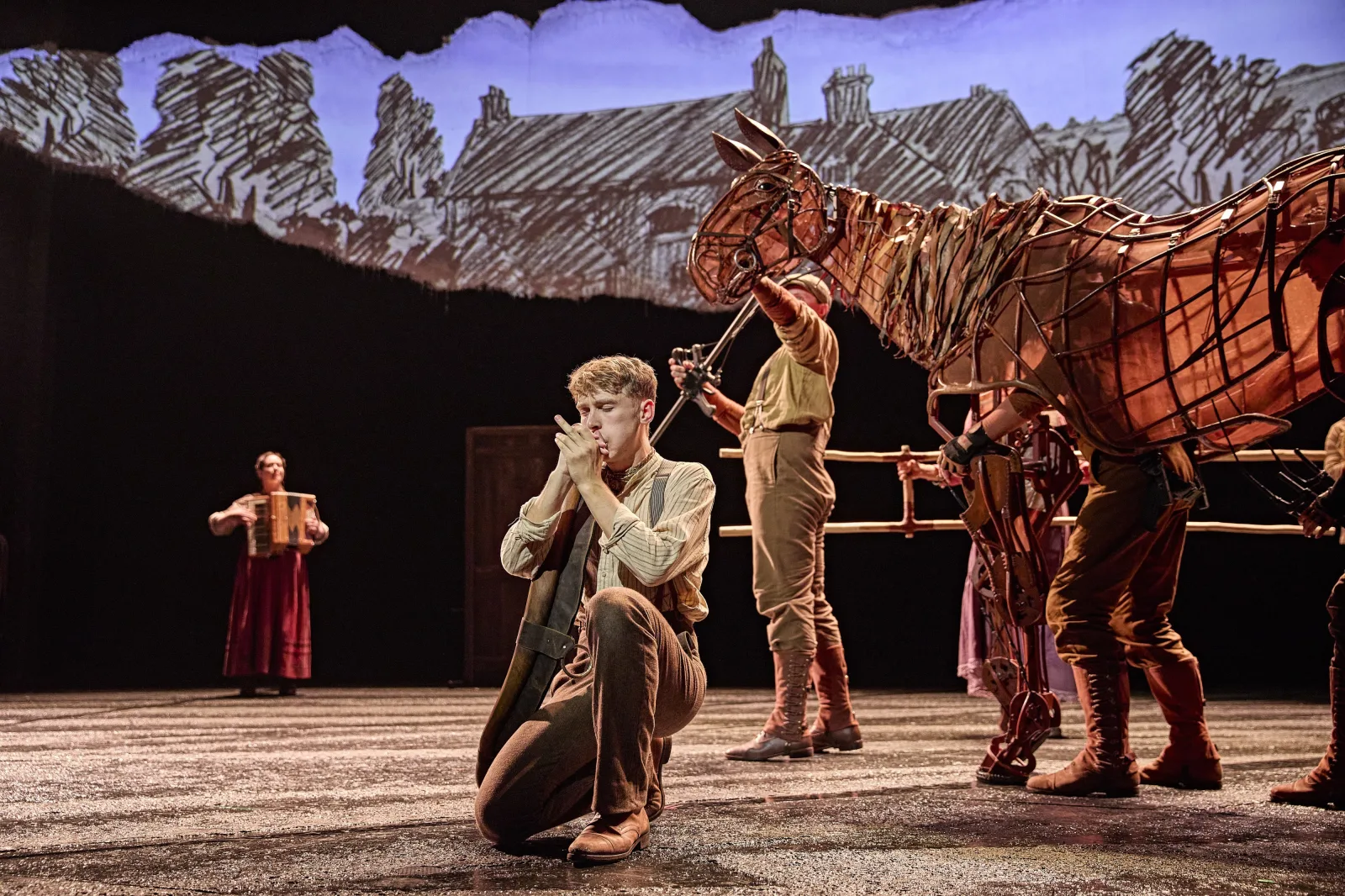
The moment when Joey transforms from a foal to a fully grown horse is a gasp inducing theatrical wonder. Such is the skill of the three puppeteers operating Joey, they are entirely invisible to the mind's eye, despite being in plain sight
Theatre Royal
Is there anything left to be said about Warhorse, the most successful production in the National Theatre's history? Seen by over eight million people since its 2007 debut, this award-laden production changed the very definition of theatre, redefined what puppetry meant to a UK audience brought up on Basil Brush, and introduced its audience to Michael Morpurgo's source novel. Curious as to what all the fuss was about I had long since seen the NT live cinema broadcast and even got up close and personal with Joey the horse during a behind the scenes tour of the National Theatre. Would seeing the production in a theatre really add much to those experiences?
The short answer is yes.
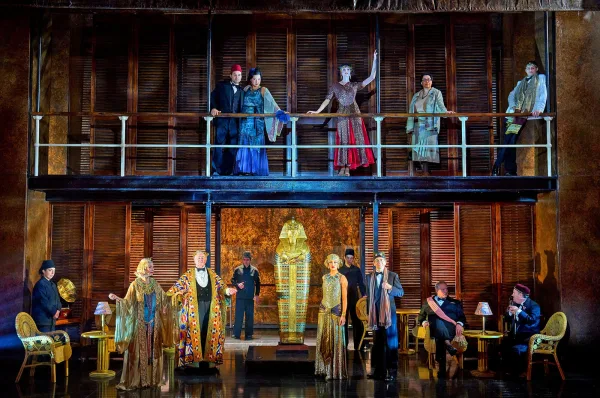
The unparalleled impact of this touring production is very nearly overwhelming. Rob Casey's imaginative lighting, Adrian Sutton's music and Rae Smith's design come together in perfect synchronicity, immersing the audience and excellent cast in both the bucolic charm of rural life and the horrors of trench warfare. Tom Sturgess, as the sixteen-year-old Albert Narracott carries much of the narrative on his shoulders, but is ably supported by Karl Hayes and Jo Castleton as his parents. In truth, there are fine performances aplenty from the ensemble cast, but it's telling that they are listed alphabetically in the program, whatever their contribution on stage. It is as if to signal there are no starring roles in the production, or rather that the star is not an actor at all. From the moment that Joey the foal comes on stage, there can be no doubt what - or dare I say who - we have come to see. The play was originally conceived as a means of fulfilling an ambition to bring the brilliance of the Handspring Puppet Company to the National Theatre. So while this episodic tale is buttressed by a reliably strong ensemble cast, the stars of the show is a horse (as well as the geese and the crows).

The moment when Joey transforms from a foal to a fully grown horse is a gasp inducing theatrical wonder. Such is the skill of the three puppeteers operating Joey, they are entirely invisible to the mind's eye, despite being in plain sight. Should you wish to marvel at their ability to breathe life into a mechanical horse - and I occasionally tried to - it takes an act of genuine concentration to watch them at work, before the emotional heft they infuse in their charge regains a grip and it's a living, breathing horse again.
The narrative of the play is a little uneven and noticeably dips after the extraordinary spectacle of the initial charge headlong into machine gun fire. It's worth remembering that Morpurgo's novel was written for pre-teenagers and told from Joey's perspective. Nick Stafford's adaptation goes some way to opening up the plot, but there remains a suspicion that in the absence of nuance we have been offered spectacle. I am reminded of a comment made about Lionel Bart's wartime musical Blitz, a production so extravagant you came out "whistling the scenery". Nonetheless, there are moments of great tenderness, stark horror and even gallows humour, all of which sweeps the audience along in a way that sees the lengthy performance time fly by.
I do have a misgiving with this production, however, and it's not a small one. The stage of the Theatre Royal has been extended for this production, presumably to cater for the turning circle of the puppets. It's understandable, as even with this increased performance space the action did look boxed in at times. When a tank appeared it should have been a grandstanding moment. In the space afforded, it moved with the awkwardness of a wardrobe being carried upstairs. My issue, however, is not with the large scale, but with director Katie Henry's decision to place intimate key scenes at the very edge of the stage, out of sight for the entire dress circle. As Albert stroked his newly acquired colt, or thumbed through a sketchbook, or hunkered down with his pal David Taylor, we as one, leaned forward, tall poppies vainly trying to see. There's a reason the proscenium arch is where it is, and the stage goes no further. Had the action been shuffled back just a few feet - something easily done - it would have improved the experience hugely for those not blessed with a seat in the stalls.
To put such misgivings into perspective, this was a small price to pay for the opportunity to see the play in Norwich. For the most part this was a stunning production that was the textbook definition of live theatre which, at its very best, can transcend all other mediums to create a magical communal experience.