

Infinity Gradient
The drones, hums and pulses of the speakers were enveloped by James McVinnie's playing as the organ added layer upon layer. The music teasingly invited the ear to discern and disassemble a composition seemingly beyond grasp.
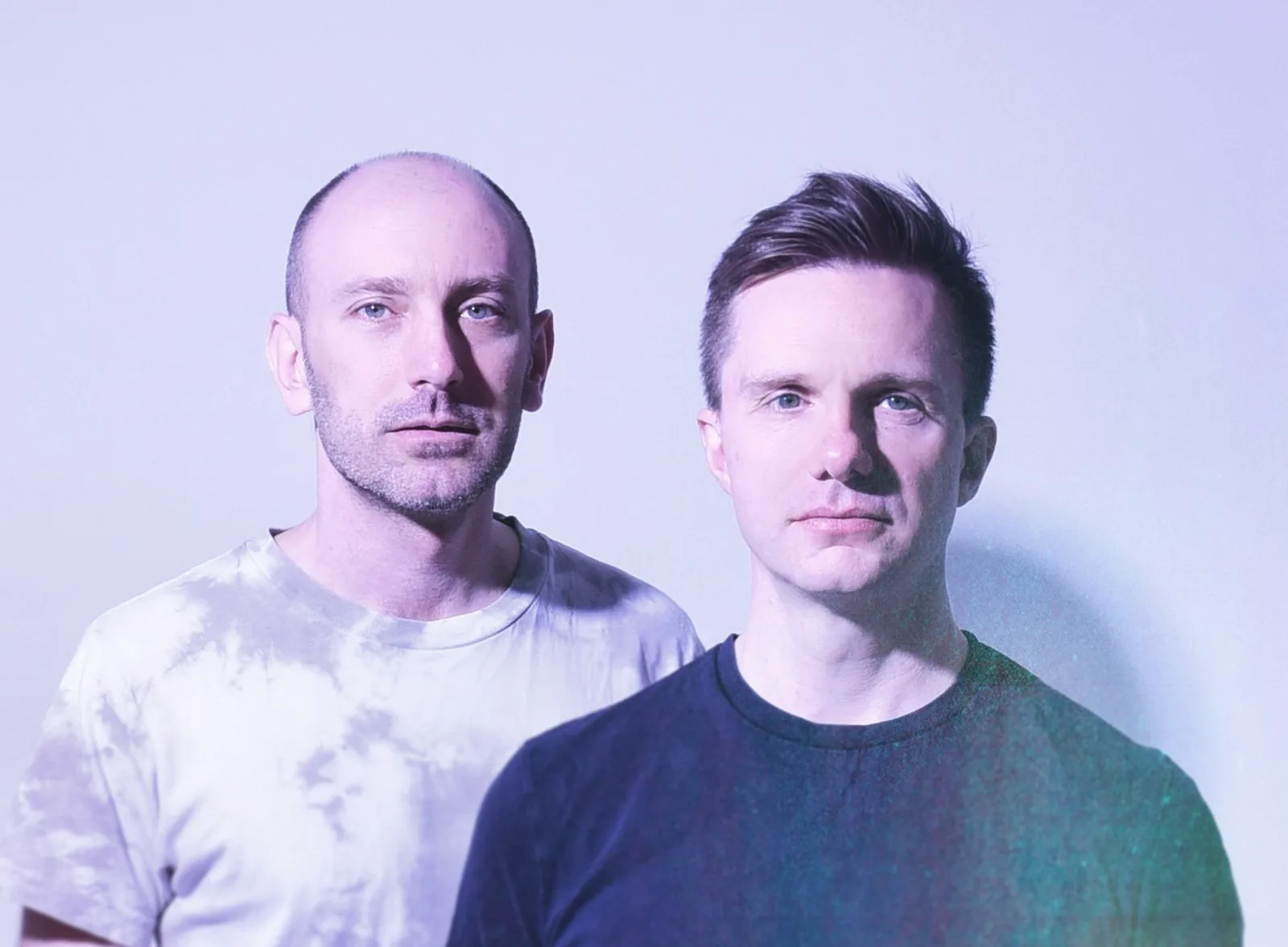
How often have you gone to a concert, be that classical, rock, pop, whatever, only to be frustrated that you can't see properly? We are so hard-wired to expect to see a show, and not just hear a show, it's easy to forget that a live musical event is supposed to be primarily an aural experience. Contemporary performances are dressed up with theatrical haze, light shows and back projection. Classical performances may be more restrained but we still like to see the flexing of bows, the plucking of strings, the tooting of horns. To be confronted by a bank of speakers mounted on a frame in front of the Cathedral's magnificent organ was disorienting. I counted, and there really were a hundred as advertised. Stranger still was that neither James McVinnie nor Tristan Perich popped round to say hello before the first rumble of the organ's pipes indicated it was time to stop chatting and start listening.
What followed was a quite extraordinary marriage of ancient and modern. The resonating pipes of the organ were complemented by, but also competed with, something akin to a hundred-voiced choir in the shape of binary 1-bit speakers. Setting aside, for a moment, the end result, the sheer audacity of dreaming up such a thing bears closer examination. A 1-bit speaker is either on or off (by way of comparison a domestic hi-fi is likely to be 16-bit) so all nuance comes from timing, not amplitude. A church organ offers a huge variety of sounds, both in pitch, tone and volume. It should surely mean a marriage made in hell.
However, an organist makes a sound by pressing a key, which releases air into a pipe, and that makes a noise. Releasing the key shuts the pipe, and the noise stops. The particular note is either on or off, uniquely among acoustic instruments without delay or reverberation. And they have worked that way for hundreds of years. The genius of composer Tristan Perich’s epiphany is to realise that speakers and organ share this binary quality and are therefore capable of literally working in harmony.

Infinity Gradient is an hour-long piece for organ and 100 loudspeakers composed by Perich in 2021 and performed with McVinnie in various prestigious venues before coming to Norwich. The thing about organs is that the building which houses them is effectively part of the instrument. I think it's likely, and therefore fair, to say that each performance must be unique. Sat in Norwich Cathedral with nothing to distract, contemplation of the cathedral's majesty became very much part of the experience. Nevertheless, the work itself was mesmeric and involving. After an opening flourish, it unfolded in seven sections, each built around a stretched crescendo. Perich’s bleeping, pulsating speakers blended surprisingly well with the organ's extensive range. Occasionally, when not caught up in the whirlwind of sound, I would pull back and attempt to distinguish who was doing what. I invariably failed. But for the most part, the oscillating sound produced induced a dreamlike reverie in the listener. If compelled to draw a comparison then the minimalist repetition of Steve Reich is the most obvious choice, though Philip Glass's Koyaanisqatsi is also a good fit.
Admittedly, there were moments when boundaries were pushed to breaking point. During what I think was the third movement (I was mid-reverie at the time) the speakers gave off such a discordant noise I assumed something had malfunctioned. I had an old amp which made that noise when not properly earthed and it had me sitting bolt upright. For the most part, though, the conversation between organ and speakers - between the old and the new, if you like - was a revelation. The drones, hums and pulses of the speakers were enveloped by James McVinnie's playing as the organ added layer upon layer. The music teasingly invited the ear to discern and disassemble a composition seemingly beyond grasp. Those moments when the full organ kicked in, as if showing the speakers who was really the boss, seemed to have the masonry of the cathedral itself take part, as the speakers' nigh on inaudible bass notes reverberated in the pit of your stomach.
McVinnie and Perich did finally make an appearance, encouraged no doubt by the extended applause at the concert's conclusion. The audience seemed as one in their insistence that organist and composer take a bow before we all went home. If this performance is indicative of the treats to come at this year's festival, we're in for an exciting and energising ride.