
To Kill a Mockingbird
The tension between the beautiful simplicity of Harper Lee's text and the whip-smart dialogue Sorkin is known for is deftly handled. The novel is how Scout saw things, Sorkin seems to be saying; now take a look at the unvarnished truth.
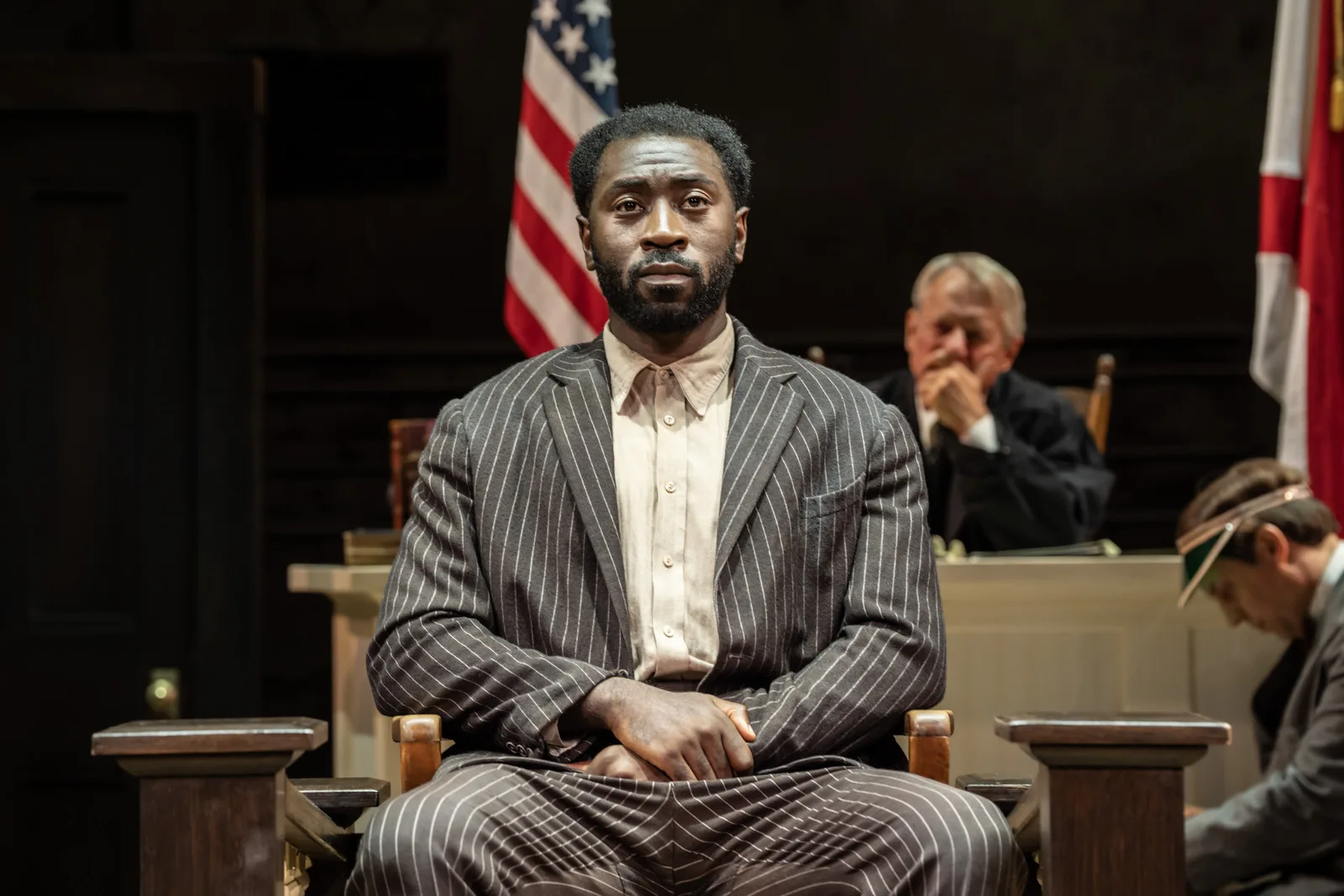
Aaron Sorkin's adaptation of Harper Lee's only novel has been a long time coming to Norwich. Pre-Covid, an alternative version of To Kill a Mockingbird was unceremoniously pulled from upcoming shows when the combined might of the Harper Lee Estate and Scott Rudin Productions decided they should be the definitive and only version. In the end, Covid prevented any version going ahead. To say this production has been keenly anticipated ever since is an understatement.
The key to unlocking the novel is that the events contained within are told from the perspective of its narrator, Scout Finch, one of lawyer Atticus Finch's children. She's not exactly an unreliable narrator, but events do unfold through the prism of a child's perspective. It's a brilliant literary conceit, allowing Harper Lee to deal with grim subject matter without explicitly illustrating events that would be shocking to her sixties readership. The fact that a novel that deals with racial prejudice, rape, incest and mental cruelty is a standard text for schools is a testament to the skill with which she does this.
A play cannot do this, as Aaron Sorkin quickly realised in his attempts to adapt it faithfully, describing the task as an "absolute suicide mission". His version, which "leaves his fingerprints on it all", enacts events as they happened, not as Scout saw them. Atticus is no longer Scout's revered father. Instead, he's a fallible, small-town lawyer, ill at ease defending a criminal case, while gripped by a conviction that justice will prevail. Patrick O'Kane is excellent in the role, portraying a decent, unassuming man who is nonetheless blind to the power of prejudice and how it inevitably trumps logic and reason. It's a canny shift by Sorkin - had the adaptation been more faithful it would have done battle in the mind's eye with the film version. Gregory Peck's pitch-perfect portrayal casts a very long shadow, and O'Kane, largely by taking the man in a different direction, does well to escape it.
We do see the world from Scout's perspective, albeit that the practicalities of live performance require Anna Munden to play her as an older child. Repeatedly breaking the fourth wall to narrate and comment, we get as close to the novel's tone as Sorkin allows. This is how Scout sees things, he seems to be saying; now take a look at the unvarnished truth. In a key scene, Calpurnia admonishes Atticus for his myopic faith in human nature, but also for what he sees as a selfless act of kindness in taking on the case. It's the closest Sorkin gets to taking issue with what he perceives as a white saviour narrative in the novel.

The role of Calpurnia was, incidentally, played on the night by Oyin Orija, billed in the programme as understudy, but you would never have guessed from her outstanding performance. But then the play was brimming with outstanding performances in cameo roles. Richard Dempsey as the repellent prosecutor Horace Glimour, Sarah Finigan’s poisonous Mrs Dubose, and Stephen Boxer’s pragmatic Judge all add colour, notwithstanding the play’s primary focus.
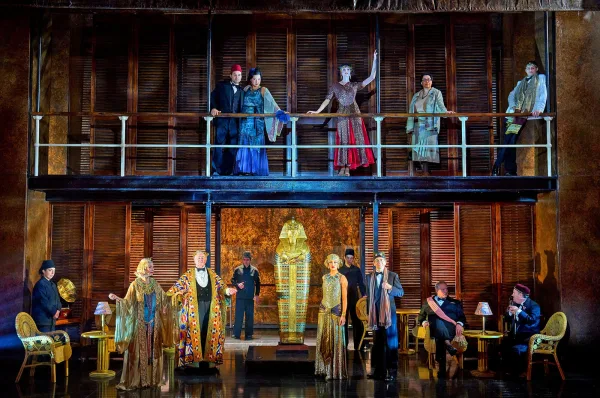
That focus, of course, is the court room, a destination which Miriam Burther’s superb set design allows us to flirt with throughout the fractured narrative. One can imagine Sorkin rubbing his hands in glee when he gets to these scenes, laying bare the cruelty Oscar Pearce's repellent Bob Ewell inflicts on Evie Hargreaves's damaged Mayella. Both give exemplary performances that are, at times, uncomfortable to watch, as Sorkin makes explicit what Lee only hinted at. The tension between the beautiful simplicity of Harper Lee's text and the whip-smart dialogue Sorkin is known for is, for the most part, deftly handled. Only when Ewell spouts textbook white supremacy propaganda, do we teeter close to soapbox Sorkin speaking of today, but it's an anachronistic slip that's easily forgiven.
More problematic is the play's conclusion. The power of the courtroom scenes - the resolution of which I'd best not reveal - is such that the subsequent scenes feel underwhelming. Dylan Malyn, in a remarkable stage debut, is quite brilliant as Dill Harris, the summer holiday friend, but Sorkin doesn't seem to know what to do with the subplot he is involved in. And while the jeopardy that Scout gets caught up in resolves narrative loose ends, Boo Radley's appearance feels more a nod to the novel than something that is narratively important.
Ultimately, the play sits in an awkward place somewhere between a faithful adaptation and a production that focuses on what Sorkin is really interested in. He has a habit of laying it on a little thick at times. In the novel, Dolphus Raymond lives with a black partner, in the play his equivalent suffers the death of both child and wife. In the novel, Mrs Dubose is a nuanced grump, in the play irredeemably awful. And yet, while Aaron Shosanya manages to portray a dignified, resolute Tom Robinson, Sorkin doesn't give him much to work with. Ironically, he is the one character that remains faithful to the novel - a grateful, subservient Black man, and that feels like a missed opportunity.