
Crossing the Line
A visceral reimagining of Mia Fisher’s novel of a young boy seduced through poverty and circumstance into the murky world of drug dealing.

The Norfolk & Norwich Festival has often been criticised for being heavily centred on Norwich, with barely anything taking place in the wider county. However, Norfolk is one of the biggest counties with one of the lowest population densities. Diss is 25 miles from Norwich, Hunstanton twice that in the opposite direction. Great Yarmouth is 20 miles from Norwich, King’s Lynn twice that in the opposite direction. For audiences, coming into Norwich from any of these places is a big commitment. For the festival, putting on an event in regional centres may be unlikely to attract audiences far beyond that town. It is a tricky balancing act for the organisers.
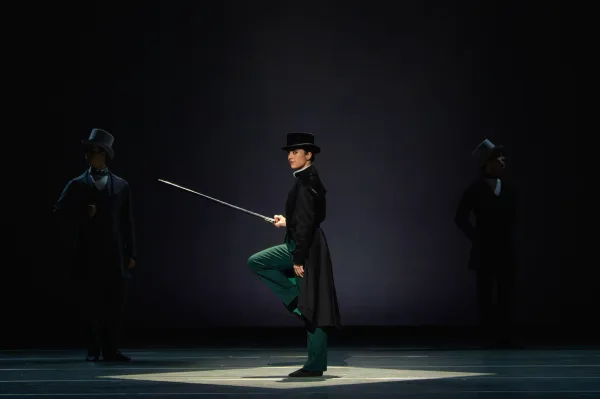
The regional tour of Crossing the Line was, therefore, a welcome commitment to the wider county. Having already been performed in Great Yarmouth, Sheringham and Lowestoft, the production moved on to Diss before its final date at the Norwich Playhouse. Tia Fisher’s novel, written in verse, features on the current curriculum, which perhaps explains why Helena McBurney’s stage adaptation played out in front of a near-capacity audience gathered from local schools. Not that revision would have been uppermost in the audience’s mind for long when confronted by this visceral reimagining of Fisher’s tale of a young boy seduced through poverty into the murky world of drug dealing. Played out with naturalistic dialogue rather than verse, Alex Hardie was able to invest Erik with an adolescent mindset that propels him toward trouble with heartbreaking pathos.

The abiding message of the book and play is that County lines crime — a policing term describing urban drug networks extending into smaller towns via dedicated phone lines — targets school-age children. Vulnerable individuals — perhaps in poverty and bullied like Erik — are mercilessly lured into selling drugs through money, praise and the promise of belonging, via phone-line networks run by organised crime. Shyam Patel instils an unnerving stillness into the head of the criminal gang, crystallising into one character the more diffuse menace of the novel. It is a performance that displays a chameleon-like ability to adapt on stage, where he also portrays Erik’s Tigger-like best friend Ravi, as well as Ravi’s discreetly generous dad. That he does so without confusing the audience is a testament to both his acting and McBurney’s writing. Ralph Prosser acquits himself well as the bully that gets the ball rolling, though his teaching role feels a little underwritten. There is a touching scene where Prosser subtly implies Mr Robinson knows more, and is more sympathetic, than he is telling, but it is not a theme the production chooses to explore. For the most part, it is Rachael Cummins who gets to explore the most interesting aspects of tangled emotional complexity, as her narrative as Erik’s mum weaves together grief, guilt, escape and regret.
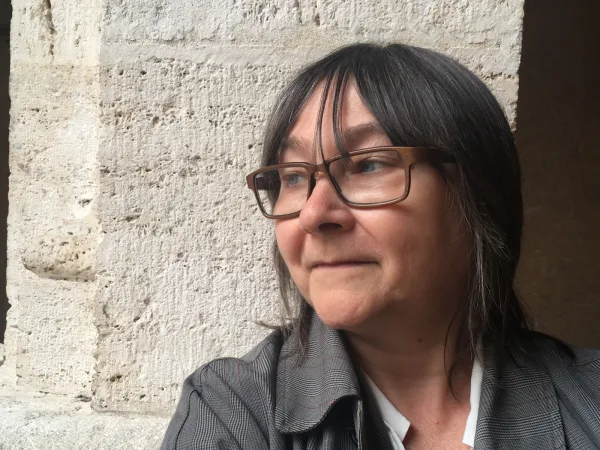
When Erik’s crimes come to a head and his mother asks if it is all her fault, Erik tells her that it is. In that exchange the play crystallises its central tragedy: vulnerable young people can come to see the very people trying to help them as part of the trap they are trying to escape. It is a gap that organisations such as the Norwich-based Joe Dix Foundation, The Children's Society and Safe4Me try to fill, groups that the play — and the Q&A afterwards — unapologetically promote. It was in that Q&A that we got to meet Fisher herself, a passionate advocate for youngsters whom she persuasively argued are modern slaves. Katie Thompson rightly took a bow for directing the play with such energy and pace. The greatest impact, however, was made by the bravery of Adam, who discussed his own past as a drug dealer, and how support and empathy were the key to his escape from it.