

Gary Crosby
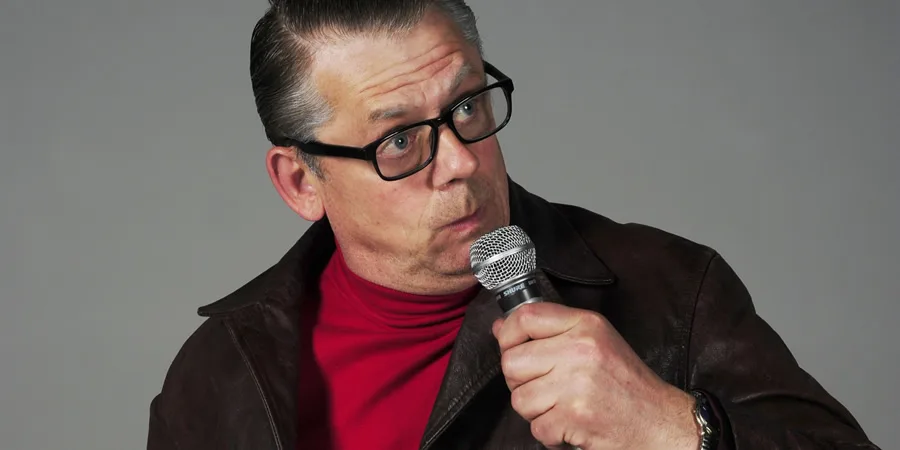
Seeing young jazz musicians under Gary Crosby’s quietly paternal leadership - with a strong presence of women throughout the ensemble - they played with real authority and assurance.
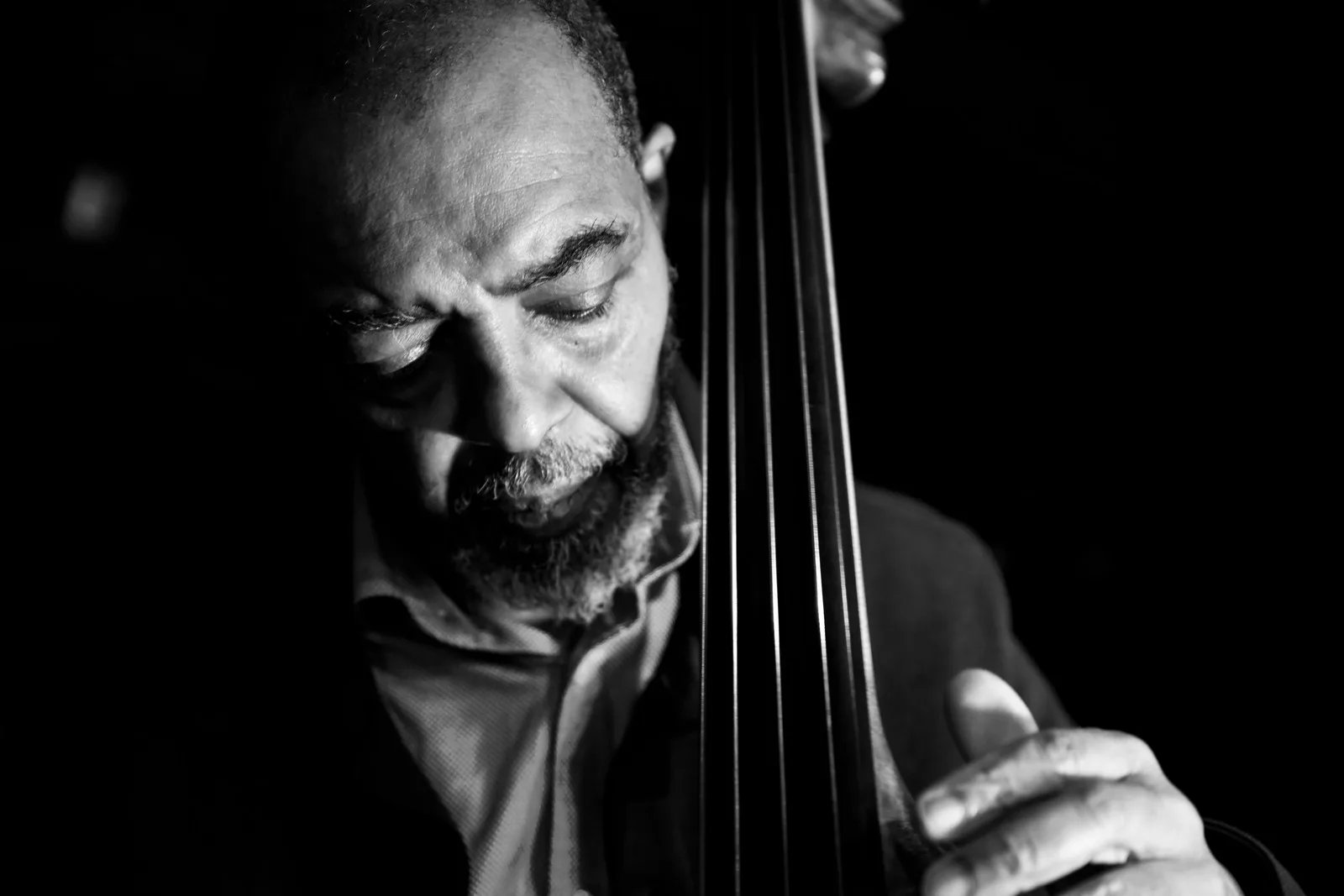
Now, I don’t really know much about jazz at all (beyond a handful of the so-called “classic” records), and even less about the UK jazz scene that emerged in the 80s and 90s, including figures like Gary Crosby, who was performing tonight at the Norwich Arts Centre with the Gary Crosby Sextet.
My first real exposure to jazz was mediated by an ex-boyfriend who listened to Miles Davis’ Sketches of Spain on rotation, but I’ve wanted to see live jazz for years - ever since I was 17, reading Kerouac and trying to force my way into places like Ronnie Scott’s in London and jazz clubs in New York before I was really old enough to be there. So, tonight was a big deal for me.
Charles Mingus was someone I knew more by reputation than sound: praised for his almost unworldly flamboyance, his temper described as brooding, his quasi-mythic bass playing compared to a lightning strike. But I hadn’t really listened to him properly. Tonight finally gave me the chance, with the Gary Crosby Sextet performing Mingus Moves - chosen, Crosby said at the start, simply because “I like it” - alongside other Mingus pieces and work by his close collaborator Sy Johnson.
Having read a few sections of André Marmot’s Unapologetic Expression: The Inside Story of the UK Jazz Explosion ahead of his talk at the N&NF this year, I came across his discussion of Tomorrow’s Warriors - the London-based jazz education organisation co-founded in 1991 by Gary Crosby and Janie Irons, which grew directly out of the earlier Jazz Warriors generation.
In an interview in the book, Crosby stresses the importance of amplifying younger musicians as essential to keeping jazz alive, pushing back against the quiet gatekeeping that can settle around established scenes. As he puts it, “a lot of the older jazz musicians have reached a height and a position; they don't really want anybody else coming in there.”
What struck me most tonight was how that idea played out on stage. The sextet included many young musicians - mostly in their 20s and 30s - and there was a sense of energy, rather than preservation, of music being driven forward rather than held in place. Gary Crosby’s double bass was almost always present, its low pulse running through nearly every piece, often walking steadily underneath the shifting solos and keeping the harmony grounded even when the surface of the music broke apart or thinned out. Most of the other musicians had moments to step forward and then fall back into the texture, but the bass rarely disappeared from view.
After Crosby introduced the three new members of the sextet - the drummer, tenor sax player and flautist/alto sax player - they began, as on the album, with ‘Canon’; a sinuous line that hovers and flickers, the tenor sax leading as if tracing a thread through air. On record it has a hushed, dusty quality; live, it felt vast.

The trumpet cut through like a flare in fog, bright and searching, as though the music was signalling across some immense, unseen distance. In contrast, the drums sat lightly beneath it all, feathered and brushed rather than struck, with a soft, swishing texture that kept time without ever weighing the music down.
Even ‘Opus 4’, with its circling structure and shifting melodic leads, carried that same forward momentum; lines overlapped and collided, runs and trills folding into one another while the rhythm section held everything in a taut current. It felt less like repetition than escalation, phrases building and breaking under pressure. The pianist’s quick movements were striking, hands skimming across the keys with a focused velocity, as though the music was always a step ahead. What stood out just as much was the way the brass ended the piece: instead of a clean recorded fade, they gradually hushed their sound, easing down step by step into a slow, controlled diminuendo.
The high point came with a stark piano-and-flute duet, stripped back from the fuller recording. With bass and drums gone, the sound became exposed, almost architectural. The flute traced slow, searching lines like breath through empty space, while the piano answered in drifting fragments, intimate and charged. It felt ghostly and hypnotic, suspended just outside the room.
By the final section, the instability of the music broke open into a dense, accelerating rush. My attention snapped from player to player in quick succession, like the camera work in Whiplash. Everything felt frantic, kinetic, impossible to hold in a single frame.
Seeing young jazz musicians under Gary Crosby’s quietly paternal leadership - with a strong presence of women throughout the ensemble - they played with real authority and assurance. Mingus’s restless, almost bombastic spirit stayed alive in their hands: not preserved, not softened, but continually re-ignited in real time. I know I will now be listening to Mingus Moves in a more sentimental mood (that’s an Ellington and Coltrane record, right?), hearing it differently after seeing it so fully realised in performance.