
Impulse
I confess to being a tad snooty when it comes to all this memory and movement malarkey, but I was surprised just how much difference it made not having a music stand between me and the players. Free from having to keep sheet music within their eyeline, the artists could express the music more, well, expressively
On the final day of the festival, it seems only fitting that it finally returns to the Theatre Royal. With the opening up of the Hall’s, a return to shows at the Playhouse, the involvement of the Curious Directive venue, and Crossing the Line touring the county, it has felt like it’s opened up this year, as surely as the Festival Gardens has shrunk. Perhaps that will be the direction of travel from now on.
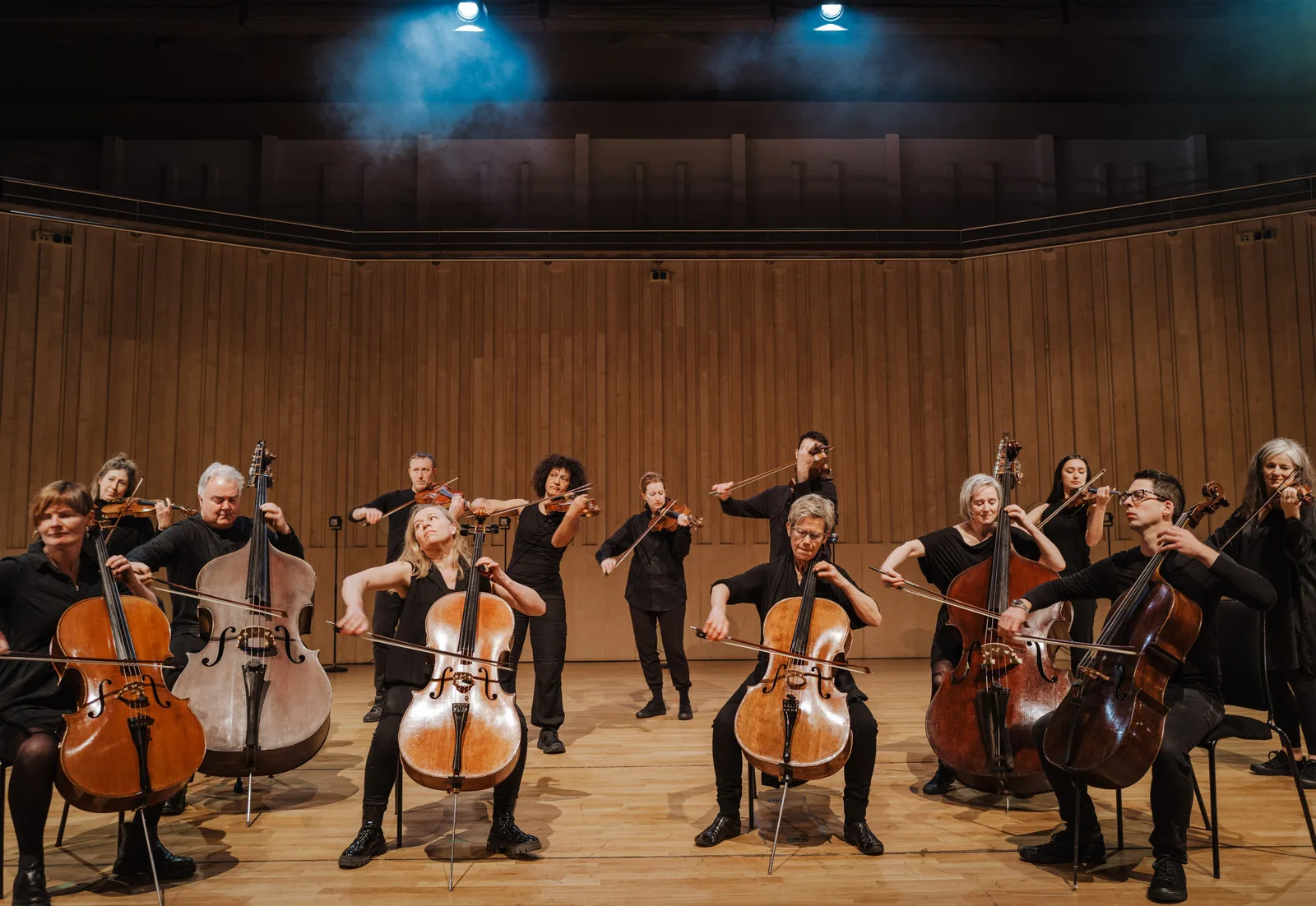
In any event, it was an early start for Impulse: Music in Motion, something that caught a few latecomers out. What a great shame that, as a result, they missed out on the most satisfying exploration of the evening’s central two concepts. The musicians played from memory and moved around the stage while they did so. Before we get into that, however, a word about the Theatre Royal’s acoustics. In the past I’ve been wary of attending classical concerts at the Royal because I’ve always found it an unsatisfactory experience. Yet throughout the Scottish Ensemble, I was impressed by the clarity of the sound produced. For once, I was up in the circle, so perhaps the sound floats up there - but note to self: next time it’s classical music, I need to make sure I’m upstairs.
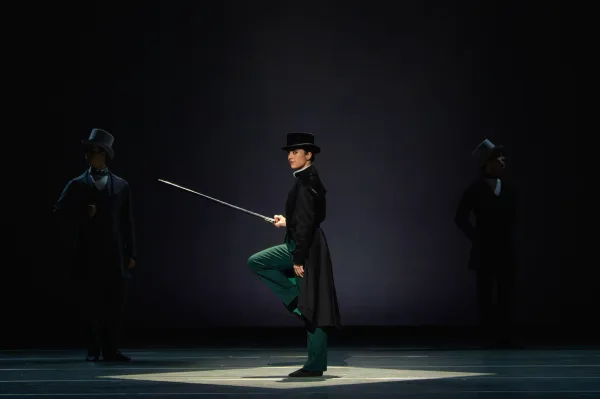
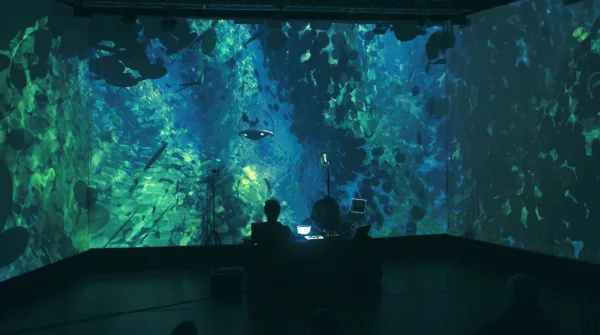
The first half of the evening was Shostakovich’s Chamber Symphony, arranged by Rudolf Barshai. I don’t know the piece well enough to judge how much it had been tinkered with, but combined with lighting from Albin Akerman and choreographed movement from Orjan Anderson, there’s no denying the dramatic synergy on stage. I confess to being a tad snooty when it comes to all this memory and movement malarkey. I simply don’t know how difficult it is for a professional musician to memorise a fairly well-known piece of music. Is it harder, for instance, than learning the lines of Hamlet, or a stand-up poetry recital, or the title role in Wagner’s Tristan und Isolde? And if it is, and is deserving of at least an appreciative nod, what does it matter to me, in the audience, that the musician already knows it?

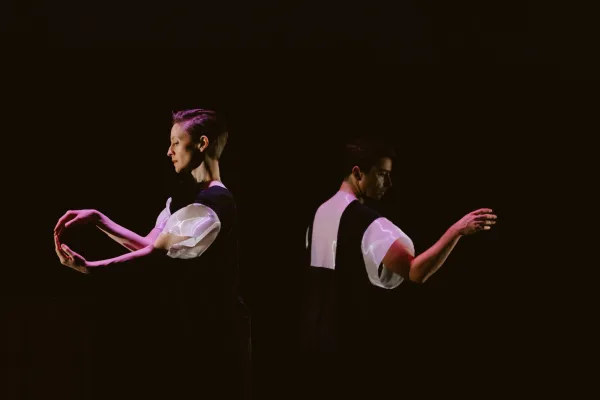
On that count, the evening did provide an answer. I was surprised just how much difference it made not having a music stand between me and the players. I also got the sense that, free from having to keep sheet music within their eyeline, they could express the music more, well, expressively. Twisting and turning as the music took them, perhaps in the way they do when practising at home when no one is watching. Twisting and turning is one thing, of course, but the elephant, if not in the room then on the move, was how much overt choreography added to the music. Anderson had the musicians charging about all over the place during the Shostakovich, and I remain unsure whether this really worked. I will say it held my interest, turning his music into something akin to a Bernard Herrmann film score, with violinists skittering back and forth, huddled conspiratorially around a nexus of violas, or playing musical chairs as the cellists and double bassists performed. There may even have been a narrative woven into the fabric of the performance, though it was something I sensed rather than understood. It was diverting, frequently inventive, occasionally silly, and sometimes just plain odd.
The staging for Tchaikovsky’s Serenade for Strings was altogether more traditional. Jonathan Morton took his violin for a walk around the other musicians, and there was occasional gadding about, but for much of the performance the musicians gently swayed in a loose semicircle. Granted, the music is known for its graceful melodies and famous waltz - during which the musicians did sort of waltz - but there was less overt dramatisation. The irony is that, had I seen this first, I’d have admired the modest movement. But having experienced the drama of the Shostakovich, I found myself waiting for the next set piece that never came, as if, waltzing aside, Anderson didn’t quite know how to fit the concept of movement to Tchaikovsky.
The obvious solution, to my mind, would have been to swap the pieces of music. In isolation, the Tchaikovsky would have impressed, only to be topped by the drama inherent in the Shostakovich. A more satisfying dramatic arc would have carried the evening to an altogether more satisfying conclusion. That said, this was an engaging and expertly delivered evening of two works of contrasting mood and tone. I can’t say I’m completely convinced how much added value the movement brought to the party, but I did enjoy the freedom of expression that playing from memory gifted the performers