
Triffids
For the most part, this was an imaginative, energising and wonderfully original approach to a literary classic.
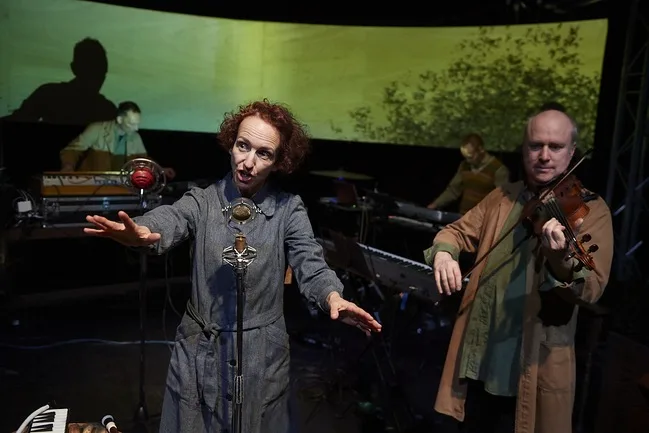
I’ll admit to some trepidation at seeing a production described as gig-theatre. In the past I’ve found shows under this banner too often fall between two stools. The music tends to be mediocre at best, and too often serves to buttress a thin narrative that otherwise doesn’t deliver. Fortunately, Platform 4 avoided this trap, presenting music that felt more like tone poems than toe tappers, and an impressionistic text that grappled around the edges of John Wyndam’s classic sci-fi story, rather than diving in.
In the program notes, Artistic Director Catherine Church speaks of the prescience of the show in a post Covid world. I dare say she would double down on that now, with the crisis in Ukraine further pounding our sensibilities. Wyndham’s post-apocalyptic novel unusually posits not one, but two, largely unrelated cataclysms, coming together to bring civilisation to its knees. If that isn’t prescient, it’s hard to imagine what is. In Wyndham’s world, it’s not enough that the whole world’s gone blind; it also has giant, man-eating plants to contend with, which is a lot of plot to cram into a show lasting a little over an hour. Wisely the company opted to give an impression, rather than an adaptation, of the novel. Those primed with a working knowledge of the source material, will have picked up on specific scenes, not least the utter grimness of Wyndhams’s text that has previously been air-brushed out of more sanitised adaptations. But this was more about getting across his big ideas – population growth, genetically modified food, straightforward hubris – rather than slavishly adhering to his text. Most notably, the main protagonist has changed sex, which was something I barely registered, until the penny dropped that as a consequence, the production were able to drop the book’s dubious take on women, something noticeable by its absence.
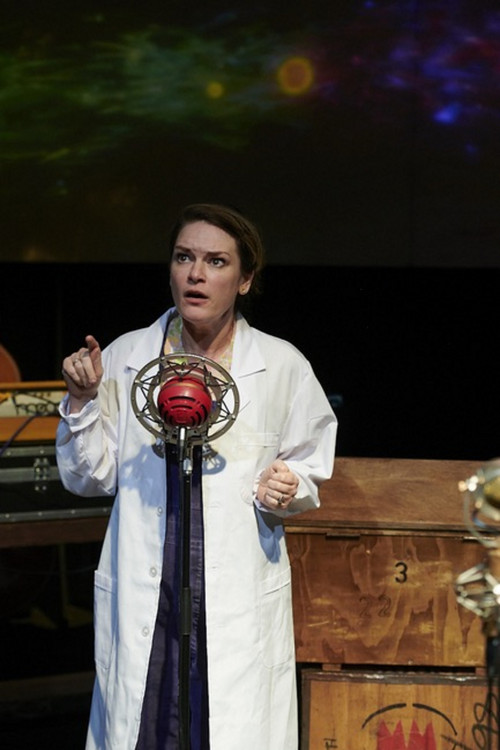

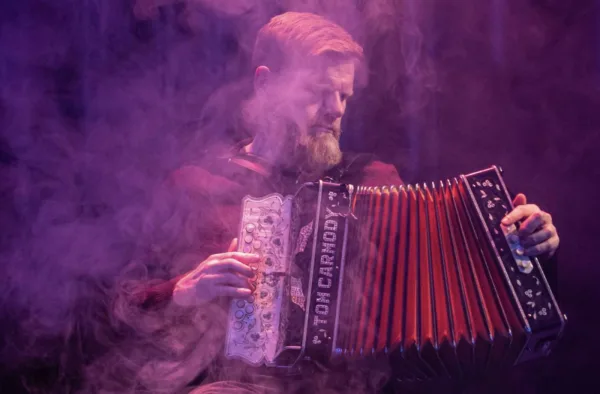
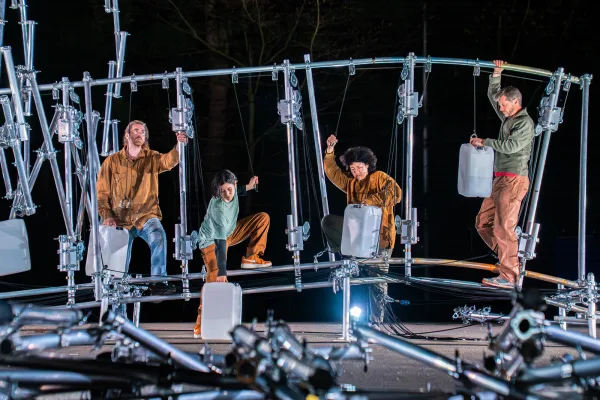
The closest we get to Bill Masen is the narrator, played with an unnerving intensity by Jill Dowse. With the help of Catherine Church, she does most of the narrative’s heavy lifting - together they are a charismatic and arresting duo. Imagine a youthful Brenda Blethyn and Anneliese Dodds on stage together and you’d be getting the idea of the interesting dynamic between them. Joining them, while playing a bewildering array of instruments were Matt Tarling (violin and cactus), Laurence Hunt (piano and synth) and Jules Bushell (Theremin and double bass). Collectively they combined to offer up a collage of musical styles and impressions, ranging from full on Acid House beats to a haunting melody reminiscent of Vaughan Williams’s The Lark Ascending. Throw all manner of audio clips into the mix and a powerful visual backdrop and it all amounted to a hugely enjoyable immersive treat.
Comparisons with Jeff Lynne’s War of the Worlds are unavoidable – after all, Wyndham was influenced by the HG wells novel - but frankly, they otherwise have little in common. To my mind the mix of spoken word, found audio and accomplished musicianship was closer in texture to the dense, layered content of Stackridge’s Mr Mick or Audioporn’s Tank. They also managed to make sense of the novel’s anticlimactic ending, which I recall so disappointed me when I first read it. Here, far more successfully, the company managed to create an elegiac mood of loss and regret, to the extent that skulking off to the Isle of Wight made perfect sense.
There were some issues with sound balance on the night. The Teremin tended to drown out the violin, while the clarinet occasionally got lost in the mix. There were also moments, despite the relatively modest running time, where the pace dropped a little. I got the sense, though, that these were teething troubles – this was, after all, only the second night of the run – and nothing that couldn’t be sorted out with a little tinkering. For the most part, this was an imaginative, energising and wonderfully original approach to a literary classic.