
Midsomer Murders
Having entered the theatre worried this show might not be for me, I left after one of the most unexpectedly enjoyable evenings at the Theatre Royal for quite some time
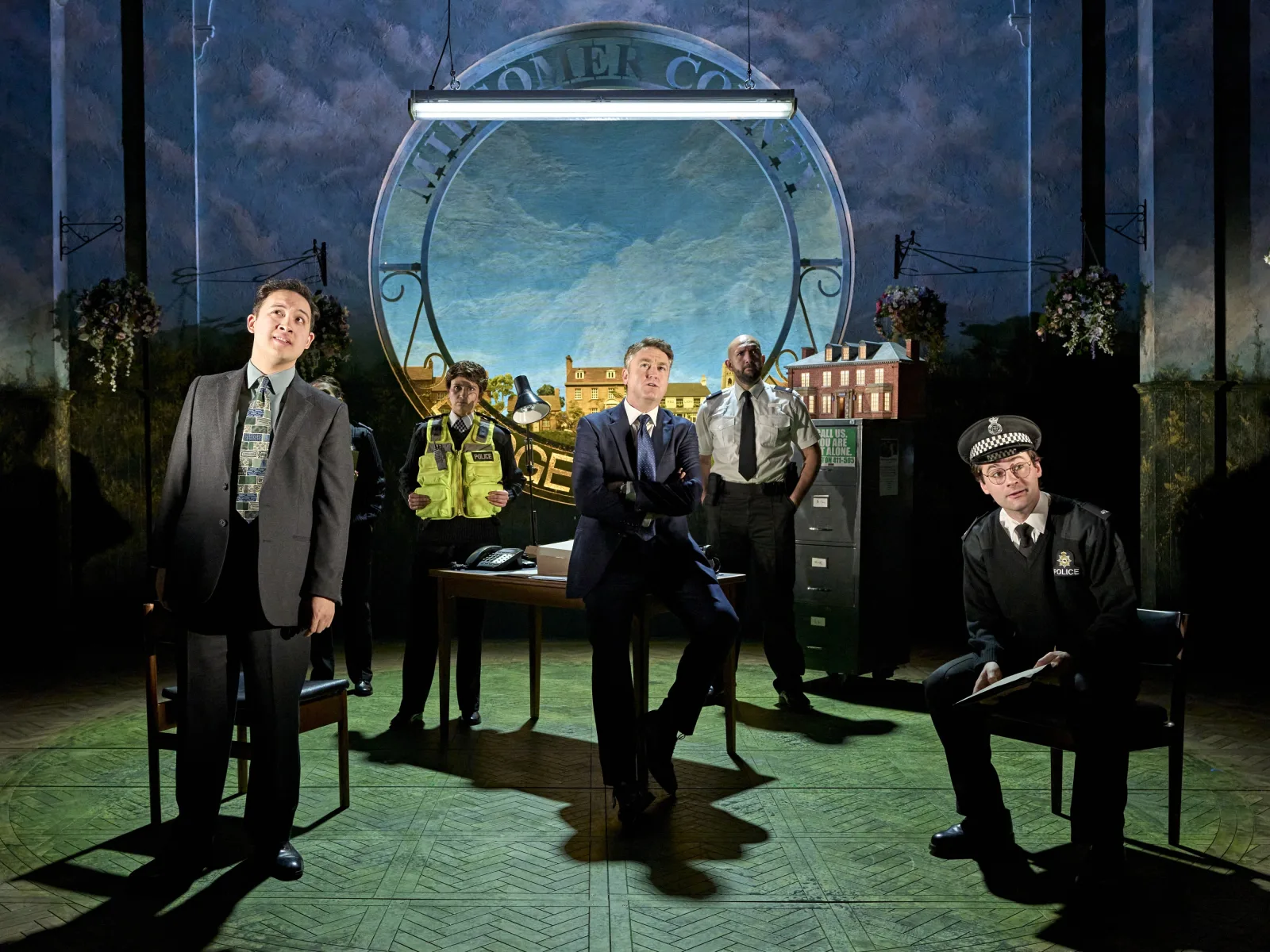
Midsomer is well known as the most dangerous village in Britain, the fictional setting for over four hundred murders in the thirty-four years since John Nettles starred as Inspector Tom Barnaby in the first adaptation of Caroline Graham's novels. I've neither read Graham's novels nor seen a single episode of the television series, something which, judging by the palpable pre-show hubbub of expectation, put me in a tiny minority of patrons who didn't know what was going to happen next. Audience familiarity with the plot of Badger's Drift was what, I imagine, led writer and director Guy Unsworth to camp up the production, in a balancing act that had fans of the series laughing with, rather than at, it. For the half-dozen or so who were less familiar with what was going on - indeed, what was about to go on - he also managed to inject enough intrigue to keep the partners of fans genuinely engaged, and that was no small achievement.
When Daniel Casey, the actor who played sidekick Sergeant Troy in the TV version, joined the roster of talent involved, it must surely have been mooted that the character might simply have been promoted. Instead, it was Casey who was promoted, heir apparent to the lead role of Chief Inspector Tom Barnaby, filling the shoes vacated by John Nettles. As I'm not privy to how big those shoes were, I can only say Casey did a fine job of portraying the centre around which the Midsomer world turned. Along with the newly minted Troy, played with puppyish enthusiasm by James Bradwell, Casey was afforded the luxury of staying in character throughout the evening, which was more than can be said for the hard-working ensemble that surrounded him.
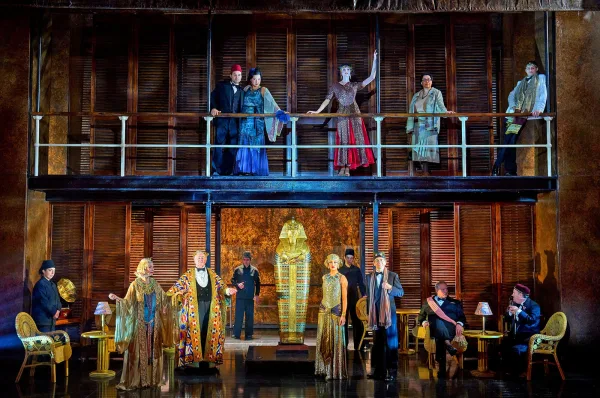
A cast of several inhabited multiple additional roles, sometimes switching characters while performing, lending proceedings an arch, tongue-in-cheek flavour, fully aware of the absurdity of the play's premise, yet never tipping over into deconstructing the conventions within which it operated. There was fun to be had simply trying to work out the true size of the cast, so great was their chameleon-like ability to change character, age, and even gender. John Dougall had a great time vamping it up as Iris Rainbird, a grotesque but nonetheless alarmingly convincing turn reminiscent of a malevolent Dame Hilda Bracket. Even more improbably, Chandrika Chevli played both Barbara Lessiter and Dickie Whiteley at the same time, in a cheeky scene that nodded to the overtly theatrical nature of the performance.

This was writer and director Guy Unsworth's masterstroke: leaning into the artifice of live performance. None of the actors knowingly undersold their characters, but in the context of such a preposterous plot, the heightened acting of all concerned seemed entirely appropriate. Barbara Lessiter seemed to have stepped out of Abigail's Party, while Julie Legrand's version of Lucy Bellringer was surely inspired by Joan Hickson's Marple. Who knows where Rupert Sadler got his inspiration for the creepy Dennis Rainbird, but his scene-stealing, squeaky-wheeled tea trolley deserved a credit of its own. With Nathalie Barclay completing the group of supporting players, there wasn't a weak link in the chain. If anything, it was Daniel Casey who sometimes looked a little short-changed by the script. Constrained by Barnaby's USP - he was a detective without a tortured backstory - Casey had to largely play it straight while all around him the cast were clearly having a whale of a time.
Plaudits aplenty were also due to David Woodhead for his brilliant set design. The TV show relies on the bucolic charm of the Chilterns and the Thames Valley setting, which he couldn't hope to compete with. Instead, we were treated to all manner of technical wizardry, as sets and performers glided into place before being whisked off again, sometimes with a knowing wave, lending the evening a brisk urgency that allowed the plot to drive forward. This is worth emphasising. So often, when shows are written and directed by the same person, they drag on - the auteur unwilling, or simply unable, to see the flab that needs trimming. Not so here. Despite the ominous runtime, the plot hurtled along, with time flying by as one set piece followed another.
Not that the plot was something to take too seriously. As is often the way with murder mysteries, there was little detecting going on, with exactly whodunnit determined largely by who was left alive after an evening of carnage that never let something as tiresome as logic stand in the way of a gruesome vignette. As the recent leaden production of Inspector Morse demonstrated, a stage adaptation of a TV show is a very difficult thing to pull off, yet Guy Unsworth proved it could not only be done, but done in a way that honoured the source while not being afraid to reinvent it. Having entered the theatre worried this show might not be for me, I left after one of the most unexpectedly enjoyable evenings at the Theatre Royal for quite some time, having watching a performance that was a joy from start to finish.