Inspector Morse - House of Ghosts
Actors, directors and backstage crews work just as hard, perhaps even harder, when things aren’t working out, and I take no pleasure in finding fault. However, whatever the reason, the play was a disappointment
Theatre Royal
A stage adaptation of a TV show that is itself an adaptation of a series of novels was never going to promise more than a bit of harmless fun, so opening on a classic monologue from Hamlet was an impishly cheeky manoeuvre. Performed with eloquence and clarity by Spin Glancy for just long enough for the audience to question whether they’d turned up on the wrong night, it was only when Eliza Teale’s Ophelia/Rebecca keeled over that we were on firmer ground.
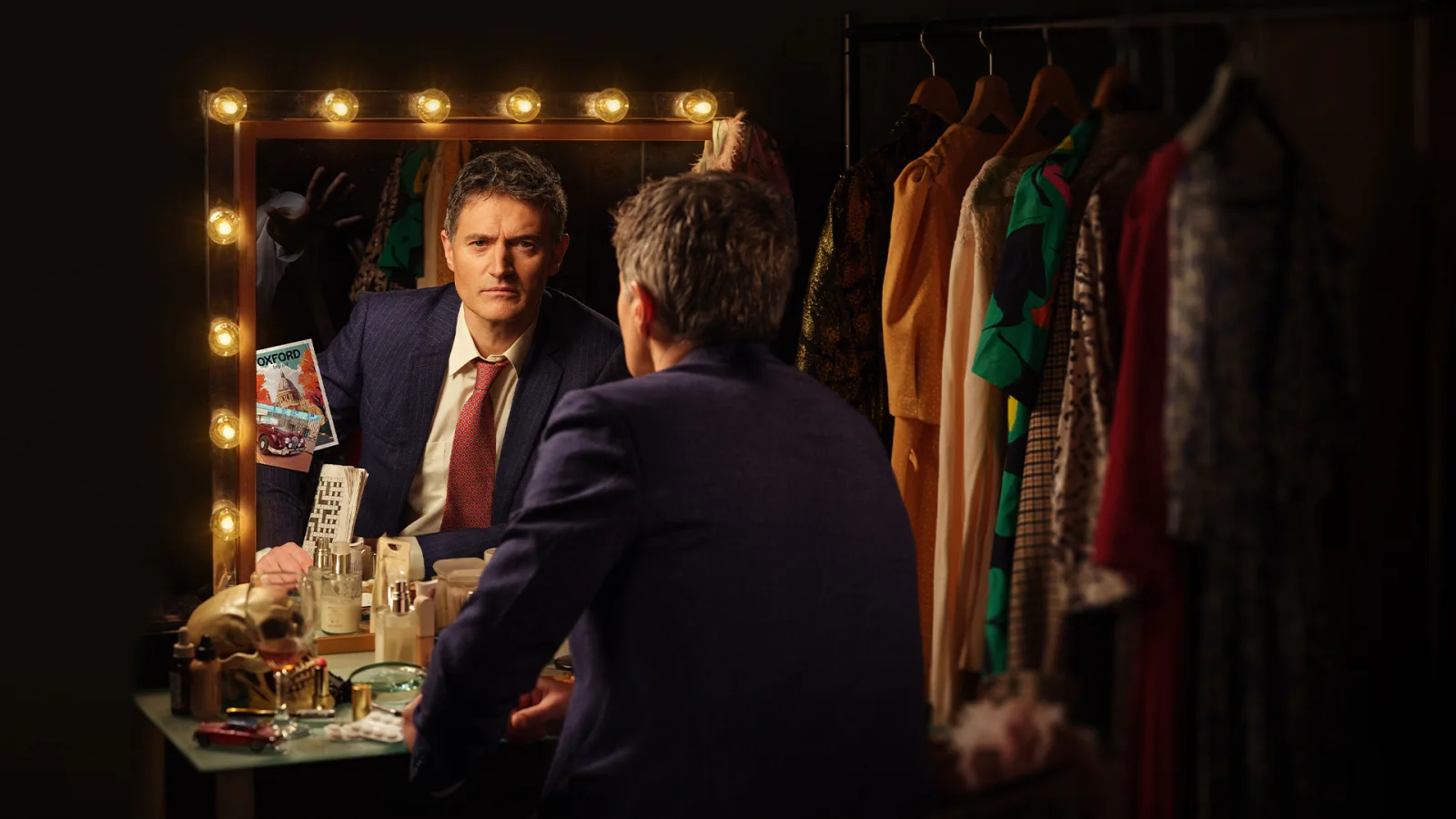
Those of us in the circle were deprived of Morse’s grand entrance – wouldn’t it have been fun if he had shouted down over the railings – but nonetheless the fourth wall was resolutely broken when Tom Chambers clambered on stage and ordered the house lights up. This was an ingenious way to legitimise a stage appearance of a TV detective, and I only wish it had been exploited further. Sadly, the moment quickly passed; the stage was reset so that the audience was now looking out over a space that was no longer the Theatre Royal, the fourth wall firmly back in place.
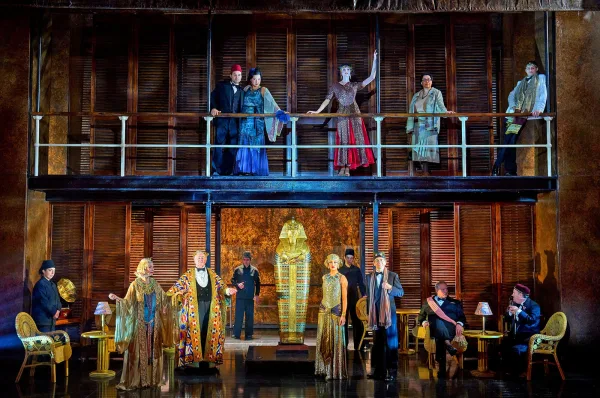
What followed was a whirlwind of scene changes as we visited backstage, a police interview room, a dressing room, a church service, a park bench. It was achieved with a deft swiftness that allowed the action to flow, but left little time for characters to develop beyond archetypes. Alma Cullen was best known for her TV scripts, and it shows in a two-hour play that cuts from scene to scene in a way we are used to on screen, but feels rushed on stage. The text could so easily – barring that opening – have been an episode of Morse, given its tempo and tone.
It wasn’t on TV, however, and perhaps that goes some way to explaining the performances that were delivered. Actors playing actors is always a tricky balancing act. Are we watching an overblown performance or a keenly observed portrait of a ham? Both Charlotte Randle, as the alcohol-fuelled Verity, and Robert Mountford as the monstrous director Lawrence give large performances that frequently lapse into caricature, which was fine if not for James Gladdon’s altogether more nuanced Freddy. At times it felt as if Freddy and Justin were in a different play from Verity and Lawrence, something the (real) director Anthony Banks should have attended to.

Far more troublesome, however, was the central performance by Tom Chambers. No one was ever going to escape the long shadow cast by John Thaw, but this was a mannered, stilted stab at a character so well defined by Thaw that his struggle was palpable. In the prequel Endeavour, Shaun Evans solved the problem by effectively reinventing the character, while Sean Rigby did a great job of channelling James Grout. Chambers managed neither, his gurning excesses falling embarrassingly between two stools. Instead we got a half-hearted impression that was neither accurate nor reimagined. Far more sensibly, Tachi Newall dispensed with Kevin Whately’s efforts entirely, his Mancunian Lewis a brasher, more robust and occasionally combative sidekick to Morse. Once again, these contrasting approaches call into question Anthony Banks’s grip on the play’s tone.
Minor quibbles include a stage set that revealed actors and scenery being readied for appearance in the wings. Was this a bold statement about the artifice of live theatre, or just that no one checked the sightlines for those of us seated to the right-hand side of the auditorium? The reappearance of the same actor in a different role was a confusing economy that suggested more than it delivered. The concluding reveal managed to be both predictable and implausible and was delivered in a garbled hurry.
Teresa Banham, playing the woman who once occupied Morse’s academic affections, brought a welcome naturalism to her performance. Olivia Onyehara did her best with Harriet, a character whose motives and inclusion remained a mystery. It was Onyehara’s struggle with her ill-fitting role that begged the question of who was to blame for this troubled production. It must be hard for an actor to deliver a poorly written line or inhabit a poorly conceived character. How does a director draw consistent performances from a cast when the characters appear to inhabit different worlds?
After all, this is not the first time Tom Chambers has been directed by Anthony Banks in a production that came to Norwich. In 2010, Chambers starred in Dial M for Murder, a play I described at the time as “fun, wildly improbable and hugely entertaining”, so the pair of them have form when it comes to getting things right. On that occasion, Banks encouraged his cast to poke gentle fun at a plot that creaked, and they did so to great effect. I wonder if everyone just took House of Ghosts a bit too seriously, rather than simply having fun with it. Actors, directors and backstage crews work just as hard, perhaps even harder, when things aren’t working out, and I take no pleasure in finding fault. However, whatever the reason, the play was a disappointment, something that is thankfully a rare experience at the Theatre Royal. If I took one positive away from the evening, it was a greater appreciation of when things do work on stage, and how elusive the alchemy of success can be.