
2:22 A Ghost Story
This is a ghost story, not a horror story, with an uneasy atmosphere of impending doom. The play is handsomely staged, with subtle but effective use of sound and lighting. Along the way we get red herrings, misdirection and tension-busting humour. Robins even lobs in class-conscious social commentary into the mix.
Theatre Royal
I was first introduced to Danny Robins via his excellent podcast The Battersea Poltergeist, followed up with, of course, Uncanny. I was surprised he had written a smash-hit, award-laden West End show as a consequence, and further surprised to learn I had things the wrong way round. His dalliance with the supernatural began with research for the play, which only subsequently turned into podcasts, such was the wealth of material gathered. Either way, his familiarity with the genre is evident throughout 2:22, a ghost story that is indebted to classics of the form, while managing to put a pleasingly new spin on an age-old formula.
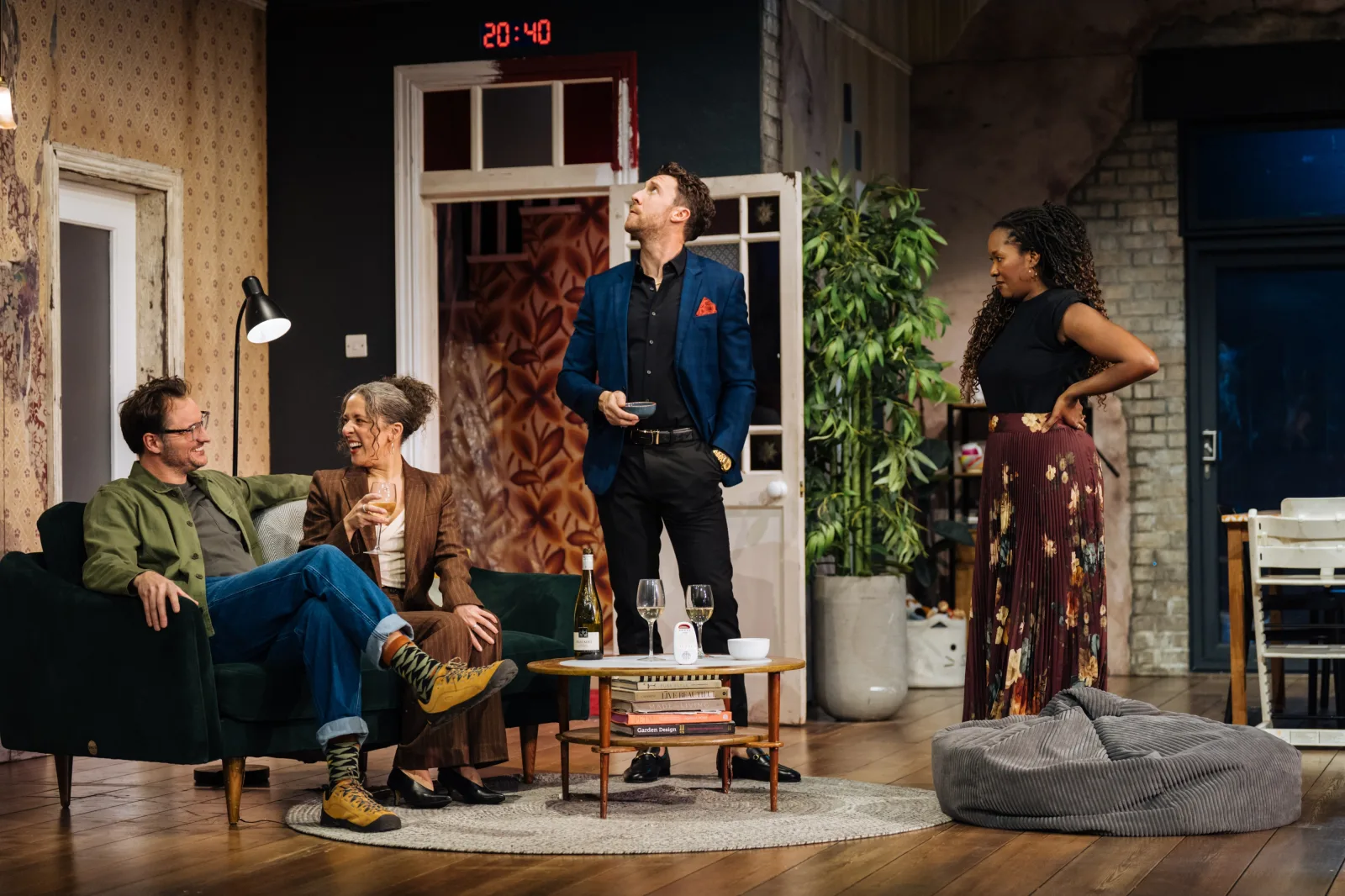
After a couple of years in the West End, boasting a headline-grabbing cast, it has toured relentlessly – this is the second time it has come to Norwich. A four-hander, set in the open-plan living room of a gutted Victorian house, the play is as much about – perhaps more about – fractured relationships as it is ghostly happenings. What you don’t get, and shouldn’t expect, is a terrifying experience. In its structure, tone and denouement, the play follows the classic template forged by the likes of M. R. James and Robert Aickman. As it says on the tin, this is a ghost story, not a horror story, and therefore anyone expecting to be continually fearful will be sorely disappointed. Rather, there is an uneasy atmosphere of impending doom in this shaggy dog story that the audience are willing to indulge so long as there’s a payoff. The play is handsomely staged, with subtle but effective use of sound and lighting, and along the way we get red herrings, misdirection and tension-busting humour. Robins even lobs in class-conscious social commentary into the mix.

If I have misgivings, they are in the delivery. This was the first night of the Norwich run, and early on in the 2026 tour, so perhaps I should cut the cast some slack, but the evening lacked clarity and definition. It was telling that Grant Kilburn, who delivered the strongest performance, was the one cast member well practised in his role, having played Ben during the first leg of the tour. Shvorne Marks injected energy into the beleaguered Jenny, and James Bye was suitably smug as the sceptic in the room, but they lacked the chemistry required to portray a quarrelling couple. Most problematic was Natalie Casey’s overwrought Lauren, a character who got drunk too quickly and then had nowhere to go. None of them were poor actors – as the tour continues I can imagine all of this being ironed out – but the effect was to require concentration just to discern Robins’s dense script, rather than being able to sit back and enjoy it. As events unfolded, Ben and Sam jousted over probable causes, no doubt mirroring Robins’s own vacillation, while their respective partners despaired at their fracturing relationships. They may have been little more than archetypes, but Robins nonetheless deserves credit for carving out four individual personalities, each of them reacting to the situation they find themselves in in a way that is credible and distinct. It was just a pity the actors didn’t seem to comfortably inhabit those archetypes.
So just what is that situation? At the end of the play the audience is asked to keep the ending a secret, but to my mind the same restriction should apply to much that has gone before. The greatest pleasure to be gained from the play is its ability to take the audience by surprise, and that’s not something to be lightly squandered. It’s fair to say – as it happens in the first few minutes – that a disturbing sound of footsteps is heard by Jenny in the middle of the night. Frustrated that her husband refuses to take her seriously, she convinces him, and their dinner guests, to hang around long enough to hear a repeat performance. What happens next is what one might expect from a group of people waiting to be scared out of their wits – bickering, home truths, disagreements, the odd laugh, and the occasional inexplicable phenomenon.
This sort of play is a notoriously difficult thing to pull off. It obviously needs to have surprises, but these should be delivered without seeming to cheat. The key is to offer up an ending we haven’t worked out beforehand, but one we really think we should have. To that extent, Robins does manage a pleasing twist, and in hindsight he played fair, scattering clues throughout the performance. In an age of wall-to-wall musicals, it was still a pleasure to see a play, misgivings notwithstanding. I have a hunch that the cast will settle down and it’s simply Norwich’s misfortune that the production didn’t arrive at the Royal later in the tour.