

The James Plays @ Theatre Royal
I left wishing it could go on longer.
It’s not an easy sell, nine hours of plays about the 15th Century Scottish kings. Rona Munro’s cycle of three plays tells a story of Scottish history spanning 60 years. That’s an entire day spent in the theatre watching men in kilts waving swords and shouting about the Earl of Douglas – and I was surprised when I left wishing it could go on longer.
James I: The Key will keep the Lock is the most traditional of the three, a straight history play in the Shakespearean mould. It tells the story of a young king, held prisoner in England all his life, trying to establish peace amongst suspicious Scots and please his new wife. Blythe Duff, Taggart’s Jackie Reid, stand out as a powerful woman controlling her wild sons, directing the course of Scottish history with a flare of her nostrils.
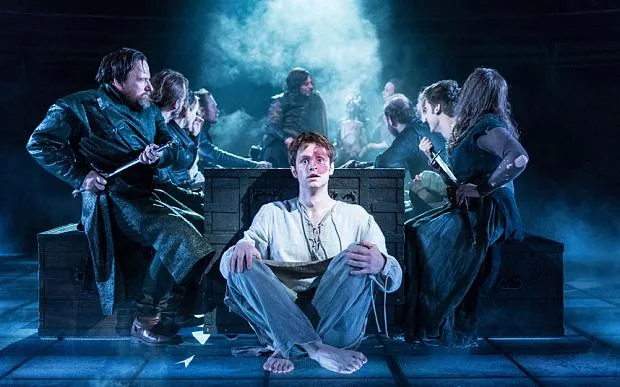
As we reach the second play, James II: The Day of the Innocents, the tone shifts. This is more of a psychological drama, in which the young king’s nightmares emerge from clouds of smoke before us, drenched in blood. Andrew Rothney plays James from frightened child to adult king, and it’s hugely impressive to watch him inhabit both. Rosemary Boyle, meanwhile, gives her first professional stage performance as the fragile French queen, in a debut that marks her out as an actress to watch.

Following two such heavy plays, James III: The True Mirror is a breath of fresh air. A comedy about a self-absorbed king uninterested in parliamentary affairs, you’ll know whether or not this play is for you as soon as the lights come up on a bagpiper performing Lady Gaga. With this shift in tone, and with the cast kitted out in modern day clothes, this third play feels slightly disconnected from the rest – but after the amount of serious history we’ve already watched, that’s a relief.
Jon Bausor’s set is dominated by a huge sword rammed into the ground, while a drawbridge and long staircase allow for armies to charge onstage. Cleverly, he seats a portion of the audience up there with them, and they become part of the performance, constant reminders of the precarious position of these kings who are constantly being watched and judged on their performance.
No history play can escape the shadow of Shakespeare, and The James Plays wisely don’t try. In fact, Munro even presents her own variation on his heroic Henry V, presented here as a tyrant, bullying the captive King James. Shakespeare’s histories famously dramatised the way that England sees itself, and it’s fascinating to see Munro attempt to do the same thing for Scotland; her characters constantly attempt to describe what it is that their country represents and what it could be. These speeches are occasionally aimed a little too directly at the watching audience, but they’re a small price to pay for a theatre event that remains with you long after you finally stretch the numbness out of your legs.