

Life and Times - EP: 1 // NNF, The Playhouse - 21.05.13
The result is divisive. I found myself intrigued and amused at points, at others I was shifting in my seat.
The genesis of 'Life and Times' is as follows; two directors (Pavol Liska and Kelly Copper) interview one of the members of their theatre company (Kristin Worrall) about her life story. Worrall excavates the minute detail of her life and one phone-call turns into ten, leaving the directors with over sixteen hours of recorded audio which they decide to turn into an epic show. Leaving none of the material out means that 'Life and Times' currently has five separate episodes, at a running time of twelve hours so far. It's such a simple concept, turned into a show that is simple yet strange by turns.
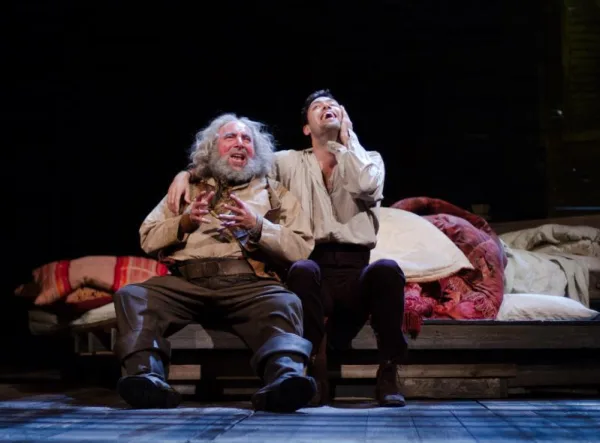
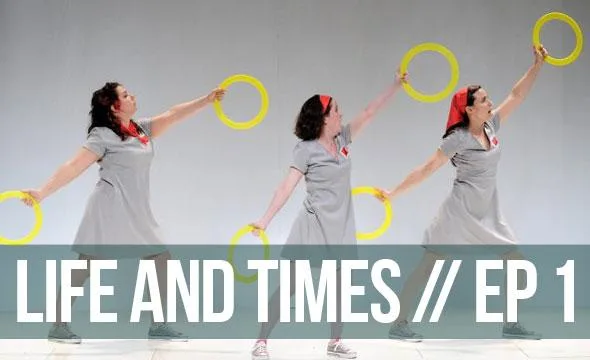
Each episode uses a different genre and execution. I attended Episode 1 and the performance was billed a 'communist musical'. The libretto is the full text of Worrall's first conversation, sang verbatim by a cast of six dressed in grey and red uniforms, accompanied by musicians on piano, flute and ukulele. Every 'um' and 'like' were sung with equal gravity. The movements were stylised and repetitive, (bobbing up and down, making tiger claws at the audience) the singing was rough round the edges at times. There are moments of comedy from this delivery and the conviction of the cast, whether singing a heartfelt torch song to a story Worrall wrote in kindergarten ('The Lonely Owl') or a screeching dramatic chorus describing Worrall wetting herself at school.
Many of the themes rang true for me, for instance the way we are prone to mythologise our own childhood, to self aggrandise and dramatise our experience, very relevant in an age of Facebook statuses and twitter updates! The show also reminded me of the common points in most western childhoods. When the cast sang about Worrall creating a band with her brother and sister I was reminded of the band my best friend and I set up at the same age and how we still gleefully launch into our theme song at parties!
However, this is not easy theatre, an entertaining evening for its own sake. Liska and Copper have set out to challenge and provoke the audience through their show. The length of the it (Episode 1 is roughly three and a half hours), the digressions within it and the repetition of material are a natural result of the original phone-call and can either be seen as an eccentric and teasing way of expressing the themes of memory or as frustrating and indulgent. The result is divisive. I found myself intrigued and amused at points, at others I was shifting in my seat. Ultimately however, I was glad I went to a show that made me examine my own ideas about what theatre can and should be. I may not have come to a conclusion yet, but it certainly got me thinking!
Louisa Theobald

The genesis of 'Life and Times' is as follows; two directors (Pavol Liska and Kelly Copper) interview one of the members of their theatre company (Kristin Worrall) about her life story. Worrall excavates the minute detail of her life and one phone-call turns into ten, leaving the directors with over sixteen hours of recorded audio which they decide to turn into an epic show. Leaving none of the material out means that 'Life and Times' currently has five separate episodes, at a running time of twelve hours so far. It's such a simple concept, turned into a show that is simple yet strange by turns.
Each episode uses a different genre and execution. I attended Episode 1 and the performance was billed a 'communist musical'. The libretto is the full text of Worrall's first conversation, sang verbatim by a cast of six dressed in grey and red uniforms, accompanied by musicians on piano, flute and ukulele. Every 'um' and 'like' were sung with equal gravity. The movements were stylised and repetitive, (bobbing up and down, making tiger claws at the audience) the singing was rough round the edges at times. There are moments of comedy from this delivery and the conviction of the cast, whether singing a heartfelt torch song to a story Worrall wrote in kindergarten ('The Lonely Owl') or a screeching dramatic chorus describing Worrall wetting herself at school.
Many of the themes rang true for me, for instance the way we are prone to mythologise our own childhood, to self aggrandise and dramatise our experience, very relevant in an age of Facebook statuses and twitter updates! The show also reminded me of the common points in most western childhoods. When the cast sang about Worrall creating a band with her brother and sister I was reminded of the band my best friend and I set up at the same age and how we still gleefully launch into our theme song at parties!
However, this is not easy theatre, an entertaining evening for its own sake. Liska and Copper have set out to challenge and provoke the audience through their show. The length of the it (Episode 1 is roughly three and a half hours), the digressions within it and the repetition of material are a natural result of the original phone-call and can either be seen as an eccentric and teasing way of expressing the themes of memory or as frustrating and indulgent. The result is divisive. I found myself intrigued and amused at points, at others I was shifting in my seat. Ultimately however, I was glad I went to a show that made me examine my own ideas about what theatre can and should be. I may not have come to a conclusion yet, but it certainly got me thinking!
Louisa Theobald