

Rambert: Life Is A Dream
Life is a Dream is not for the unimaginative. The performance played with the concept of realism, crossing between what appears to be different dimensions and at times entering a parallel universe. The piece was based on a Spanish play of the same name from the 1630s. It tells the story of a fictional Polish prince who had been imprisoned since birth. His father, the king, lets him out for a day, but the Prince unleashes his rage onto the world and goes on a rampage. The king then persuades him that everything he had experienced in the real world had been a dream, which forms the basis for most of Brandstrup’s haunting masterpiece – the Prince is left in his cell to wonder what is real and what is not.
In the first section of the performance, one can practically touch the thick atmosphere of confusion and chaos created by the thrilling musical piece and the high-energy movements of the dancers on stage. We are very much in the character’s mind throughout this segment, as Bandstrup has created an illusory world that exists purely through his perception of memories. The inconsistency of the fluidity and speed of the piece – with some sections being slow and flowy and others with panicky, strong music and movements – highlighted the way reality changed according to the character’s emotions and sense of self. Bandstrup’s choice of music from composer Witold Lutoslawski really complemented this segment and brought out the chaos that comes with discerning fantasy from reality.
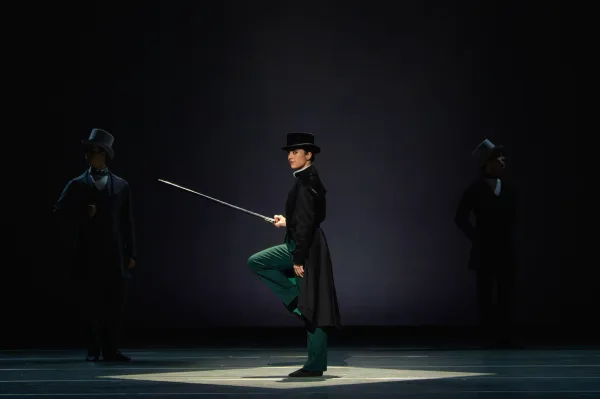
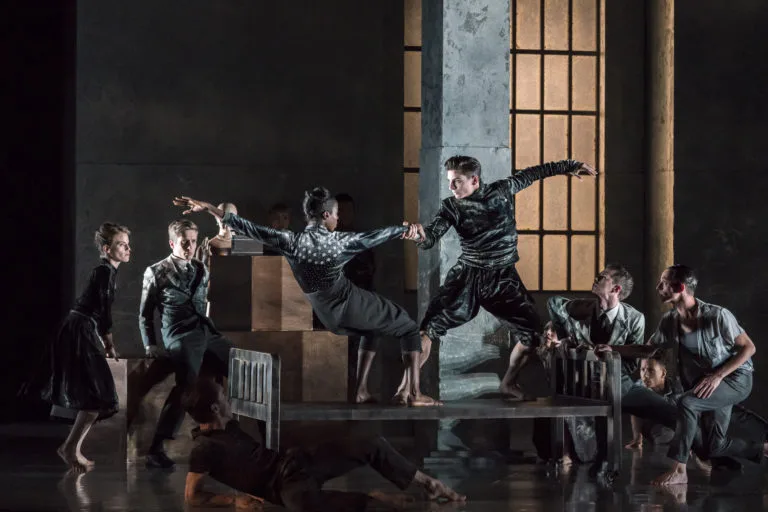
The set was particularly impressive during this segment. While the actual walls of the set always made it clear that the segment took place in the physical space of a cell, the lighting and sound made it seem like we, and the dancers, were transported to different landscapes every few minutes. At one time, a forest, and the next, a barn. It was a brilliant usage of the digital facilities involved in the piece.

However, with so many changes in the setting and an abstract concept being thrown to the audience, the piece felt vague and loose at times. There were many role-switching moments, which was difficult to follow because of all the instability there was already present in the piece. Each dancer was wearing a different costume and one would need to be sharp to discern which dancer was playing a particular character at any given time. Furthermore, the costumes, when seen against the plain, cell-like set, were slightly distracting, as they were overly elaborate and intricate. It is a performance where there is much to take in, and the first segment in particular required more concentration.
The second segment was where I thought the dancers had the chance to shine. The confines of the cell were gone, and the company was free to use the full space of the stage. Brandstrup’s choreography showcased the best of the Rambert dancers, and their technique was outstanding. The various lifts were especially impressive, firstly because every single dancer who was lifted managed to maintain a beautiful and well-controlled line, even when the lifts were lightning-fast, but also because it showed how well the company gelled together. The trust between the dancers was evident and enormous. I enjoyed Brandstrup’s play on shapes in the second segment, with the dancers forming wavelike, swarming masses.
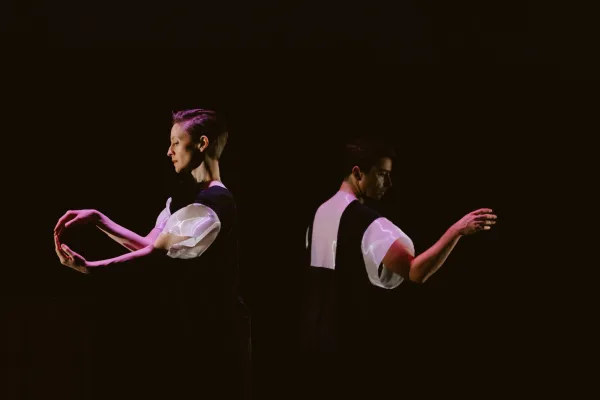
The second half was when the prince goes out into the world again and he finds that the real world is, in a way, inferior to his illusory world inside his cell. There is a lot of desperation and raw emotion in this segment, with the duet between him and a female dancer being charged with tension. These duets were arguably the most breath-taking part of the piece. There was nothing to take away from the raw movements, and it was contemporary dance stripped of any excessive theatricals, of any unnecessary stunts, there was only the two characters and their stunning movements.
Overall, Life is a Dream was a risk-taking, experimental performance that was incredibly well-executed. It challenges the Rambert dancers, as well as the audience, to grapple with the concept of reality. Interestingly, it also dealt with the concept of creating reality and the way art can be used – can one accurately portray reality through art, or does art belong in a dreamscape, a plane that can only be accessed through the rejection of reality? These are just some of the questions that Life is a Dream leaves us with.