

How The Other Half Loves
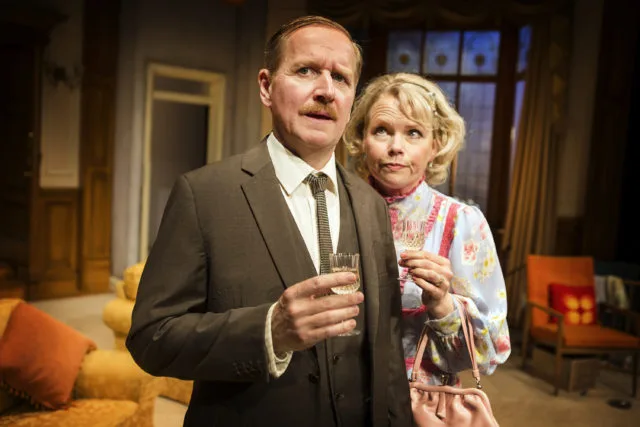
How The Other Half Loves was a quintessential British comedy play, and I thoroughly enjoyed it. It was humorous, fun and clever. The story revolved around two lovers who were cheating on their respective spouses, and the scenes constantly switched between the two households. This sounds like there would be lots of awkward breaks between scene changes and messy transitions, but in truth, there were only about three instances where the audience had to wait for a scene change. This was only possible because of the creative and unique useage of the stage, which was the most impressive element of the play. The stage was expertly arranged so that it was able to showcase two living rooms at the same time, with two exits that represented two kitchens and two other exits that represented the entrances into the homes. Characters would only interact with the other person who was supposed to be in their house, and ignore the any other person on stage.
In this way, the play was able to show us two contrasting couples, and the stark juxtaposition immediately made their situations more amusing. The characters themselves were interesting and funny. There were six characters altogether, and my favourite was Mary Featherstone, a supposedly mousey person who turned out to have a strong-will, no-nonsense personality in the most endearing way. Bob Philips was the most unlikable character, but I suppose that was done on purpose — it made the story more exciting because you wanted his wife, whom he was cheating on, to succeed in breaking away from him. It was also hilarious and absolutely delightful when Bob essentially got punched in the face, and judging by the reaction of the audience, everyone else loved that moment as much as I did.

But the highlight of the night was the scene where both the Fosters and the Philips had invited the Featherstones over for dinner, albeit on different nights. Again, the two households were expertly juxtaposed, as the two dinners were showcased simultaneously. It was a brilliant idea to combine the two dinner tables together, and the way the actors had to change their expressions and demeanors within a split second, depending on which household they were supposed to be in, was pretty impressive.
Overall, the plot went along at a nice pace, and it certainly grabbed the audience’s attention. I was always entertained, and almost every second of it was funny. I also appreciated the way the play was subtly critical of misogynistic men, as it mocked them and their arrogant mindsets. It may not be the best play to bring your kids to, due to the violence and the sexual scenes involved, but if you’re looking for something to take your mind off heavier matters, then this play will definitely cheer you up.