
Public Service Broadcasting
I can’t say this was the best gig I’ve ever been too, but I can say I’m struggling to think of a better one. A perfect marriage of stagecraft and musicianship, it’s certainly the finest thing I’ve seen in Norwich for a very, very long time.
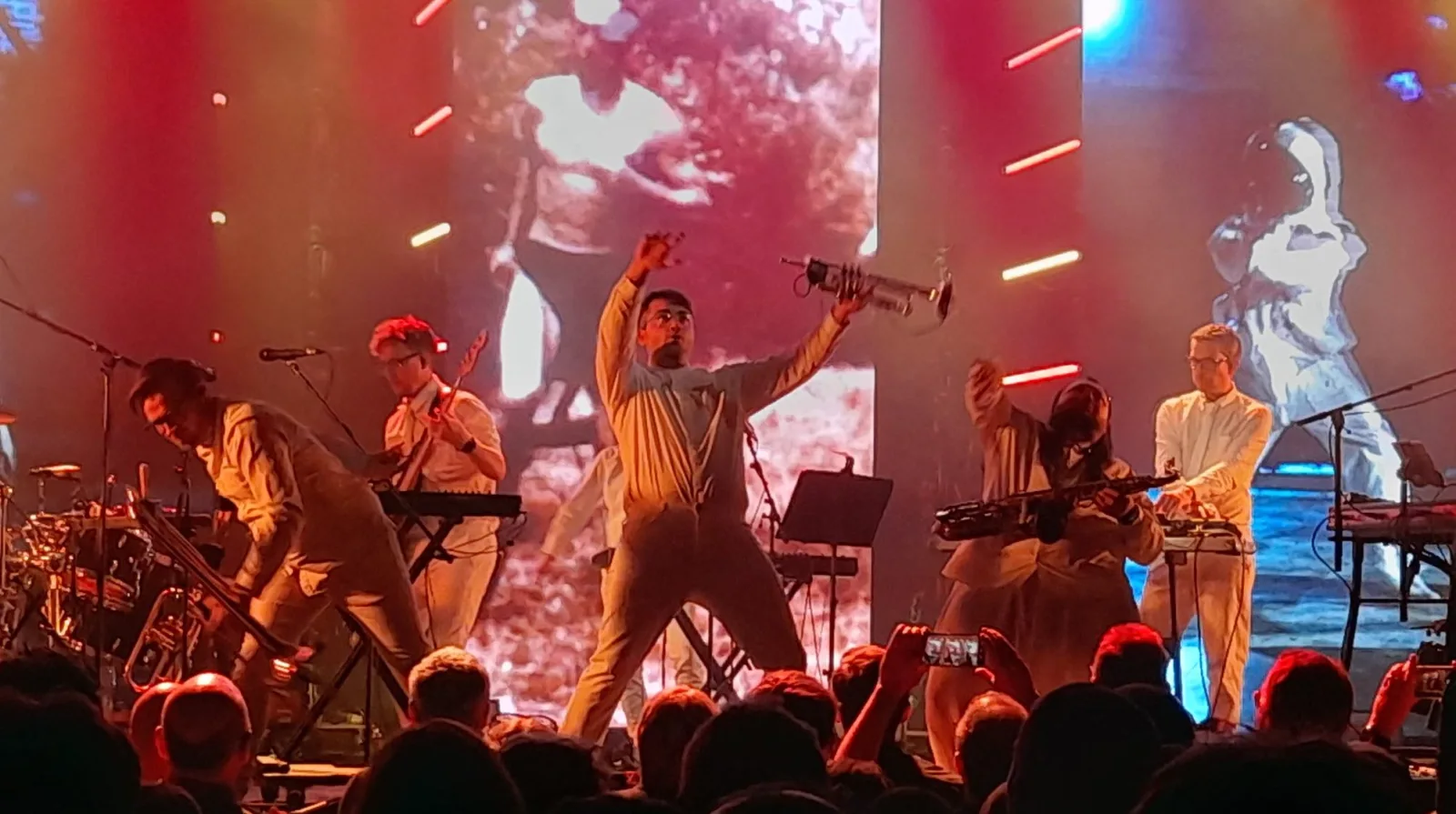
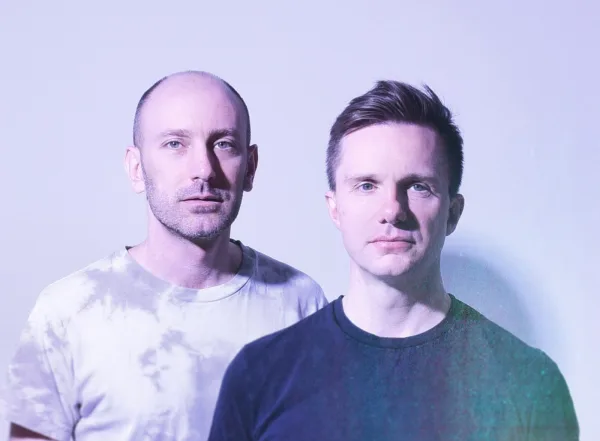
Around about ten years ago, wearying of the jostling crowd watching The Editors playing at Glastonbury, I jumped ship looking for an empty tent where I could congratulate myself for swimming against the tide. I knew there was this weird duo playing off the beaten track – instrumentals overlaid with archive soundtracks – something no one, surely, would turn up for. However, the tent was already rammed for this supposedly unknown band, and I got to rub shoulders far more intimately than if I’d just stayed put. Clearly, word had got out that these corduroy wearing geeks, speaking to their audience with recorded messages, were something special. Since then, I’ve seen them occupy bigger and better stages, their seemingly inexorable rise defiantly at odds with an appeal you’d think resolutely niche. Each time, they seem to have spawned another member, as the complexity and ambition of their work expands. There were times, during their show at UEA, when we had eight people on stage, in what was, by far, the biggest and best performance I have seen from them.
Warming up for them, in front of what looked like a close to capacity crowd, were Pale Blue Eyes, a trio that is the brainchild of Sheffield’s Lucy Board and South Devon’s Matt Board. It’s perhaps no surprise that Board comes from the home of British electronic music - their unapologetically retro sound brought the classic post punk sound of the early eighties to mind. I heard hints of Cabaret Voltaire and echoes of the Bunnymen, though my abiding impression of Aubrey Simpson’s bass was the thumping insistence of Peter Hook’s contribution to Joy Division. If you’re aged enough to remember those heady times, one could argue there was little new here, but what goes around comes around. I can imagine them attracting a younger demographic that doesn’t know its ABC from its Clock DVA, and good luck to them.

Prior to the headliners coming on stage we got, appropriately, a witty public service announcement in that faux electronic voice they’ve now thankfully dispensed with, followed by a David Bowie song – by which I mean a recording of your actual David Bowie actually singing Sound and Vision. It was a bold move on the part of Public Service Broadcasting and I’m still not quite sure why they did it, but The Visitor that followed was a powerful departure from the music we’ve been served up before. The scale and grandeur of late Vangelis immediately came to mind, while Im Licht and Der Rhythmus Der Maschinen that followed owed a debt to both Ultravox and Kraftwerk. Kicking off your gig with three songs from the new album (they played eight in total) was a bold move, but the path was greatly eased by a frankly astonishing stage presentation.
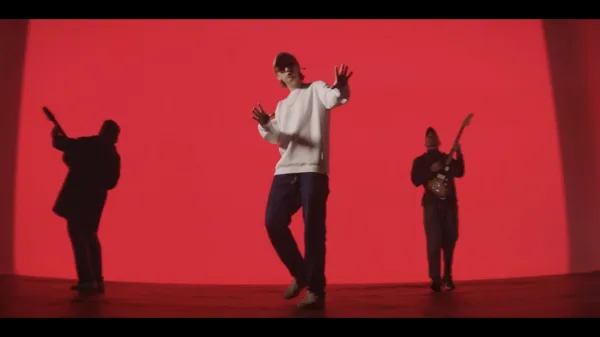
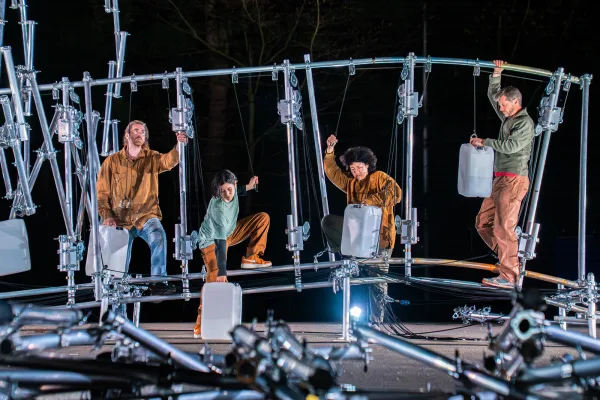
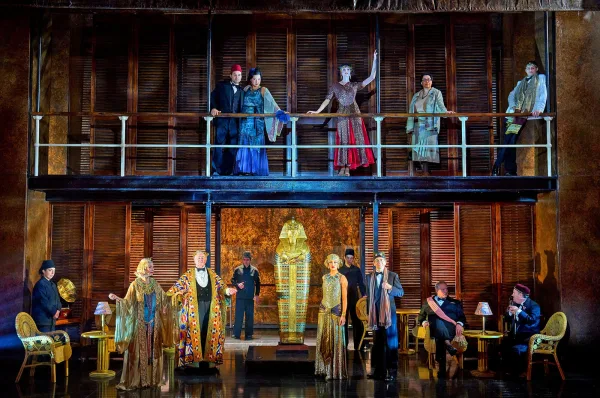
They’ve an old adage that you shouldn’t come out of a musical whistling the scenery, and I guess the same goes for a gig, but the show the band put on was simply stunning. It’s pretty unusual for the visuals and set designer to get a name check as a band member, and odder still to have him on stage throughout, but hats off to Mr B, who certainly earned his keep. I’m still trying to decide whether this was the finest visuals I’ve seen at UEA, or simply the finest visuals I’ve seen. It was, either way, an absolute knockout. The tunes helped, of course, and the hardy perennials of People Will Always Need Coal, London Can Take It and Night Mail put us back on familiar ground, before diving back into the “new stuff”. Not only did we get to hear J. Willgoose resurrect the vocoder but, whisper it, proper vocals from Anna Lena Bruland, using her trade name of EERA. I’m still mulling over what I thought about her elfin contribution to Blue Heaven – after all, things went horribly wrong for Brandt Brauer Frick when they introduced guest vocals – but I guess there are only so many public information films you can play over. The band has evolved, grown and expanded, and into interesting territory, not least with their magnificent, full on John Adams sound alike Lichtspiel I and II. I told myself I needed to embrace the new, even if I did hanker after the wilful eccentricity of Spitfire, surely everyone’s favourite.
Nonetheless, People, Let's Dance was more than a match for the joyful exuberance of Gagarin, both of which featured the brilliant brass section making its final appearance in the encore, before J F Abraham got to do his thing with the flugelhorn in the magisterial Everest. Not one given to hyperbole, I can’t say this was the best gig I’ve ever been too, but I can say I’m struggling to think of a better one. A perfect marriage of stagecraft and musicianship, it’s certainly the finest thing I’ve seen in Norwich for a very, very long time.