Oliver Coates (Cellist) // NNF2013, Norwich Playhouse – 10.05.13
Coates’ recital seemed a great reflection on the local art scene; upholding traditional values, but simultaneously forging something new.
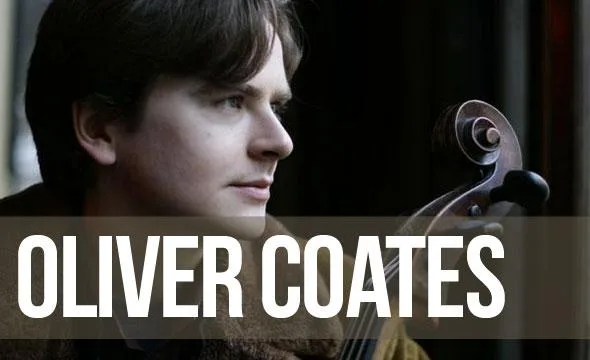
Oliver Coates’ blend of contemporary and classical pieces for solo cello was a fitting launch for the Norwich and Norfolk Festival. Merging traditional, folk-inspired suites by Bach with modernist miniatures by Kurtag and a movement by Benjamin Britten, Coates’ recital seemed a great reflection on the local art scene; upholding traditional values, but simultaneously forging something new.
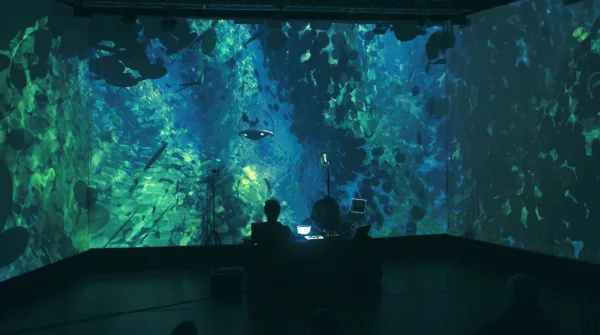
However, whilst the more middle of the road choices like Bach’s ubiquitous Prelude in G, and Ernest Bloch’s beautifully elegiac Prayer satisfied the casual audience members, it was the conceptual duo of David Fennessy’s The room is the resonator and Michael Gordon’s Industry which seemed to spark Coates’ and my own interest. Coates spoke shortly before each piece, expanding on his programme notes, and reaffirming his convictions in the pieces. The room is the resonator was a perfect example of the beguiling experience of witnessing live music. A pre-recorded tape accompanied Coates’s lyrical cello, and added shifting atmospherics – starting in a flat garage in Aberdeen, and then expanding seamlessly into a cavernous Berlin underground station. This change in resonance, paired with Coates’s reverb-laden pizzicato, was surprisingly moving and deeply effective; no doubt helped by the fantastic acoustics of the brick-walled Playhouse. Michael Gordon’s Industry was the finale, and a contrasting, but also complementary piece to Hennessy’s. Led by weeping double-stop harmonies and bass frequencies, Coates’ cello was manipulated by the sound engineer to replicate a distorted guitar. The result was a shockingly loud, powerfully decaying vision of a machinated world, and certainly the most forward-thinking piece of ‘classical’ music I have ever witnessed in person.
The only slight detractor from an otherwise excellently executed repertoire was Coates’ choice of miniatures from Kurtag’s Signs, Games and Messages. Deeply modern and virtuosic, the incredibly short pieces were a little alienating by nature; especially placed in the middle of the concert as they were. The inventive double bowing on the second, Hommage á John Cage, was notable, and technically impressive, but unfortunately led to rather simplistic harmonic shortcomings, and fell a little flat as a result. All in all though, Coates’ piquant balance of the new and the old was captivating, and to witness the two aforementioned conceptual pieces was worth the admission alone.
Alex Throssell

Oliver Coates’ blend of contemporary and classical pieces for solo cello was a fitting launch for the Norwich and Norfolk Festival. Merging traditional, folk-inspired suites by Bach with modernist miniatures by Kurtag and a movement by Benjamin Britten, Coates’ recital seemed a great reflection on the local art scene; upholding traditional values, but simultaneously forging something new.
However, whilst the more middle of the road choices like Bach’s ubiquitous Prelude in G, and Ernest Bloch’s beautifully elegiac Prayer satisfied the casual audience members, it was the conceptual duo of David Fennessy’s The room is the resonator and Michael Gordon’s Industry which seemed to spark Coates’ and my own interest. Coates spoke shortly before each piece, expanding on his programme notes, and reaffirming his convictions in the pieces. The room is the resonator was a perfect example of the beguiling experience of witnessing live music. A pre-recorded tape accompanied Coates’s lyrical cello, and added shifting atmospherics – starting in a flat garage in Aberdeen, and then expanding seamlessly into a cavernous Berlin underground station. This change in resonance, paired with Coates’s reverb-laden pizzicato, was surprisingly moving and deeply effective; no doubt helped by the fantastic acoustics of the brick-walled Playhouse. Michael Gordon’s Industry was the finale, and a contrasting, but also complementary piece to Hennessy’s. Led by weeping double-stop harmonies and bass frequencies, Coates’ cello was manipulated by the sound engineer to replicate a distorted guitar. The result was a shockingly loud, powerfully decaying vision of a machinated world, and certainly the most forward-thinking piece of ‘classical’ music I have ever witnessed in person.
The only slight detractor from an otherwise excellently executed repertoire was Coates’ choice of miniatures from Kurtag’s Signs, Games and Messages. Deeply modern and virtuosic, the incredibly short pieces were a little alienating by nature; especially placed in the middle of the concert as they were. The inventive double bowing on the second, Hommage á John Cage, was notable, and technically impressive, but unfortunately led to rather simplistic harmonic shortcomings, and fell a little flat as a result. All in all though, Coates’ piquant balance of the new and the old was captivating, and to witness the two aforementioned conceptual pieces was worth the admission alone.
Alex Throssell