
Goldberg Variations (Philharmonia Chamber Players)
A truly scintillating performance of an iconic work
For almost as long as I can remember, a classical recital within The Music Room of The Assembly House in Theatre Street had been a regular feature, indeed highlight, of the Norfolk & Norwich Festival. This magnificent Georgian Grade 1 listed building, designed by architect Thomas Ivory in 1754, has stood on the site almost since the days of Johann Sebastian Bach himself. It therefore seems appropriate that, following its omission from last year’s Festival programme, we are back at The Assembly House in 2026, listening to a work originally composed by Bach himself, arranged for chamber trio, and comprising members of the Philharmonia Orchestra’s prestigious string section.
Johann Sebastian Bach's Goldberg Variations takes its name from the German harpsichordist Johann Gottlieb Goldberg for whom the piece was conceived, and who most likely first performed it after being published in 1741. Comprising an aria and 30 variations based upon it, it is considered to be a masterpiece of the Baroque era. It has since been re-scored many times - for full orchestra, for jazz trios, for a saxophone quartet, for accordion, and even for a Kurzweil digital synthesiser. However, at The Assembly House on Sunday evening, it was the three members of the Philharmonia that were here to deliver a richly textured arrangement, transcribed in 1984 by Azerbaijani born violinist and conductor, Dmitry Sitkovetsky.
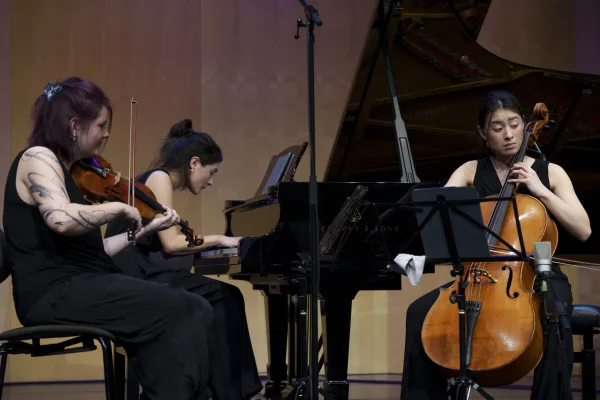
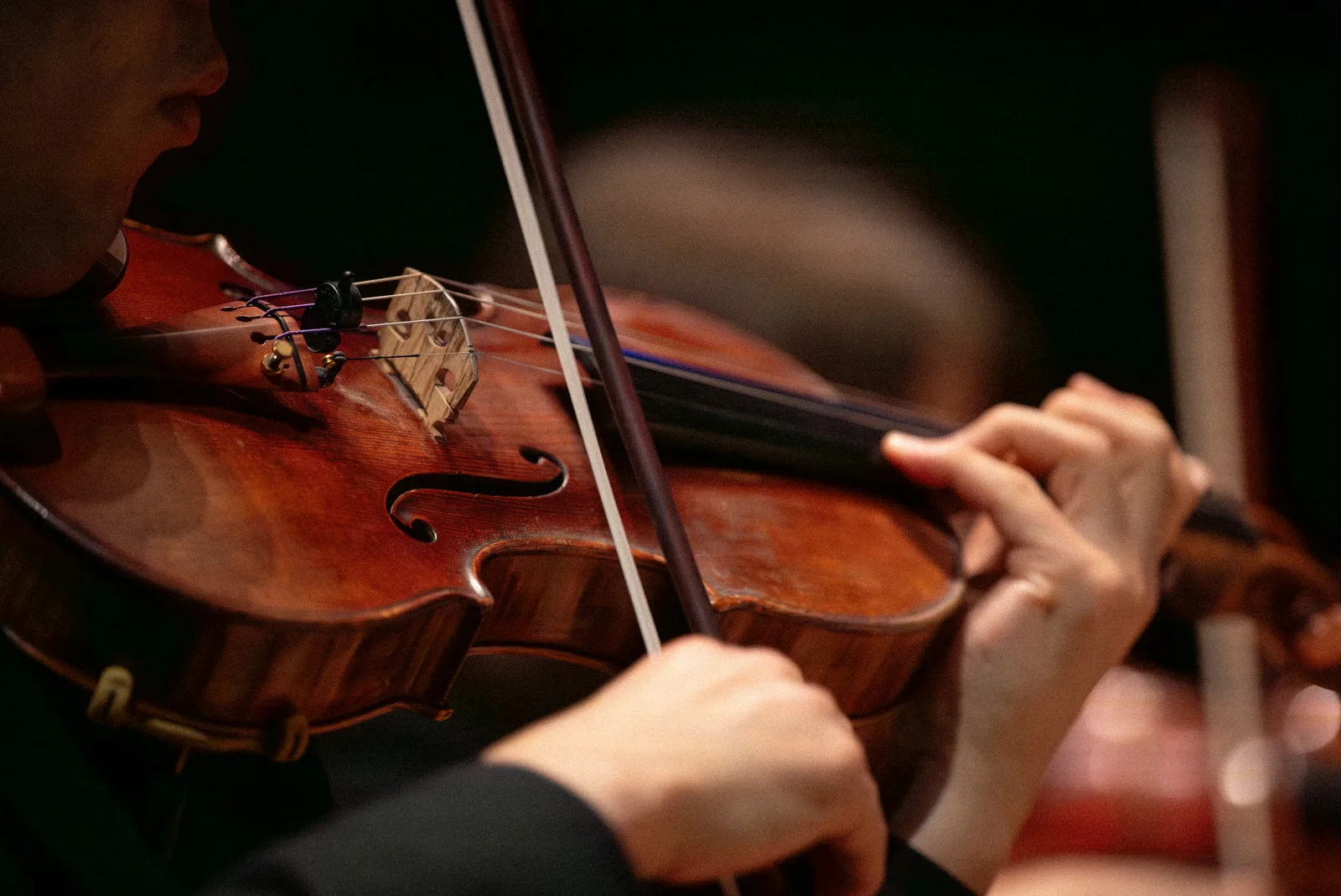
Sat beneath the glittering chandeliers of The Music Room, Rebecca Chan (violin), Scott Dickinson (viola), and Richard Birchall (cello), performed Bach’s chamber masterpiece with a range of passion and emotions befitting the work. And, as each variation is revealed, the multiple layers buried within the work's complex and interwoven motifs allow this performance of the Goldberg Variations to become a real roller-coaster ride for the ears. To those who may have only previously listened to piano or harpsichord versions of the work (and of those, I count myself as one), it is something of a revelation to hear the keyboard replaced by a trio of bowed string instruments. What I remember as a very precise series of arpeggios, canons and gigues becomes a warm and emotion-filled journey. It is fascinating to discover how the emotional dynamic of the whole work switches so dramatically, and so often, within such a short space of time. It is a work that displays Bach’s genius for structure, balance and depth, and yet manages to convey a profound sense of humanity as well.

I find myself drawn into observing how each of the three musicians works. Chan is almost cat-like. Perched on the edge of her chair she seems to stretch and turn, squeezing every last note from her instrument as if she is playing with a mouse. Birchall is powerful, but more restrained, somewhat like a like a bear - tall and totally in control of his instrument, clearly aware of what is happening around him. Dickinson, seated between them, is in the position of authority, able to observe and control, and even to sit back and listen during the two variations that are scored for just violin and cello. The result is just over one hour of musical magic, with the thirty separate variations ‘book-ended’ by the work’s opening and closing Aria.
It was a treat to be back in the Music Room of The Assembly House, and in the company of three such talented musicians. This was a truly scintillating performance of an iconic work, delivered by three talented musicians from one of the country's most respected orchestras, and performed within this much-loved Norwich venue.