

Giselle - My first Ballet
Theatre Royal Norwich
Giselle is a tale of an adored peasant who is gentle and sensitive, building a relationship with Count Albrecht, who poses as a villager named Loys and deceives Giselle whilst she falls deeply in love with him. The forester Hilarion is whom Berthe, Giselle’s mother, had hoped that she would marry and warns Giselle of Loys. Berthe fears that Giselle will turn out like the many girls before her who have allowed their deep passion of dance to lead them to death and doesn’t want Giselle to join the Willis.
Performed by the critically acclaimed Varna International Ballet, founded in 1947, celebrating their 75th anniversary, they’re touting the UK for the very first time. ‘Renowned for its award-winning soloists and magnificent corps de ballet, the company has been delighting audiences for decades at home and abroad with its performances of the highest quality.’
What begins as a tale of a hopeful and delicate young woman, turns into a story of sorrow and grief, as Giselle’s fate is almost inevitable as she turns distraught at the news that Loy’s is really a Count and worse than this, has an existing finance who he plans to marry.
As you can tell from the title, this was my first ballet experience, and I was very unsure on what to expect. My only exposure to ballet so far had been briefly in films, so I had a vague idea of what the night may entail, but it still held uncertainty. For one, I wasn’t sure of there was any dialogue during the show, so I was waiting for the first line to be spoken in the first 5 minutes, before I realised that the dance, enhanced by the music was going to provide the story telling.
Intense music began, building to a fast pace before the curtain rose, creating tension and anticipation before turning into a dreamier and melancholier symphony to open the stage and welcome us into the rustic village, where the entire first act took place, and the show commenced. The use of body language and facial expression is so powerful to tell the story and emphasis the feelings of each character, making up for the loss of dialogue that this art form refrains from. Also, the energy that each dance exerts is so essential in portraying the mood and the feelings of each character to extend the story.
As the shyness and uncertainty from Giselle and Loys turned to fondness, they shared a duet that was very enthusiastic and mirrored their relationship developing, growing into a deep passion. Giselle, performed by Perdita Lancaster, was completely mesmerising to watch, so poised in her movements, with the accentuated elegance from her long-pleated skirt, which disguised her peasant title. Giselle’s centre stage solos included stunning pirouettes and arabesques that presented such a calming theme and portrayed her beauty, before escalating into a more energetic dance of turning around the stage.
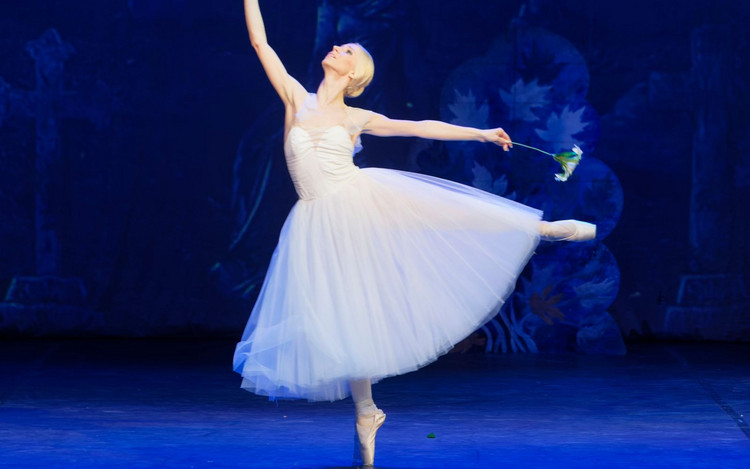
The first act told the story of how Giselle came to her premature death, the contribution of each character and relationship, filled with many dancers and had a hopeful light to it, but the end of act one had an intense and sad ending that was reciprocated through the entirety of the second act.
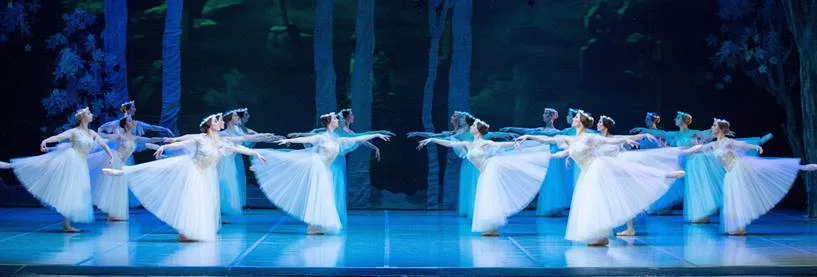
Act 2 held more weight, as it was set in by Giselle’s grave in the forest, exploring her becoming a Wilis, as her spirit rises from the grave. The act opened with Myrtha, their queen, summoning the Wilis from the marshes, drawing Giselle’s spirit from the grave to place her in their ranks. The Wilis performed a seamless group dance, so much grace was preserved through their movement, this was completely captivating and had to be my favourite part of the show, as it was so majestic. Myrtha, performed by Francessca Busquets, danced her solo amongst the other Wilis spirits, taking centre stage and creating sorrow and lost hope through her movements and body language. The choreography was incredible, by the talented Jean Coralli, Jules Perrot, Marius Petipa and Leonid Lavrovsky.
The night would have been completely lost without the essential orchestra creating the narrative of the story, with Stefan Boyadzhiev as music director and Peter Tuleshkov as the conductor, the incredible pair that lead the night into success.
Usually, when I go to see a show that I am unfamiliar with, I won’t read the introduction or synopsis beforehand as I think it add an extra surprise to the evening. However, this can’t be done with the ballet, which I found out the hard way! The synopsis of a ballet show is crucial to enable you to follow the story and understand the progression of relationships and characters. I think a lot can be left up to your own interpretation, if you are not sure on the exact story line, which can be very interesting, but doesn’t always align with what they’re performing. The few props used within the show had huge symbolic meaning, which largely built up the story and exerted metaphors too, which was interesting to see how they created this.

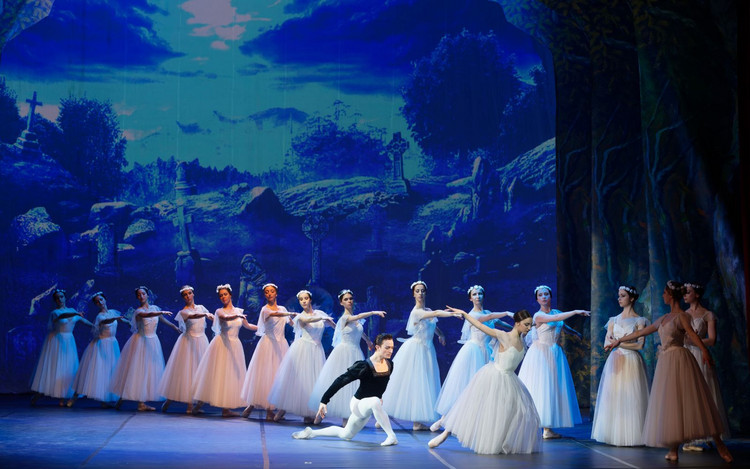
The Wilis and Giselle sending Count Albrecht out of the forest
I must admit that I did enjoy the Ballet very much, getting to see the Varna International Ballet group perform was an absolute honour and not an experience that I will be able to, or want to forget. Ballet is such a beautiful and incredible art form that requires so much physical strength and endurance. I have a lot of admiration for the art form, watching it live really proved how gracious the dancing is and is so easy to appreciate, even of it is not a genre you’re familiar with. I’m extremely happy that I took the chance to try something different and experience a ballet performance, especially a title that is so highly renowned and by the famous the Varna International Ballet.