

Echo and the Bunnymen
Touring with the strapline “Celebrating Forty years of magical songs” will inevitably lead to double takes and the counting of fingers. Can Echo and the Bunnymen really have been going for that long? More disconcerting for me is that I was at the gig they played at UEA all those years ago, probably standing in the same place as I did last night. Back then, the Bunnymen were a very different proposition, at least in terms of their public profile. Despite the glum introspection of their astonishingly assured debut Crocodiles, my abiding memory was that – unusually for a University gig – the venue was largely populated by teenage girls from town, squealing with delight at the moody good looks of Ian McCulloch. After the gig, I found myself chatting to bass player Les Pattinson (things were so much less formal in those days) and we shared our mutual bewilderment at the audience they were attracting. Les, of course, has now long gone, leaving behind the odd couple of Ian McCulloch and Will Sergeant to tour with hired hands to fill out the sound, the profile of their earlier audiences air brushed out of history.
But that was then and this is now, and before they kicked off we got Alan McGee playing a DJ set, which he did with the aplomb you’d expect, but it was something I struggled to engage with. I’ve seen a few gigs of late that started off this way, and it seems an odd business to me. The LCR was absolutely stuffed full of people – I’ve not seen it like that since pre-covid days - and as the gig would subsequently prove, the Bunnymen attract a lot of appreciative head nodding, but not much more from the majority of their fans. Ninety minutes standing around while records are played, be that filler between acts, or as an act in itself, is a very long time. We’ve all seen support acts we’d rather have stayed at the bar for, but for years it’s been the chance for an embryonic band to occasionally shine. I wouldn’t have known anything about October Drift, or Working Men’s Club or Confidence Man if I hadn’t turned up to watch someone else afterwards, and that would have been my loss.

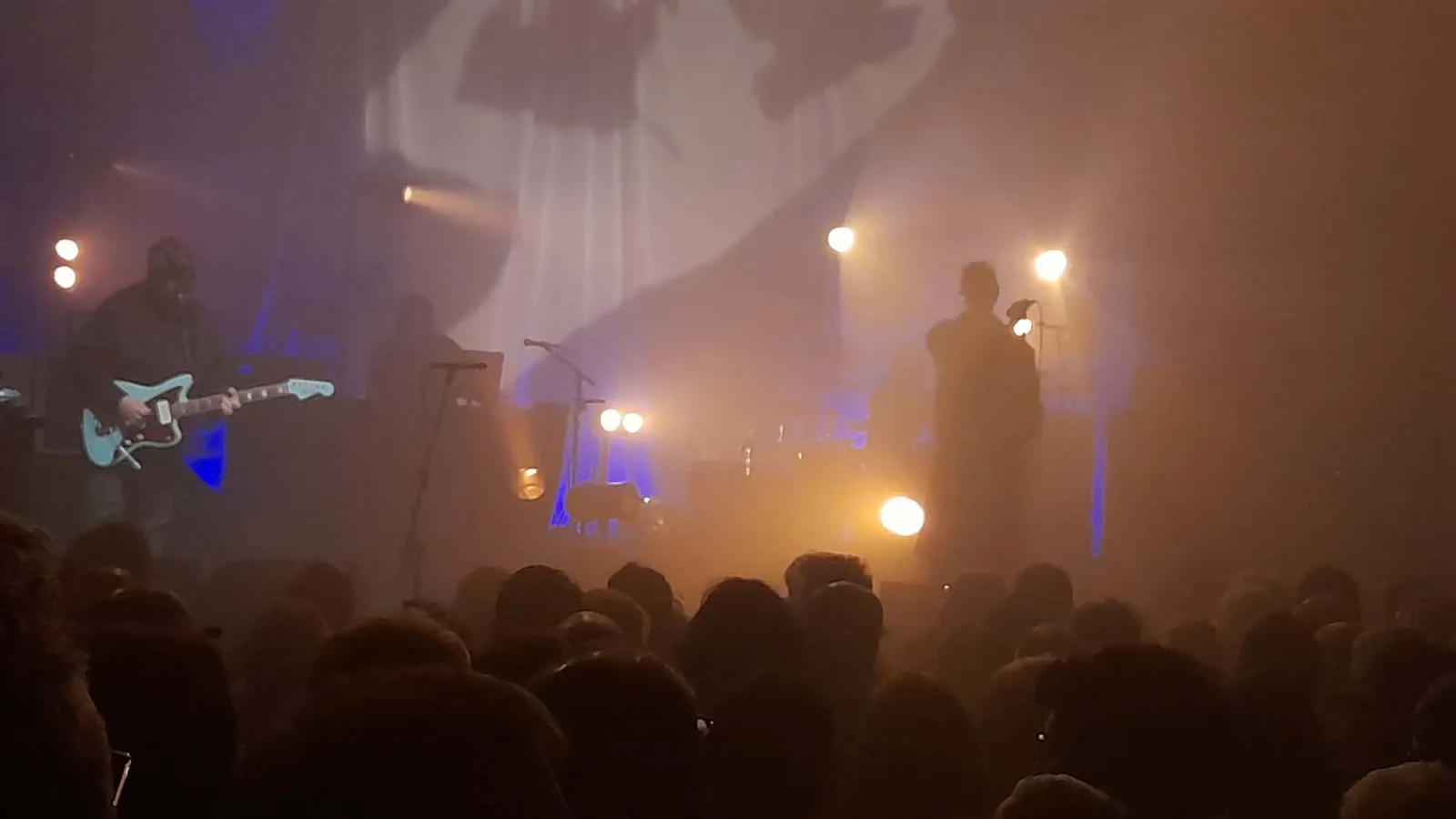
When the Bunnymen finally did appear, shrouded in near impenetrable smoke and ambient lighting, they certainly delivered. An unassuming Will Sergeant, looking like Ricky Tomlinson on a dare, mooched about stage left, leaving Ian McCulloch to grab most of the attention, as they tore into Going Up. A man is his sixties wearing an overcoat and sunglasses should be absurd, yet somehow he managed, as always, to look impossibly supercool. It was swiftly followed by the classic All That Jazz and along the way we got Rescue and Villiers Terrace, but that was it for Crocodiles, which for a tour billed as a retrospective seemed a pity. I’d have happily listened to them play the whole album (I probably did all those years ago) but I guess there was just too much other good stuff to choose from. The Bunnymen did have hits, as evidenced by the later appearance of The Cutter, Killing Moon and Nothing Ever Last forever, but their strength is breadth. Time and again, I found myself nodding sagely as yet another brilliant song popped up. It’s hard to credit that Over the Wall didn’t even chart at the time, or that All My Colours was only ever an album track.
I could have done without the interminable wait between, not one, but two encores, but they had charged through a set of something approaching twenty songs with nary a pause, so perhaps they genuinely needed a bit of a breather. I dare say some of the mature audience did too – witnessing the first post-covid mosh pit as the gig reached its climax was a surprisingly emotional moment. Along the way we got excellent Lou Reed and Doors covers, and some affable chat from McCulloch, during which he mentioned that one of their best ever gigs had been at UEA. I couldn’t help wonder if he was referring to the one we both attended, all those years ago.