

Interview with The 1975
"It’s like, would you rather fight a 6ft duck or 100 tiny ducks? I’d always go for the 6ft duck." Beatrice talks to The 1975 at the start of their tour
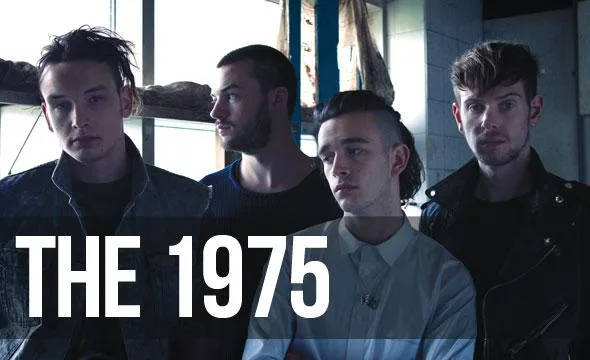
It’s been a big couple of years for the 1975, going from performing in small pubs and venues, to selling out some of the UK’s biggest venues, touring worldwide, and supporting The Rolling Stones, yet they’ve been playing together for about eight years. Does the success really feel like it happened over night? Or have these past two years just been a continuation of their work? Our interview had to take place at 11pm, as the band was playing the Big Day Out Festival in Melbourne, leaving us with quite a hefty time difference. So while I was tempted to do the interview in my PJs, lead singer Matt Healy had just woken up when we called.
So how’s Australia? It’s very nice, we’ve never had time off like we’ve had time off here. It’s part of a festival called the Big Day Out, but it’s more commonly known as the Big Day Off, as you really do fuck all! We’ve had three days off, and we got a boat yesterday and went fishing and found our own little island, so it’s been a pretty idyllic little holiday.
Is it nice and sunny over there? In comparison to rainy England? It’s lovely, and it’s been my first ever January in the sun, so I don’t want to rub it in anyone’s face. It’s a funny subject - we find it difficult to have an active Facebook page because we’re from a small town where most of our mates are grass-roots kind of people, who work normal jobs, and our lives are just ridiculous right now, with Australian islands and partying all the time, so it’s hard to put that on Facebook, or whatever, without feeling like we’re showing off, because we are getting to be in cool places every day.
You’ve gone from being fairly small - no offence! - to massive, pretty quickly - - Yes, I’d agree with that!
Were nerves a problem before? And are they better or worse at bigger shows? It’s all a learning curve, as generic as that sounds. There’s so much history in playing live with us, and the foundations of why we did it was always for the four of us and I think that always translates live. The best bands are the bands that are having fun, and I think for us, playing live has always been grounded as a really personal thing. But yeah, it’s interesting how much you grow in the space of a year. In January, our big show was playing to 150 people at the Barfly, and then a year later we did three nights at the Brixton Academy. I find big shows slightly easier as the idea of the individual is less apparent. You can SEE 100 people, and you feel that emotional immediacy; you’re with 100 personalities. This is much less apparent in a big conglomeration as they react all in the same way, like a jellyfish effect, and it’s a lot more controllable. It’s like, would you rather fight a 6ft duck or 100 tiny ducks? I’d always go for the 6ft duck.
That’s a wonderful analogy. Your debut album went to Number One, beating Nine Inch Nails’ hugely anticipated album. Does it feel to you guys like you got big really quickly, or is it more like a continuous climb since you started? I suppose it’s a bit of both. It’s strange the things you become defined by, like statistics - like that whole Nine Inch Nails stuff; it’s not a competition. People have said so much that we beat Nine Inch Nails, I mean, yeah, our album did so well, but do people think that Trent Reznor is sitting at home slapping his knees going, “Ahh those pesky 1975 kids getting in the way of me being a genre-defining artist”? He’s not fucking bothered about our album. It’s been a miraculous ride for any band, and the things we’ve achieved this year have not only been remarkable but unprecedented, and that’s not coming from an arrogant place, it’s just a fact. That’s something that’s amazed me and excited me and confused me a lot this year. There was a time this year, and I think I’m only just on the other side of it, where I was going through a massive identity crisis, because my reality had been totally polarised, and I don’t think people quite understand how personal this band is. I think that people don’t realise that we had no intention for our band to be embraced in the way it has been, because we’d resigned to the fact that it wasn’t going to happen. We’d always made music because we could; we were middle class kids, there was a lot we could get away with, so we worked shit jobs and we made music, because making music was so fun. In the same way teenagers dedicate their time to football or Xbox. This all comes from making records in my bedroom, and that’s still what we do. We are deeply humbled by the situation that we’re in, and we’re so flattered and enamoured by the connection we now have with people, but it’s a headfuck.
Right, now for the question I’m sure you’re asked every time. You played with The Rolling Stones. How did that go? Um, it was weird; it was one of those moments when reality and non-reality becomes one. A lot of shows, you’re concentrating on doing the show, but on that show we were trying to take it all in as well, and it all became a bit overwhelming. People didn’t like us, by the way. That’s never reported. We didn’t have like, a good show. Well, there were 50,000 people there -
- I’m sure some of them liked you? Of course, yeah, but the first 4000 people are the people who got up at 4am and spent £1000 on this ticket and they’re stood there in Rolling Stones t-shirts that they bought in the 70s and a cap they got from a fan club in the 80s. They don’t wanna see some young, jumped-up R&B-inspired band; they weren’t fucking interested. I’m sure plenty of people liked us yeah, but it was a weird day. I mean, the best part of it was when Jagger was on the side of the stage for ‘Chocolate’ and was singing along and stuff. We didn’t meet them - even the owner of the festival had a 5-minute appointment to meet Jagger. I can’t imagine what their schedule was like, but he was on the side of the stage, taking photos and stuff. The coolest thing was that next to our dressing room we heard music start, and it was their rehearsal room, and they were rehearsing before they went on stage. They’ve been in a band for 50 fucking years together, in a band based on just jamming, and now they’re in their 70s, they’re still jamming in a room together before they go on stage. It’s probably the coolest thing I’ve ever experienced, I mean, just think about their lives. They’ve been getting away with murder, they’ve never grown up and they’ve never had to. They’re still jamming and getting pissed in their 70s.
While we’re talking about the biggest moments of your life, has there been anyone you’ve met, or anything you’ve experienced that’s really stuck out and made you realise how big the band is now? Well, I think because I grew up around it [Matt’s mother is Denise Welch and his father is Tim Healy] I was more used to the idea of ‘celebrities’. I didn’t have the disconnection between real people and people who’re on TV. Sometimes you meet people who meet a celebrity and they genuinely can’t believe it. There’s loads of people I met this year who I wanted to meet; A$AP Rocky, Iggy Azalea… lots of people I’ve ended up chatting to. We’re technically on tour with Snoop Dogg at the moment, and some guys from his band, the Dogg Pound.

You’ve said how some people find it hard being around famous people, and obviously you’ve grown-up around it, so how do you feel about fan-attention? You’ve got a good few fan-blogs on Tumblr, and a large part of your fanbase is teenage girls, who’re probably more vocal than other audiences. How do you take that kind of attention? I don’t think of myself as a celebrity, and I don’t like describing us as “big”, but when you get to the level we’re at now, there’s a big divide between fans, and people that know you because you’re on the telly. When someone comes over and they’re a real fan, and you can tell that they genuinely care about the ideas you’re putting across, then it really matters. And I have all the time in the world for anybody like that. Um, but it does get slightly weird when you have 14-year old girls greeting you at an airport. A lot of them are sweet and really into the music, but a lot of them turn up with 6 cameras and an autograph book, and that’s what we find slightly weird, because the idea has strayed so far from where we started. It’s different to talking to fans who really connect with the music. Attention from young girls is weird because I don’t know how to react to it, and I don’t know how I’m perceived. It’s socially unusual for a 24-year old guy to have a daily dialogue with 14 / 15-year old girls. When that happens, you learn how to be around these kids. You know, there’s a lot of crying that happens, and I’m not sure how to deal with that; it’s a bit daft, it doesn’t make you feel like Jesus, it makes you feel like a bit of a tit. But of course, it’s flattering as well.
You tweeted recently “Another song about sex and drugs”. Do you think that they are the key topics of most of your songs? Yeah they are. There’s no real reason behind it, the subject matter that I’m now defined by, like being really honest, like sex, drugs, blah, blah, blah… when I wrote those songs, no one knew who we were, so I wasn’t conflicted with any ideas like, ‘what am I writing about?’ But it’s not simply about sex and drugs; it’s all of the rock and roll clichés discussed from a certain point of view. There’s a lot of love and loss as well. I think the songs are so specific that they’re almost relatable. I hope they’re not too relatable for really young fans, if they know what I’m talking about, but I think a lot of the time they just enjoy the music and don’t understand every specific lyric. That’s the best thing about music, isn’t it, the subjectivity of it all.
How does touring internationally compare to playing at home or closer to where you came from? We’ve been really lucky to be honest; we went to America to do our first sold out tour in March, so the experience of going far away and working hard to get fans didn’t really happen for us because we’d got popular on the Internet. As a band, we got to go to America and Europe and play sold out shows. The globalisation of teenagers and the Internet has allowed us to go wherever we want and play; there hasn’t been a city yet that we haven’t played a show we were happy with. Me and George went for a steak in Melbourne yesterday [George can be heard in the background commenting on how great that steak was] and the guy knew who we were. We’ve been recognised everywhere for a long time now, and we’re slowly realising that we’re starting to get popular.
As we’re a local magazine, I’d like to ask, what’d you think of playing in Norwich? It was great. I spent a bit of time in Norwich; the guy that does all of our artwork is from Norwich - he owns Fortyounce and did all our artwork, t-shirts etc. He’s really talented and a good friend of ours. We also played Latitude, which is pretty near Norwich. It was very posh; you go to Reading and Leeds and there’s sick all over the place and stuff, and then you go to Glastonbury or Latitude and it’s like Observer monthly pullouts and loads of children. I love festivals though; I was a big festival goer, and I love festivals and denim shorts and - what’s that new thing all girls wear? [George can be heard in the background] … A leotard! In Australia yesterday girls in leotards and shorts were all we saw.
You’re also quite big fans of bands like Swim Deep, do you feel that you and bands like that have come around in a similar context? Do you inspire each other or is it more difficult? Well there are lots of bands you meet on the circuit and become friends with, it’s easy to be jealous, but a lot of them are really cool. The media tries to split bands into different categories, but a lot of bands kick back against that and group together a little bit. We’re quite close to Swim Deep, but we couldn’t have come about from more different perspectives. They’re very much an NME-kind of band, and NME hate us. We’ve come from a different place. I try and avoid defining our style; I don’t know what it is, because the idea of ‘style’ isn’t relevant. It’s hard to explain; I think one of the things I’ve realised recently is that music publications are more interested in music’s impact on culture, or what David Bowie record was more ‘relevant’. It’s all of the frivolous elements that surround music culturally that they’re interested in, and that’s why styles and genres become so defined. We don’t come from that world; we get slagged off by people like the NME and I don’t think they understand where we’re coming from. We don’t write music on one genre because we don’t listen to one particular genre. We don’t consume any media in one particular format, so to not be reflective of our generation would be really difficult for us, because we’re 21st century… Dudes…? [George can once again be heard laughing] George now won’t stop laughing at me, but it’s true, we’re very much a product of our generation. Bands like us are very generationally orientated.
Beatrice Howard
The 1975 are playing the Nick Rayns LCR at the UEA on February 15th, and as they like Norwich so much, it should be a pretty good show! Get your tickets from www.ueaticketbookings.co.uk.