

Interview with Mount Kimbie
I thought ‘you can't be playing to the people who make the most noise all the time’, you know.
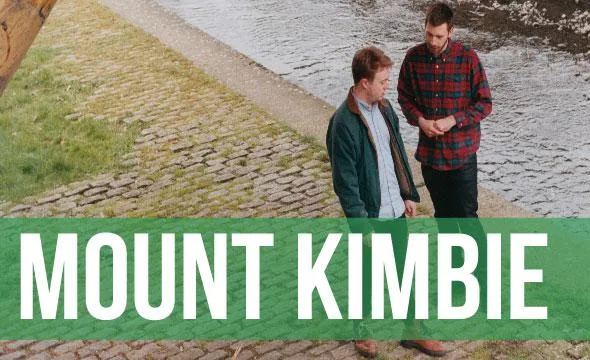
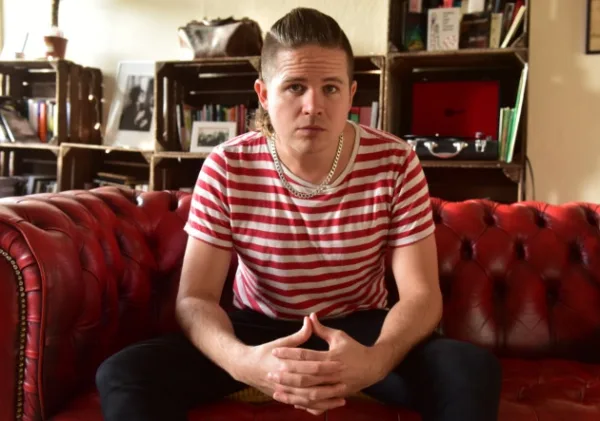
Crooks and Lovers was Mount Kimbie’s minimal, but highly regarded debut; full of quirky electronic charm, and promising waves. Critical acclaim was met with scintillating live reviews and approval from the night-dwelling populous, and as a result, the spread of ‘post-dubstep’. Moving away from the genre they had, perhaps inadvertently, created was always going to be testing though, especially on only their second album. But on Cold Spring Fault Less Youth, Mount Kimbie evolved, and matured, and with the help of King Krule combined their electronica with live vocals for the first time; a kind of beat poetry for the modern age. Outline talked to Kai about the changes to the band, and the changes within themselves.
You've got a pretty outrageous line of tour dates ahead of you - how are you feeling?Yeah, pretty good. We're literally on the way to the airport now, so I’m excited. We're looking forward to it.
Yeah, 'cause you're flying out for a big chunk of it. Have you played there much before?Yeah, I think this is our fourth time over there; they caught on pretty early. It's always been quite a good place for us to tour.
So you're excited about it?Yeah!
Is it difficult though, when you know you've got such a hefty line of dates ahead of you? Is it hard to maintain energy for each show?What I find harder personally is in festival season when you have five days between each one. When they're all in a row, you get into a good rhythm and you start pushing it a little bit further and in different directions, you know. That's much more interesting for me, and much more exciting. I actually look forward to this; it's like a period of stability in a weird way.
The live aspect has obviously quite heavily influenced 'Cold Spring…' I think you've ended up sounding much more complete; it's a fuller sound. Can you describe how you've changed from kinda 'Crooks'-era to where you are now?Erm, I mean in a multitude of ways. It's three years in quite a pivotal point in our lives, so I’m probably quite a different person to who I was on the first records, you know. We spent two years, not really making music, but playing it a lot, so that obviously fed into what we ended up doing in the studio. We try not to analyse it too much when we're working, we just try and figure it out afterwards.
Do you think, as you mentioned there, that the more developed sound has come simply because you and Dom have kinda matured together, you've been working together so long and you've literally just grown up - do you think that's part of it?Yeah, it's that and it's also a case of being a bit more confident to put down stuff that we wouldn't have thought was our area of expertise before, you know? And just having faith in your instincts and stuff, and hoping that people come along with it. And enjoying it, you know? In the way that we can do it, and still enjoy it. I think it can be quite like a slightly strange thing that I’m always attracted to working on something that I’m not 100% sure of how to do, so I’m not sure that i'll ever really nail it. I’m sure that's probably had an effect on commercial viability, you know -
Yeah, but that doesn't really matter that much, does it? The only other time I've seen you was at Bestival in 2011 and I think you described that as 'the send off for 'Crooks and Lovers'. Does that mean you've changed your set nowadays, and is there less time for some of the more leftfield tracks from that album?We still play a bit of it, and we've got another member now so that's changed the way we play quite a lot. I think playing so many festivals, we ended up going from one extreme to the other. When we started out, it went from being a really disjointed, kind of meandering set - which didn't work at festivals at all, you know - to then finding what festival music was, which I don't really have a problem with. I’m not that pompous about it that I don't think that music is in there, it's just what context you put it in and stuff. Now we're coming off the back of this summer, and doing these shows, we're looking at doing some kind of slower, kind of weirder bits and we were a little bit nervous about it in rehearsals. Then I thought you can't be playing to the people who make the most noise all the time, you know. And if I was at a concert - 'cause it's very easy to forget when you're on stage - that there are other ways to enjoy music.
Yeah, 'cause people who like the new record and people who like the old record are gonna enjoy the stuff that's not four-to-the-floor all the time. Who's the new person you're playing with live? Is that an extra instrumentalist.Pretty much, yeah. I mean, we've put him behind a drum kit, so he's kind of looking after most of the rhythm side of it, but he's playing bass and some keys and stuff as well, so he's like us in his ability to play a multitude of instruments not very well! We've played with good drummers before, and it sounds ridiculous but I’m really not into it. I want to carry on working with non-musicians, or whatever, and the thing is it's freed us up to use the technology that we're using a lot better because we're not worried about two of us controlling five bits each, and keeping time with each other and making sure that everything's locked in. We're able to lose ourselves in one or two bits of equipment, or instruments rather, than five or six, which I think benefits the performance somewhat.
Yeah, and you're obviously singing on some of the tracks as well, which is a fairly new thing. Lyrics haven't really been the focus before, so how have you written those songs? How did they come about? Was it a random decision, like 'oh, some vocals might work well here?'No, I think those songs were just forming themselves. There was a period where we had a cut of the first song off the album, which we were playing a kind of half-finished version of a little while ago, before we started writing the album. It felt like there should be a vocal there, and I was sort of making it up as we went along every night. Out of that came - 'cause the melody was actually a lot easier, and that one came quite naturally - and then the lyrical content was a completely different story, as was the singing, but i've always got hooklines in my head, it's just that this time, I started pushing them a bit closer to the front instead of replacing them with another instrument, which I used to do quite a lot.
It kinda reminds me of the Jamie XX / Gil Scott Heron album, 'cause it's like that beat poetry kinda thing, but the beat is just… great. That organ sounds like something you've borrowed from James Blake, or something, it just works so well. Do you think there'll ever be a point where we'll see a Mount Kimbie that's completely removed from your dancey roots - especially that post-dub niche that people seem to attribute you to?Yeah, I definitely wouldn't rule it out, I mean, there's stuff that occasionally I have thoughts about where I make a song that I think, 'maybe I'll make an album of all this kinda stuff', which has nothing to do with dance music. Other times, there's still areas of dance music that I get really excited about and there's still the occasional thing… It's funny, 'cause it's the area where you find the most innovative, but then also the most derivative production. Basically like, sound and production is the starting point - for me anyway. It's just as important a part; it's not a separate thing. It's not like you write the song and then go to the studio - I've never really understood that. I think i'll always have a kind of attention to detail that working in a more electronic way encourages. But yeah, I definitely want to make lots of different records, yeah.
I was gonna ask you where the inspiration for the instrumental tracks come from, 'cause I think a lot of people do it quite differently. You said you start with the production, but is it a case of having a little riff or something -- Yeah, it can be anything; it can be just trying out a compressor with the bass guitar or something, and it'll be the compressor that I get excited about, you know, it's not my playing. It's like, 'oh, that's what it's done to the sound of me playing guitar', that's what keeps me going. Then it's all just very simple stuff, you know, me not being a virtuoso, it's quite an enjoyable way of working. Now I think i've got a good understanding of music, better than my ability to play it, so it's just kind of like hammering it out until… I mean, there's stuff that I like the sound of but I wouldn't ever put out 'cause it's not well written, but occasionally they come together; the spark to write music comes from the sound really. And then, it's almost like there's only one or two options really of what I could play, because the sound pushes it in a certain way, you know. After the fact, it's very hard to say where that came from, where that instinct to create that sound came from.
So it's quite an organic process then?Yeah, although that can be quite frustrating as well. It can be quite sporadic, you know.
Did signing to Warp mean that you polished this album more than 'Crooks…' Was there any pressure from them to get more - not commercial, but -- No, there was no pressure from them at all really. They signed us without hearing any of the record and they didn't have any suggestions about which direction it should be going in, or anything like that. I think whoever the record had come out on, it would have been a more well-rounded sounding thing. That's what we wanted to do and yeah, it was the first time we'd worked with anyone, like a mixing engineer and it was quite eye opening, to be honest. I really didn't think the process was like that, you know, I just thought you handed over your music over to somebody and then got it back. But it was actually more like - the guy we were working with is a good friend now. It's such an enjoyable process of him getting more out of us and our ideas rather than passively seeing what he'd do to the record.
That's good, because you hear so many horror stories from bands who are signed and then it goes wrong, so it's good to hear someone getting on with their management. On a completely different kind of area, your artwork's changed quite a lot. On 'Cold Spring…' you've got these kind of vivid, bold shapes. You've moved away from the kinda lumography style - is that another thing to herald the change in direction?Erm, yeah, I think for me it was just a case of with that first record and everything that came with it, we were… I don't know; it just seems in general I try not to like open my mouth about stuff unless I feel quite sure about what I’m saying. I’m not much of a chancer, you know. I think with that first record, both of us were still finding our feet; neither of us were sure of 'I want to say this', or 'I want to say that'. I think that was reflected, not only in our music, but it filtered through to everything I think. On this record, I just wanted to take a bit of a bolder stand, so I wanted something clean and simple, but also like slightly challenging and abstract. It's not like I had a particular message that I wanted people to get from it, but more saying 'this is something different.'
So did you do it yourself?No, no, no! Goodness, no! We sent off - it started off that we were looking at old Impulse records and talking about how bold and simple they were, then Leif, the guy that ended up doing the cover, he was the only one that - we got a few back that were kind of, fairly similar replica versions of these Impulse records that we'd sent, then Leif had kind of got inside it and it's quite different to his normal kinda work, which is more psychedelic. He got what the essence of those records was, what we wanted from them, but also put something new in it, you know. It was an easy choice.
Your music - to me anyway, maybe because I’m biased - sounds very British, and it definitely doesn't sound like it comes from America or other parts of Europe. Do you think your music has an affinity with your surroundings?Yeah, I mean, I don't necessarily know if it's geographical, or your social surroundings… if I moved to L.A. I'd still be making British records because that's actually who I am. Unless I had some complete shift in outlook on my life, I think that'll always be a starting point, you know. So yeah, I’m kind of reluctant to buy in to the idea that if you go to the countryside, you'll make a certain kind of record and if you're in the city, you'll make that type of record. I just kind don't buy it. I think music's kinda bigger than that. I wouldn't want to make a record about going on holiday - you don't need to make a record about it. Making a record should be something that's like -
- Profound?Yeah, in a way. Not to make it sound more important, it's just you can achieve a lot more with a record than just writing about going on holiday.
Just to ask you about Norwich - you've played before and you're playing the Arts Centre again. Are you excited to come back?Yeah, it was cool; I remember being pretty ill but it was a really lovely venue. The sound was good and you could tell people were listening. Hopefully we'll do it justice.
Alex Throssell
Spectro bring Mount Kimbie to the Norwich Arts Centre on November 15th. For all the information, go to www.norwichartscentre.co.uk. Read the full version of this interview online at Outlineonline.co.uk
Crooks and Lovers was Mount Kimbie’s minimal, but highly regarded debut; full of quirky electronic charm, and promising waves. Critical acclaim was met with scintillating live reviews and approval from the night-dwelling populous, and as a result, the spread of ‘post-dubstep’. Moving away from the genre they had, perhaps inadvertently, created was always going to be testing though, especially on only their second album. But on Cold Spring Fault Less Youth, Mount Kimbie evolved, and matured, and with the help of King Krule combined their electronica with live vocals for the first time; a kind of beat poetry for the modern age. Outline talked to Kai about the changes to the band, and the changes within themselves.

You've got a pretty outrageous line of tour dates ahead of you - how are you feeling?Yeah, pretty good. We're literally on the way to the airport now, so I’m excited. We're looking forward to it.
Yeah, 'cause you're flying out for a big chunk of it. Have you played there much before?Yeah, I think this is our fourth time over there; they caught on pretty early. It's always been quite a good place for us to tour.
So you're excited about it?Yeah!
Is it difficult though, when you know you've got such a hefty line of dates ahead of you? Is it hard to maintain energy for each show?What I find harder personally is in festival season when you have five days between each one. When they're all in a row, you get into a good rhythm and you start pushing it a little bit further and in different directions, you know. That's much more interesting for me, and much more exciting. I actually look forward to this; it's like a period of stability in a weird way.
The live aspect has obviously quite heavily influenced 'Cold Spring…' I think you've ended up sounding much more complete; it's a fuller sound. Can you describe how you've changed from kinda 'Crooks'-era to where you are now?Erm, I mean in a multitude of ways. It's three years in quite a pivotal point in our lives, so I’m probably quite a different person to who I was on the first records, you know. We spent two years, not really making music, but playing it a lot, so that obviously fed into what we ended up doing in the studio. We try not to analyse it too much when we're working, we just try and figure it out afterwards.
Do you think, as you mentioned there, that the more developed sound has come simply because you and Dom have kinda matured together, you've been working together so long and you've literally just grown up - do you think that's part of it?Yeah, it's that and it's also a case of being a bit more confident to put down stuff that we wouldn't have thought was our area of expertise before, you know? And just having faith in your instincts and stuff, and hoping that people come along with it. And enjoying it, you know? In the way that we can do it, and still enjoy it. I think it can be quite like a slightly strange thing that I’m always attracted to working on something that I’m not 100% sure of how to do, so I’m not sure that i'll ever really nail it. I’m sure that's probably had an effect on commercial viability, you know -
Yeah, but that doesn't really matter that much, does it? The only other time I've seen you was at Bestival in 2011 and I think you described that as 'the send off for 'Crooks and Lovers'. Does that mean you've changed your set nowadays, and is there less time for some of the more leftfield tracks from that album?We still play a bit of it, and we've got another member now so that's changed the way we play quite a lot. I think playing so many festivals, we ended up going from one extreme to the other. When we started out, it went from being a really disjointed, kind of meandering set - which didn't work at festivals at all, you know - to then finding what festival music was, which I don't really have a problem with. I’m not that pompous about it that I don't think that music is in there, it's just what context you put it in and stuff. Now we're coming off the back of this summer, and doing these shows, we're looking at doing some kind of slower, kind of weirder bits and we were a little bit nervous about it in rehearsals. Then I thought you can't be playing to the people who make the most noise all the time, you know. And if I was at a concert - 'cause it's very easy to forget when you're on stage - that there are other ways to enjoy music.
Yeah, 'cause people who like the new record and people who like the old record are gonna enjoy the stuff that's not four-to-the-floor all the time. Who's the new person you're playing with live? Is that an extra instrumentalist.Pretty much, yeah. I mean, we've put him behind a drum kit, so he's kind of looking after most of the rhythm side of it, but he's playing bass and some keys and stuff as well, so he's like us in his ability to play a multitude of instruments not very well! We've played with good drummers before, and it sounds ridiculous but I’m really not into it. I want to carry on working with non-musicians, or whatever, and the thing is it's freed us up to use the technology that we're using a lot better because we're not worried about two of us controlling five bits each, and keeping time with each other and making sure that everything's locked in. We're able to lose ourselves in one or two bits of equipment, or instruments rather, than five or six, which I think benefits the performance somewhat.
Yeah, and you're obviously singing on some of the tracks as well, which is a fairly new thing. Lyrics haven't really been the focus before, so how have you written those songs? How did they come about? Was it a random decision, like 'oh, some vocals might work well here?'No, I think those songs were just forming themselves. There was a period where we had a cut of the first song off the album, which we were playing a kind of half-finished version of a little while ago, before we started writing the album. It felt like there should be a vocal there, and I was sort of making it up as we went along every night. Out of that came - 'cause the melody was actually a lot easier, and that one came quite naturally - and then the lyrical content was a completely different story, as was the singing, but i've always got hooklines in my head, it's just that this time, I started pushing them a bit closer to the front instead of replacing them with another instrument, which I used to do quite a lot.
How did the tracks with Archy [King Krule] come about? Again, did you just meet him, or was it a planned thing, to get someone on board?Er, well we actually planned to have nobody on board, 'cause I just didn't want to make a second album that, I think, I don't know - I think electronic music sometimes does itself a disservice when the second album comes out and guest vocalists are brought in, 'cause it's almost saying that it can't stand up on its own.
Kinda like the Disclosure record - that's sort of what I thought about that…Yeah, kind of; I just wanted to do something for myself, you know, and it was just a case that when I was watching one of Archy's videos - I mean, I was a big fan as soon as I heard it, but there was something… I just remember sitting in the hotel room and thinking that there was a correllation in some way, that they'd really work together, you know. It made me definitely want to try it, and that was a couple of years ago, I guess. Then I went to a gig of his at Corsica and I was gonna go and have a word, but he was just bein mobbed - you know what it's like. I was with some friends and we were just about to leave and the drummer came over and was just like, "oh, I can't believe you're at my show!" And they were just seventeen-year old kids and the music, you wouldn't necessarily put it together, so… And basically it turns out we pretty much live in the same area, near Peckham and he just came in and was really relaxed; came in and took away a couple of bits that we'd started, which ended up being the three that are on the record. It was about three or four sessions of going over stuff, but it was really enjoyable for us, because he had quite an instinctive way of working, not trying to figure out a lot of stuff before, or precious about his art as well. He was happy to try stuff around.
It kinda reminds me of the Jamie XX / Gil Scott Heron album, 'cause it's like that beat poetry kinda thing, but the beat is just… great. That organ sounds like something you've borrowed from James Blake, or something, it just works so well. Do you think there'll ever be a point where we'll see a Mount Kimbie that's completely removed from your dancey roots - especially that post-dub niche that people seem to attribute you to?Yeah, I definitely wouldn't rule it out, I mean, there's stuff that occasionally I have thoughts about where I make a song that I think, 'maybe I'll make an album of all this kinda stuff', which has nothing to do with dance music. Other times, there's still areas of dance music that I get really excited about and there's still the occasional thing… It's funny, 'cause it's the area where you find the most innovative, but then also the most derivative production. Basically like, sound and production is the starting point - for me anyway. It's just as important a part; it's not a separate thing. It's not like you write the song and then go to the studio - I've never really understood that. I think i'll always have a kind of attention to detail that working in a more electronic way encourages. But yeah, I definitely want to make lots of different records, yeah.
I was gonna ask you where the inspiration for the instrumental tracks come from, 'cause I think a lot of people do it quite differently. You said you start with the production, but is it a case of having a little riff or something.Yeah, it can be anything; it can be just trying out a compressor with the bass guitar or something, and it'll be the compressor that I get excited about, you know, it's not my playing. It's like, 'oh, that's what it's done to the sound of me playing guitar', that's what keeps me going. Then it's all just very simple stuff, you know, me not being a virtuoso, it's quite an enjoyable way of working. Now I think i've got a good understanding of music, better than my ability to play it, so it's just kind of like hammering it out until… I mean, there's stuff that I like the sound of but I wouldn't ever put out 'cause it's not well written, but occasionally they come together; the spark to write music comes from the sound really. And then, it's almost like there's only one or two options really of what I could play, because the sound pushes it in a certain way, you know. After the fact, it's very hard to say where that came from, where that instinct to create that sound came from.
So it's quite an organic process then?Yeah, although that can be quite frustrating as well. It can be quite sporadic, you know.
Did signing to Warp mean that you polished this album more than 'Crooks…' Was there any pressure from them to get more - not commercial, but - No, there was no pressure from them at all really. They signed us without hearing any of the record and they didn't have any suggestions about which direction it should be going in, or anything like that. I think whoever the record had come out on, it would have been a more well-rounded sounding thing. That's what we wanted to do and yeah, it was the first time we'd worked with anyone, like a mixing engineer and it was quite eye opening, to be honest. I really didn't think the process was like that, you know, I just thought you handed over your music over to somebody and then got it back. But it was actually more like - the guy we were working with is a good friend now. It's such an enjoyable process of him getting more out of us and our ideas rather than passively seeing what he'd do to the record.
That's good, because you hear so many horror stories from bands who are signed and then it goes wrong, so it's good to hear someone getting on with their management. On a completely different kind of area, your artwork's changed quite a lot. On 'Cold Spring…' you've got these kind of vivid, bold shapes. You've moved away from the kinda lumography style - is that another thing to herald the change in direction?Erm, yeah, I think for me it was just a case of with that first record and everything that came with it, we were… I don't know; it just seems in general I try not to like open my mouth about stuff unless I feel quite sure about what I’m saying. I’m not much of a chancer, you know. I think with that first record, both of us were still finding our feet; neither of us were sure of 'I want to say this', or 'I want to say that'. I think that was reflected, not only in our music, but it filtered through to everything I think. On this record, I just wanted to take a bit of a bolder stand, so I wanted something clean and simple, but also like slightly challenging and abstract. It's not like I had a particular message that I wanted people to get from it, but more saying 'this is something different.'
So did you do it yourself?No, no, no! Goodness, no! We sent off - it started off that we were looking at old Impulse records and talking about how bold and simple they were, then Leif, the guy that ended up doing the cover, he was the only one that - we got a few back that were kind of, fairly similar replica versions of these Impulse records that we'd sent, then Leif had kind of got inside it and it's quite different to his normal kinda work, which is more psychedelic. He got what the essence of those records was, what we wanted from them, but also put something new in it, you know. It was an easy choice.
Your music - to me anyway, maybe because I’m biased - sounds very British, and it definitely doesn't sound like it comes from America or other parts of Europe. Do you think your music has an affinity with your surroundings?Yeah, I mean, I don't necessarily know if it's geographical, or your social surroundings… if I moved to L.A. I'd still be making British records because that's actually who I am. Unless I had some complete shift in outlook on my life, I think that'll always be a starting point, you know. So yeah, I’m kind of reluctant to buy in to the idea that if you go to the countryside, you'll make a certain kind of record and if you're in the city, you'll make that type of record. I just kind don't buy it. I think music's kinda bigger than that. I wouldn't want to make a record about going on holiday - you don't need to make a record about it. Making a record should be something that's like -
- Profound?Yeah, in a way. Not to make it sound more important, it's just you can achieve a lot more with a record than just writing about going on holiday.
Just to ask you about Norwich - you've played before and you're playing the Arts Centre again. Are you excited to come back?Yeah, it was cool; I remember being pretty ill but it was a really lovely venue. The sound was good and you could tell people were listening. Hopefully we'll do it justice.
Alex Throssell
Spectro bring Mount Kimbie to the Norwich Arts Centre on November 15th. For all the information, go to www.norwichartscentre.co.uk. Read the full version of this interview online at Outlineonline.co.uk