
American Fiction
Cord Jefferson’s Debut Satire on Race
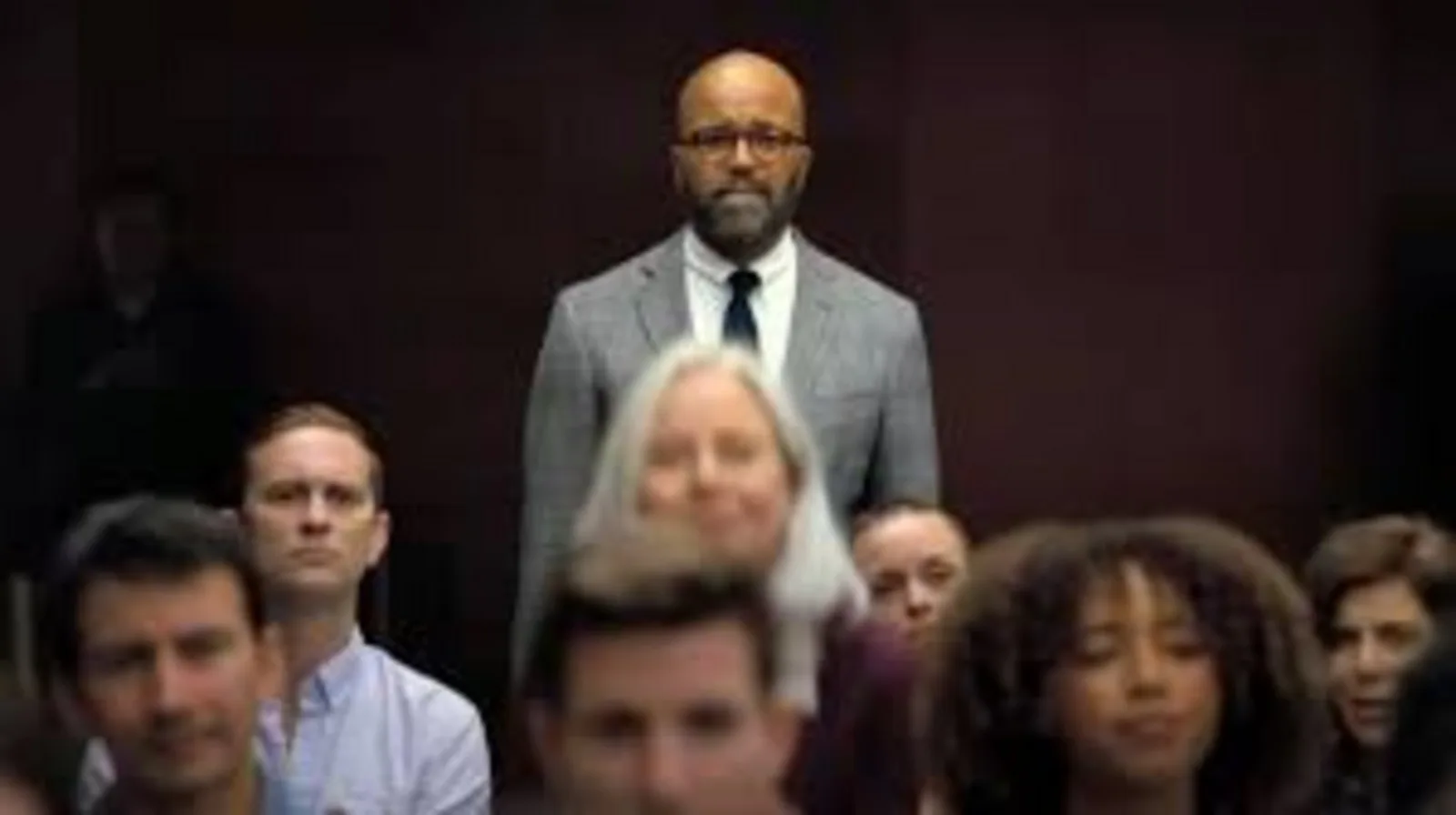
From his established eloquence for comedic writing on The Good Place, Cord Jefferson delivers one of the funniest and cleverest movies of last year, only recently released in the UK, American Fiction, based on the 2001 novel ‘Erasure” by Percival Everett. Going into this knowing little about the plot, its safe to say it’s understandable how this film has bagged five Oscar nominations, not only for its outstanding cast, but for its originality.
Jeffrey Wright leads as a grumpy, uptight African American novelist “Monk” who hasn’t had much luck in recent years with his writing. Many have compared American Fiction to Bamboozled, where the protagonist jokingly writes a story full of the stereotypes and cliches of being black in the hopes to expose the “white understanding of being black” if you will, only for it to turn into a bestselling hit. Jefferson uses visual humour and witty dialogue to bring a satirical tone to the film, as we laugh along with the protagonists at the sheer absurdity, yet unfortunate truth, of the reaction white people have to what they consider the life of being black in America, yet Jefferson proves it is so much more than what you read on a page.

The cast is so expertly chosen for this film; Jeffrey Wright (nominated for Best Actor) brings a dry, blunt humour to his leading role that gives the film such a fiercely clever message, alongside the smaller, but no less brilliant role of Monk’s brother Cliff, played by Sterling K. Brown who is also nominated for Best Supporting Actor. The ridiculous, comedic storyline of Monk’s satirical novel “My Pafology” (later made much shorter…) is balanced so beautifully with the at times heartbreaking storyline of Monk’s true life. Monk experiences loss, pain, and solitude as his mother becomes ill and he is left as her carer. However, this brings out a rather loving vulnerable side to his usual hard exterior, but still manages to make you laugh at the most outrageous times.
American Fiction is so effective because of how it exposes the hypocrisy of society, and the way in which the media and literature can be responsible for promoting a 2D picture of life as an African American, when in fact, these stories have layers. The stereotypical characters of fatherless young men getting into trouble with the law are not debunked, but rather built upon, showing that the experience of black people is more than that which is depicted in the media. The focus is taken away from the black experience from an outside, mainly white understanding, which is greatly mocked within the film, and instead on a real, family drama which allows the characters in this film to tell their story based on how they understand themselves.