The Big Lebowski @ Cinema City
This is a very complicated film, guys
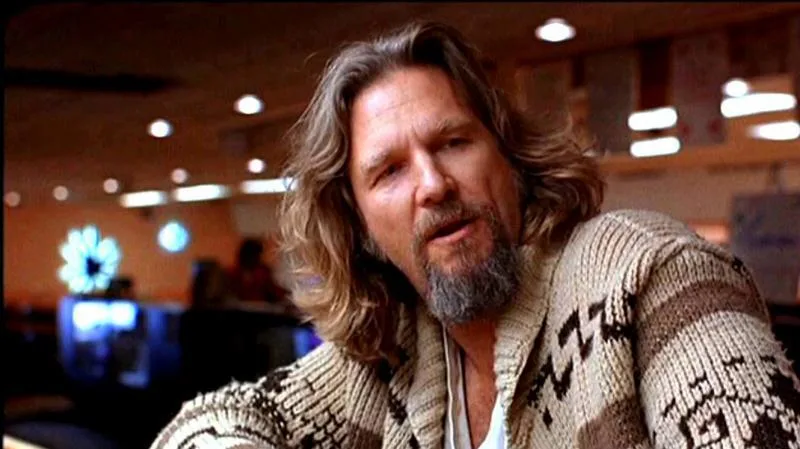
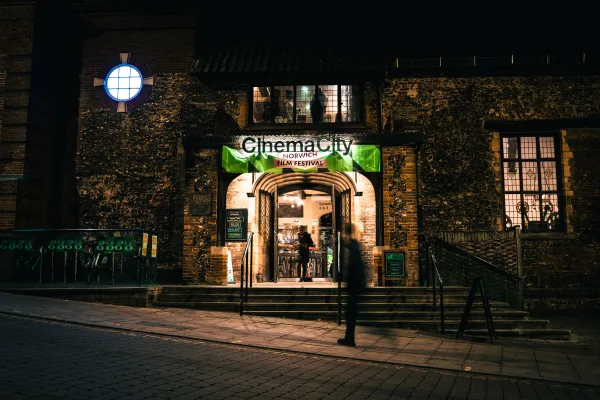
Two years after their critically adored, award-laden black comedy Fargo, the Coen Brothers’ The Big Lebowski was considered by many at the time to be something of a misstep, drawing criticism for being “haphazard”, “off-kilter”, “scattered”, and “unsatisfying”. Yeah, well, that’s just, like, their opinion, man. In the almost twenty years since its initial release, The Big Lebowski has earned cult classic status, spawning a 200,000-plus-strong slacker religion in “Dudeism” (or, to give it its full title, “the Church of the Latter Day Dude”), annual conventions attended by thousands, and countless regular late-night screenings all over the world, one of which was presented at our own Cinema City last night.
So, what is it about this absurdist LA-based stoner romp that can fill a Norwich cinema with enough White-Russian-slurping Dudes and Dudettes to drink the bar dry (of Caucasians, at least) on a Saturday night? I took my seat to watch the Dude abide for the umpteenth time, and pondered just that question…
The most obvious answer is that The Big Lebowski is relentlessly hilarious, whatever your preferred flavour of comedy. Slapstick (the attack of the nihilists, Donny’s “funeral”), physical comedy (Jesus’s strutting, the landlord’s woeful dance recital), and visual gags (the chair falling through the door) are all deployed with pinpoint accuracy by masters of those crafts, but it’s the eternally quotable dialogue that seals the deal for me.
For example, in one of the first scenes of the film where, following a case of mistaken identity, The Dude is having his head pushed into his toilet by thugs believing that his wife (The Dude is assuredly single) owes them money, we get the classic line, “Does this place look like I'm fucking married? The toilet seat's up, man!” This is immediately followed by one of the thugs holding up The Dude’s beloved bowling ball and saying, “What the fuck is this?” The Dude replies, “Obviously, you’re not a golfer.” It’s one of my favourite exchanges in all of cinema, and I loved the film from the moment I heard it.
Or maybe the reason that The Big Lebowski is revered with such affection is that, really, when you think about it, we’re all The Dude, aren’t we. We’re all victims of circumstance, just trying to get our rug back. Praise Him.
But why has it taken so long for The Big Lebowski to get the recognition it deserves? To their credit, many of the initial naysayers have thoroughly revised their opinion of the film, and it now features frequently in best-bla-bla lists, but why did a lot of people not get it first time around?

The thing is, The Big Lebowski is a far more complicated film than it initially appears. What the Coens did was to take a typically convoluted film noir and, while strictly adhering to the conventions of that genre (the protagonist being in every scene, for example), filtered it through the lens of a slacker comedy. I mean, consider the plot, but imagine it without the gags, rendered in high-contrast black and white with Bogart in the lead: A case of mistaken identity embroils our antihero in a kidnapping plot. A series of unfortunate events (bungled payoffs, disappearing cars, spiked drinks) puts him in a Johnson-threatening situation and draws him to the centre of the fishy familial affair, and he eventually escapes his emasculating fate by revealing the true perpetrator of the switcheroo scam. Chuck in a private detective, a trigger-happy sidekick, and a broad that would make a Bishop kick a hole in a stained-glass window, and you’ve got hard-boiled crime fiction.
There are also layers of thematic complexity, both visually and in the dialogue, that add up to a virtuosic directing performance. Constant call-backs and visual references, many of which are so subtle as to be only subconsciously effecting (on first watch, at least), make The Big Lebowski feel like much more than the sum of its many parts, and certainly much more than any slacker comedy has the right to be.
So, maybe that attention to detail is a reason for some of the enduring and ever-developing appeal of The Big Lebowski; it’s always worth watching again, because there’s always something you’ve missed. Also, thinking about it, it’s in my top 10 films of all time, but it’s the only one of that 10 I’m always happy to watch, irrespective of mood, circumstance, or company.
But does it all mean anything? Well, maybe. There are enough political references for one so inclined to read The Big Lebowski as a comment on the role of pacifism in these uncertain times, if you like (“Is it being prepared to do the right thing, whatever the cost? Isn't that what makes a man?”). The film opens with the once-politically-active Dude being largely oblivious to Bush senior declaring war on Iraq, and then being buffeted between the forces of gun-toting conservatism (Walter), self-serving capitalism (Big Lebowski), and nihilism (the Germans). Maybe The Dude represents pacifism finally making a stand (“this unchecked aggression will not stand, man!”), or maybe The Dude’s former political activism being replaced by the desire to simply abide is a cautionary tale. But, y’know, in the parlance of our times; whatevs.
What is certain, though, is that this is a very complicated film, guys. You know, a lotta in's, a lotta out's, a lotta what-have-you's. And, uh, a lotta strands to keep in my head, man. What’s also certain is that a cinema full of people, most of whom were not old enough to drink when The Big Lebowski was first released, had a blast last night. So, here’s to the nice folks at Cinema City.