Mindhorn
An apocalypse of justice.
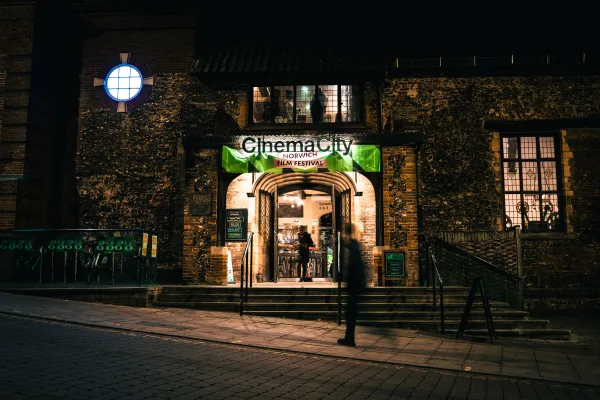
A couple of weeks ago I went to see the film Their Finest, and whilst somewhat unremarkable it made me start to think of what British cinema is today. Whereas Their Finest can best be described as a bit of overtly sentimental slop, we as a nation do produce some quite wonderful films, Ben Wheatley's Free Fire and Alice Lowe's Prevenge then start coming to mind as shining examples of British talent being both good and original. With this existential notion starting to clear up I quite happily trundled along to a screening of Mindhorn. I trundled out of the cinema after the screening with my existential crisis once more starting to flair up. Oh dear, I'm back there again I thought as I settled in with my pint and cardboard Mindhorn mask. Oh dear indeed.
Perhaps I'm being a little too harsh - by no means did I not enjoy Mindhorn, it's just I've seen this all before over a decade previously on BBC3 with The Mighty Boosh, on Channel 4 with Garth Marenghi's Dark Place and, very recently, just a few years back with Alpha Papa which is to Alan Partridge as Mindhorn is to Boosh and Dark Place. This doesn't necessarily discredit Mindhorn, it is still tremendously funny and any Julian Barratt fans would be remiss to miss it. I just wonder whether the material once shown on television is worthy of the big screen. Either way that's enough of the downbeat mood - this film is worth watching so I'm going to heap a little praise on it to level out the field.

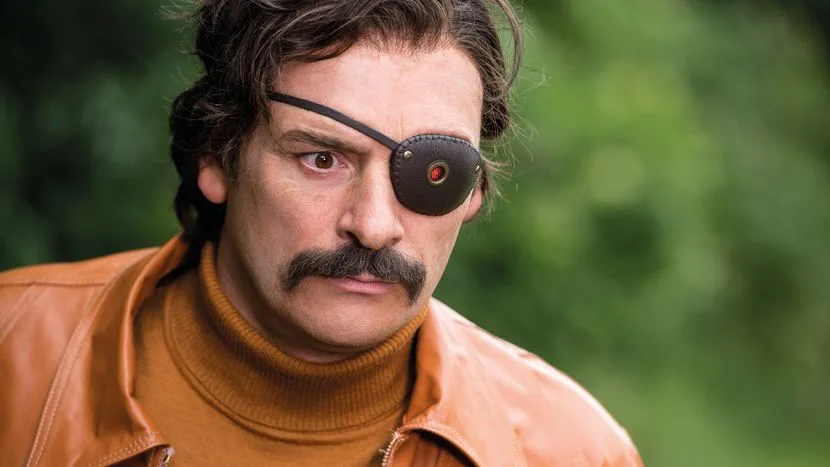
Written by Julian Barratt and Simon Farnaby, the film follows down on his luck actor Richard Thorncroft (Barratt) as he struggles through life as an unsuccessful actor after a brief stint of fame in the eighties as the star of the series Mindhorn, a man who through the use of an artificial eye can literally see lies. After a suspected murderer on the Isle of Man refuses to talk to anybody but Mindhorn, the washed up actor desperate for a comeback finds himself once more in the limelight and once more embroiled with the cast and crew of the show he long since left behind.
Drawing much of its creative drive from the fictional show it has created for itself Mindhorn exists as a mix between Bergerac, Knightrider and Alpha Papa. The retro 80's aesthetic which has been having a resurgence in recent years is played to great effect with the film's visuals and soundtrack; a stand out musical number You Cannot Handcuff The Wind plays over the final credits and its visual flair where it comes to recreating a vintage and overtly nostalgic look is a welcome touch that solidifies the film's concept where it could otherwise be easily lost. It is to the films credit that I find myself longing for some of the Mindhorn merchandise the film throws at the viewer throughout parts of the movie. I won't lie, a talking Julian Barratt doll is right up my alley and I find myself wishing for a retractable talkbox attached to my belt.
Julian Barratt is surely a stand out as the beguiled actor Thorncroft although at times it feels like he's challenging more Howard Moon than Mindhorn - a problem that the film suffers from is its clear and present ties to the British comedy circuit of the past fifteen years. While a hindrance, it is also a help, a tremendous amount of good will is funnelled into Mindhorn, you just need to look at the list of celebrity cameos to understand where the movie is coming from and the pedigree that birthed it. Otherwise the film itself is functional with the exception of a rushed and hurried ending, mechanical parts slip and slide with the required motion you'd expect just without any clear gumption that would distinguish it from heavier fare. Mindhorn, while not perfect and suffering from its conception is far from a lost cause however. I laughed far more than my prescribed quota, a film so fun that I'm fairly sure a little wee came out. I had a blast while watching it and I'm sure you all will too.