Midsommar
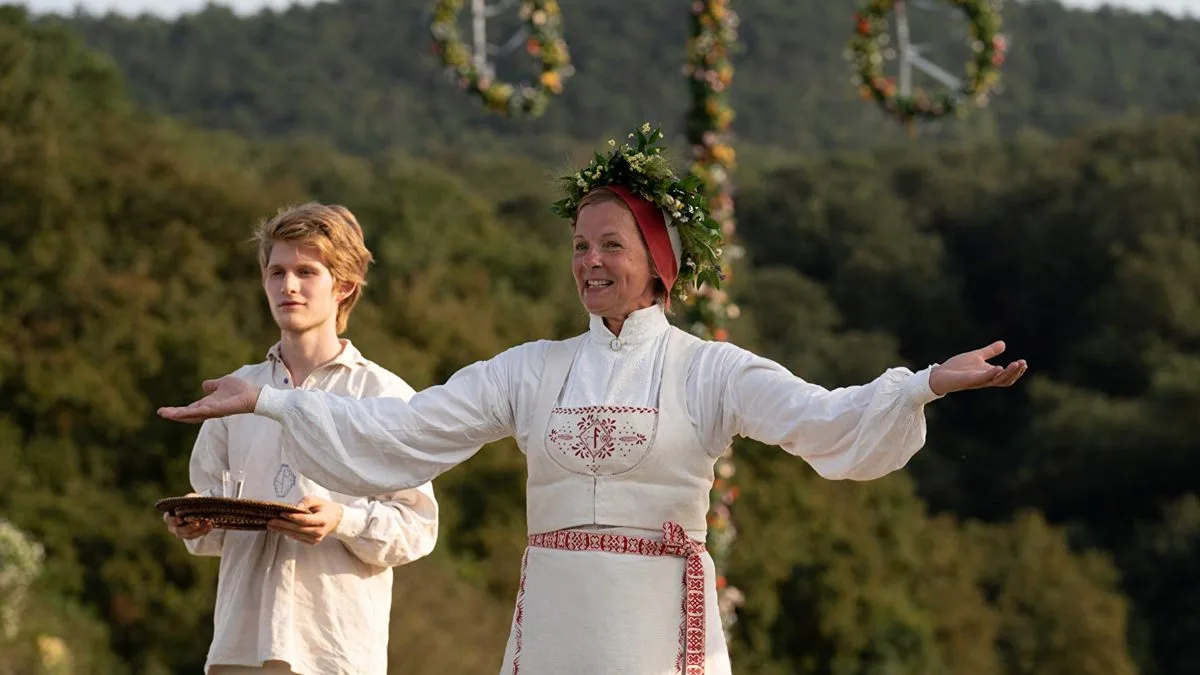
What do you get when you cross The Wicker Man’s setting with the trajectory of The Witch and the batshit crazy-ness of last year’s Suspiria remake? Well, according to director Ari Aster, the answer is a, uh, break-up movie? Here he’s followed up horror-hit Hereditary with a rapturous seance of a film, trading nutty cakes with pube-stuffed pies and clicking noises with Chekhov’s bear. Where his debut tried and failed to smoosh a nuanced examination of grief with campy cultish hijinks, Midsommar finds a perfect marriage, its overblown plotting—and freakish finale—one big fat metaphor for a floundering relationship. Forget the flashy gore and daylight distress: the true horror of Midsommar is an emotionally unavailable boyfriend (that and hayfever).
The relationship in question is between Florence Pugh’s Dani—attempting to recover from a pre-credits trauma—and Jack Reynor’s Christian, who begrudgingly invites her to a Swedish weekend retreat he had secretly planned with his friends. His bickering, gaslighting and unabashed lying all feed into one hell of a toxic relationship, so when the group’s voyage to this midsummer festival begins with a healthy dose of mushrooms, Dani’s bad trip is inevitable.
Aster, in fact, wields this inevitability like a weapon (namely a goofy wooden hammer). You don’t need to pay attention to the camera’s topsy-turvy techniques or that thrilling opening segment to realise that this holiday ain’t gonna end well for the group. Sure, most of them are defined in broad strokes—there’s Will Poulter’s horny comic relief Mark, and William Jackson Harper’s academic Josh—but really they’re just slabs of male meat, embodiments of gendered hubris and the queasy clashing of cultures, simply designed to up the dread and meet their reckoning.
If Hereditary is about how you respond to your own grief, Midsommar is about how others choose to respond in turn. Forgotten birthdays or a surrogate family’s embrace; apathy or empathy. Aster’s trick is to slowly reposition the audience’s perspective to that of the cult’s; soon you start noticing a beauty to the bloodshed, a triumph to the madness. The glossy, over-exposed cinematography loses its impression of a waking nightmare and turns into a flowery daydream. Composer Bobby Krlic’s delicious licks of harp and synth certainly enhance the effect: the foreboding strings slowly shift to an altogether more victorious endorsement of the on-screen antics, offering up a woozy, intoxicating juxtaposition.

Where Midsommar slips up is in its baggy runtime, which stretches the central dynamic to the point of snapping. Aster is clearly a nut for rituals, but he plays up the pagan so much that he often loses his grip on the underlying metaphor. The specifics of the cultish traditions hardly matter when there’s an emotional undercurrent at hand, but Midsommar’s delirious dance towards its inevitable finale, much like its Mayqueen ritual, is riddled with stops and starts.
That’s not to suggest that Aster eases up on the throttle. Midsommar’s trajectory is grandiose, bombastic, and scarcely believable, but when in service of the bigger picture at hand—the man who’s unable to claim responsibility for his own actions, and the woman who comes to terms with that fact—it works. Sip the drink, sniff the root, ingest the shrooms: give in to the (genuinely hilarious) carnage, and it’ll all be worth it.
Gus Edgar-Chan
8/10