
Interview with Alt-J 2013
"Gus ended up going back to Ted Danson’s house for some Prosecco! He became aware that Ted Danson was aware of alt-J and he likes the album!"
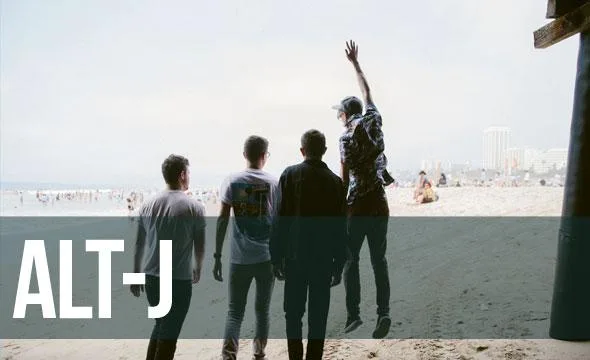
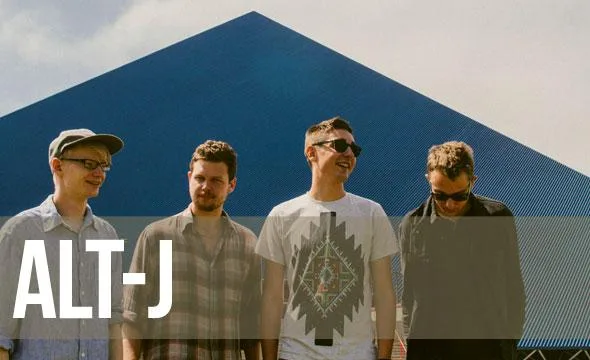
Having interview alt-J before, we would usually leave it a while before revisiting the band again, but with alt-J, this is not a regular situation. Since last we spoke, some short nine months ago, the band have realised the potential of the momentum we could feel brewing, and won the Mercury Music Prize and Ivor Novello for best album in that short time. While the major newspapers were still playing a game of ‘file the promo CD in the stagnant, abandoned in-tray’, the greater populus of the UK and good-music-loving America had already decided alt-J were their new favourite band. This summer, they’ve been given the headline slots to prove it, and that’s exactly the subject we embark upon as Gwilym Sainsbury, bassist from the band, gives us his time. Oh, and they’re as polite as you might have heard. I’m all for the ‘gentrification of rock’ if it means I can have a nice chat with a swell guy called Gwil.
We’ve had the pleasure of interviewing you guys before; one of our writers, Alex interviewed Gus last year. It feels like ages ago – it’s been a busy old time for you… It feels like it’s been like a decade! In a way it’s felt really long, like a really long time ago, it’s pretty strange! It’s been a very, very intense year.
It sure has. Now I detect from the dial tone that you’re somewhere exotic, is that right? Well… I don’t know if you’d call it exotic! I’m in Hamburg in North Germany for Hurricane Festival.
Oh, that’s pretty exotic – I love Germany. I do love Germany but this festival is notoriously muddy! We played here last year and there was genuinely like a – almost a hurricane. So it’s very muddy and smelly today.
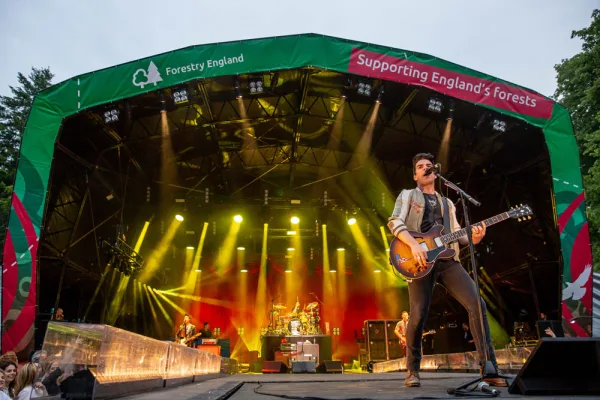
We’re doing this interview in honour of your Latitude appearance next month. You’re headlining the 6Music Stage, which is quite a prestigious spot – how did you feel when you got the call? Erm, very honoured! It’s also a bit scary, really; we’re doing Latitude, headlining that stage and then we’re also doing Reading and Leeds and headlining those stages, so it’s a bit, erm, bit scary actually, ‘cause we only have one album! Those slots tend to be a bit longer, so we’ve got to work hard on making more of a headline set. Up until this year, up until now, when we’ve been at festivals we’ve been that ‘new band’ that some people have heard of. You had the pressures of being that band, but not the pressures of being an established band, so it’s quite different.
It’s a hell of an achievement in the time; it must be crazy... Yeah, it’s so new to us so we’re still sort of looking at other bands that are headlining and seeing what a headline band really does! What constitutes a good headline performance as a kind of art form?
And how are you gonna fill that time? Do you have enough material?! [LAUGHS] Well, we’ll see! We’ve got some other songs in the set, some other songs we’ve written and some covers and we’re just working on trying to make it so that the set chapters are as effective as possible. We’ve got some songs that are very bass heavy and hard, then we’ve got some other songs that are really, really quiet, so it’s quite a strange thing to work at a festival. If you’re playing a club show, your audience is there, they’ve all paid for a ticket and they’re all pretty much gonna be in that room regardless of whether it feels like the set’s lost energy or not. It’s just a completely different atmosphere; they’re there to listen and to absorb it, whereas at a festival you’ve got this transient crowd, who are completely nomadic. They don’t have to stand there and sit through something they don’t want to hear, or something they’re not in the mood to hear, if they just want to jump around. So yeah, it’s quite different; you’ve got to work a lot more to keep everyone with you.
How do you feel going up against the mighty Kraftwerk on the schedule, ‘cause I think they’ll be on at the same time as you?! [LAUGHS] Yeah, that’s pretty horrible, actually! I don’t know; it’s one of those things where you’ve no idea – maybe everyone will go and see Kraftwerk and no one will come and see us. I also feel that a lot of kids, especially younger kids won’t really identify with Kraftwerk, so maybe they’ll come and see us.
So the last time we interviewed you, we were very aware of the momentum of your career, but there’ve been some significant game-changers since. Now you’ve had a bit of time to digest it and reflect on it, tell us about the whole Mercury prize experience… Really, I haven’t had chance to digest, or come to terms with it yet. It’s one of those things that I say all the time, that we won it then went straight back into touring the next day again. We had a bit of time off for Christmas in which to think about it, but I was too absorbed into seeing my family and things to really sort of congratulate ourselves on it. I don’t think we’ve given ourselves that pat on the back yet, because we’ve just been too busy. It’s always like when someone mentions it, it’s genuinely like I’ve forgotten, so it’s nice when someone mentions it, ‘cause then I remember that it happened. It’s such a strange thing because it was such a massive, massive thing for us – really the only prize that we ever paid attention to. Things like the BRIT Awards, I never really watched but the Mercury Prize, to see it from a young age it was the thing that people in the industry would really look up to. It was never really about who won it – I’m not sure what winning it really means – but it was about that shortlist, those nominations. You’d check out that list every year and find so many things you’d missed out on throughout the year and maybe buy an album by a band you’d never usually like, I don’t know, sorta come in to contact with. Maybe they’d be part of a genre you weren’t really in to, or other reasons, but you’d often discover really, really great artists through that. That’s what it was really about, so getting a nomination, that was really the big thing – we were gonna stick on our CDs, ‘Mercury Prize Nominated’ and we probably would have got a different arrangement or something in HMV. So that was really nice, and winning it was really strange, really, really strange.
I love the Mercury Prize and every year feel a rush of excitement when the nominations are announced, then ultimately the winner. I never usually ask, or dwell on the negative, but I read a really pointless and unnecessarily negative article by Neil McCormick of The Telegraph who suggested the Prize was irrelevant now, and he even suggested, “won by a band no-one really loves.” I don’t know how out of touch he is; it may be a crass measure of endorsement, but 425K Facebook Likes would say otherwise. How are you at brushing off that kind of rare, but negative press? I think it depends on the journalist, really. Some of us in the band, we read a lot, you know, we read a lot of current affairs and read a lot of newspapers and we’re fairly familiar with most journalists, so sometimes when one journalist disses you, you just kinda go, “oh well, it’s them! I know what they’re like; I’ve read their articles before and it’s no big news.” They’ve got this point of view on music, that it should be this way… Y’know, whatever – they’ve got agendas. And so when you’re aware of these agendas then it’s cool, you can just shrug it off and say it’s pretty funny, and read it in a different detached way from them kinda criticising you. You can just see it in the wider perspective of the media and their role, how they see themselves in it. I think sometimes if you find out someone you really like, doesn’t like you, then that can be really gutting – that can be nasty – but it doesn’t really happen very much. And most of the time, we get things that are really incredible happening that are just completely bizarre, I mean, a couple of weeks ago Gus was meeting up with Johnny Flynn – are you familiar with Johnny Flynn?
Yeah, yeah – - Well we were in New York doing a festival there and Gus met up with him, and they ended up going back to Ted Danson’s house for some Prosecco! So you get stuff like that; he became aware that Ted Danson was aware of alt-J and he likes the album, and it’s just… You get things like that happen that are just phenomenal!
Yeah, that’s amazing! Just today, we had a tweet – I don’t know, do you watch Breaking Bad?
I LOVE Breaking Bad, yeah. You love it? Well today Jesse from Breaking Bad tweeted us asking us to play at his house!
Noooo!! That’s the BEST! So you get stuff like that where you’re like, “actually, if this person likes us then it doesn’t really matter”. I find that like-minded people tend to like our music, so it usually works out better.
It just made Neil McCormick look like a sad old ballbag really, so there’s nothing to worry about. Yeah, it did make him look like a sad, angry man.
I’m amazed by the Jesse tweet, by the way, but I guess more of an accolade recently would have been the Ivor Novello award recently. That must have been a really sweet one to get, especially for Joe, I imagine? Yeah, I think that’s it; you have the Mercury Prize, which is quite weird, but you get a kind of nod from the established music industry, don’t you, and it’s all quite strange. It feels nice but you also feel quite guilty for liking it, whereas the Ivors were kinda like the same thing but it felt more – I don’t know – it felt kind of warmer. You had people like Randy Newman picking up a Lifetime Achievement Award and it felt very strange to be accepted into what feels like some sort of songwriters’ guild that the Ivor Novellos are, you know? You get invited back to judge on other Ivor Novello prizes in the future and things like that, so it’s quite odd to see these doors opened into a kind of much older world of people.
Even though album sales have been really strong, it’s been good to see you take the traditional approach and champion a few as singles, because with a track like ‘Dissolve Me’, which you’ve just released on its own – by listening to it on its own, benefitting from a bit of spotlight, it’s my new favourite track from the album. Do you think it’s important that songs get to breathe on their own? Interesting – I think so; I think it’s something you worry about a little bit, you know? You wonder how much you should push things to radio but singles are the way you do that; you put out a single and you take it to the radio and you say, “Do you want to play this? Please play it!” So I think a lot of it is about making different tracks from the album have their own time within public awareness, really, that’s what the radio us. I do think that there’s things about radio that – you can put nearly any track on the radio and if people hear it enough, you’ll end up liking it. It’s a very strange thing and for us it was odd because we had radio support before we had any actual music press support. A lot of the time, bands get read about in the NME and then get radio play but it really was the other way round for us, when they started playing ‘Matilda’. We went from being a band where we’d turn up at these things and maybe 10 people would know about us, or even before the album was released, playing and having people sing along to ‘Matilda’ ‘cause it’d been on the radio in that public consciousness. It’s an interesting thing; on one hand I love to hear it played on the radio, and on the other, I’m always quite cautious of radio because it seems to be that if you put a track on the radio and play it enough, it’ll get into people’s heads, a bit like brainwashing.
I really am enjoying ‘Dissolve Me’ though – I love that kind of carnivalesque, funfair type of Wurlitzer sound you use for the hook. Is that what it is? It’s not, no; I’m trying to remember, in the recording process, how it actually went! It used to be played on a very old Yamaha keyboard that I think Joe might have stole from his secondary school, like, borrowed and never given back! It was a rubbish keyboard but it had some really good sounds on it, then I think in the studio it ended up being manipulated on the computer to sound a bit more, I don’t know – somewhere between, yeah, carnival and I don’t know, a church pop organ.
Yeah, it’s a lovely sound. I was looking at the single artwork [a picture of a cropped face with brandished tongue, on which sit two LSD tabs emblazoned with the alt-J logo] and I was wondering, is the face meant to look like a child’s?! [PAUSES] Is it supposed to look like a child? No. Is it supposed to look like a child?! No - that sounds bad doesn’t it! Encouraging children to take LSD.
[LAUGHS] Ha, yeah, it’s probably just me – it’s quite small on my screen. I don’t have my glasses on either… maybe I’ll put them on and reconsider it! [LAUGHS] I’m gonna say to the record company, it definitely wasn’t meant to look like a child!! [LAUGHS]
Well I thought that would be quite a strange statement from you guys, but it did get me thinking about how you could actually ingest alt-J? How you could get the complete, full, alt-J immersive experience? I think you’d need sight, sound and… and an ‘L’ [LAUGHS]. I don’t know really; I think because people experience things so differently, it’s hard to sort of understand what people get from a record, because people really do take away what they want to take away, so it’d be hard to get an all-over experience and give it to people because I think everyone approaches it so differently. What they think about the lyrics, what they think about what our influences were; it amazes me how different people, with different points of view of the world can view it so differently.
Yeah, like seeing a child where you should be seeing a consenting adult. Whoops. [LAUGHS] Yeah! Maybe it is a child! I think maybe the photo of the child was just a stock photo from Getty Images or something…
Yeah, the designer just typed in ‘tongue’ – - Yeah, then they just stuck two tabs on it. But erm… yeah, oh dear.
I want to ask you quickly about new material, because instead of launching in to work on a second album, or something, you’ve written the soundtrack to a film – is it ‘Leave to Remain’? Tell us why you decided to do that… Uh-huh, yep. Well, I think that we’d always really liked the idea of writing for a film because it seems, in a way, almost musically purer than writing pop, I suppose, because you’re not worried about song structure or “we’ll not be able to put this on the radio because it doesn’t have a single, or even a chorus”, or any of this kind of stuff. There’s not really any worry involved, you simply respond to the subject matter in a very intuitive way. There’s none of the same restrictions and it feels like almost a more human response; it kind of takes less crafting, in a way because you’re not concentrating on the same things, or conventions. You can make one piano chord last five minutes if you want to build up some tension. It’s a completely different kind of listening, because it’s music to film, so for us I think it was a really almost therapeutic thing to have done. We’d been on tour for a year and a half, maybe two years, and then I think you don’t get much time to do what you’d intended to do, to make music because you’re touring. So that’s two really therapeutic things to do, to get into the studio and to get it done quite swiftly as well, allowing ourselves to be creative for a bit, rather than sort of being in this touring mode, which isn’t very creative – it’s kind of, er, I don’t know, it’s a strange state of mind just travelling around and not really having much of a routine. So we did that and Bruce, the director and writer was basically listening to our album while he was writing the script and he probably thought it was quite a natural tangent to go down to ask us if we were interested in doing the music. So we read the script and we agreed. I’m not sure when that’s coming out; sometime later this year, I think. We’re also working on some other things that we can’t really talk about, but it’s more film work, so it’s a really nice thing to be getting on with, while on tour. You can do lots of it on your computer; you don’t have to have a recording studio. You can do lots of it by yourself and it’s just very therapeutic.
I’m really interested to see the film, I think it’ll be really exciting. So lastly Gwil, the terms ‘boffin rock’ and ‘indie-lectual’ – how much pressure has that put on you? Do you think, ‘oh shit, they think we’re really clever’? You’ve got something to uphold here, haven’t you?! [LAUGHS] I think, er [LAUGHS AGAIN], I think it’s quite funny because we’re not stupid, but we’re not really super smart, I mean, I would never use the term ‘geek’ or ‘nerd’ to describe any of us really, because I think that term is far more of an honour than we would really deserve. When I think about people I know that I would describe as geeks or nerds, their expertise or knowledge in certain areas they’re interested in is far greater than ours. We’re not necessarily techie kind of people. I think a lot of people think we sit around playing with synthesisers and geeking out and stuff, but we don’t at all! We might do on computers, but we don’t really have that same – I don’t even know what notes I play on the guitar. I don’t know what I’m doing; I just play by ear! It’s kind of embarrassing to actually be called that. I think it’s more of just a cultural stereotype: people who went to university, some of them wear glasses and maybe, I suppose, we’re better than some bands at articulating ourselves. That leads to this label, but I don’t think it’s accurate – I think it’s more lazy journalism. They need these little phrases and buzzwords to keep editors happy and keep things ticking along, ‘cause that’s the way it is.
I think because your music has been hard to define, they have to find other things about your character to snappily convey to the reader. I guess the best indication we could have though is, would your parents say you’re boffins? Erm… No. As individuals as well, we’re all very different – some of us are definitely more boffiny than others, but I don’t think any of our parents would call us boffins, no. There you go, parent knowledge.
Emma R. Garwood
Alt-J headline the BBC Radio 6Music Stage at Latitude Festival on Saturday 20th July. For tickets, go to www.latitudefestival.co.uk.

Having interview alt-J before, we would usually leave it a while before revisiting the band again, but with alt-J, this is not a regular situation. Since last we spoke, some short nine months ago, the band have realised the potential of the momentum we could feel brewing, and won the Mercury Music Prize and Ivor Novello for best album in that short time. While the major newspapers were still playing a game of ‘file the promo CD in the stagnant, abandoned in-tray’, the greater populus of the UK and good-music-loving America had already decided alt-J were their new favourite band. This summer, they’ve been given the headline slots to prove it, and that’s exactly the subject we embark upon as Gwilym Sainsbury, bassist from the band, gives us his time. Oh, and they’re as polite as you might have heard. I’m all for the ‘gentrification of rock’ if it means I can have a nice chat with a swell guy called Gwil.
We’ve had the pleasure of interviewing you guys before; one of our writers, Alex interviewed Gus last year. It feels like ages ago – it’s been a busy old time for you… It feels like it’s been like a decade! In a way it’s felt really long, like a really long time ago, it’s pretty strange! It’s been a very, very intense year.
It sure has. Now I detect from the dial tone that you’re somewhere exotic, is that right? Well… I don’t know if you’d call it exotic! I’m in Hamburg in North Germany for Hurricane Festival.
Oh, that’s pretty exotic – I love Germany. I do love Germany but this festival is notoriously muddy! We played here last year and there was genuinely like a – almost a hurricane. So it’s very muddy and smelly today.
We’re doing this interview in honour of your Latitude appearance next month. You’re headlining the 6Music Stage, which is quite a prestigious spot – how did you feel when you got the call? Erm, very honoured! It’s also a bit scary, really; we’re doing Latitude, headlining that stage and then we’re also doing Reading and Leeds and headlining those stages, so it’s a bit, erm, bit scary actually, ‘cause we only have one album! Those slots tend to be a bit longer, so we’ve got to work hard on making more of a headline set. Up until this year, up until now, when we’ve been at festivals we’ve been that ‘new band’ that some people have heard of. You had the pressures of being that band, but not the pressures of being an established band, so it’s quite different.
It’s a hell of an achievement in the time; it must be crazy... Yeah, it’s so new to us so we’re still sort of looking at other bands that are headlining and seeing what a headline band really does! What constitutes a good headline performance as a kind of art form?
And how are you gonna fill that time? Do you have enough material?! [LAUGHS] Well, we’ll see! We’ve got some other songs in the set, some other songs we’ve written and some covers and we’re just working on trying to make it so that the set chapters are as effective as possible. We’ve got some songs that are very bass heavy and hard, then we’ve got some other songs that are really, really quiet, so it’s quite a strange thing to work at a festival. If you’re playing a club show, your audience is there, they’ve all paid for a ticket and they’re all pretty much gonna be in that room regardless of whether it feels like the set’s lost energy or not. It’s just a completely different atmosphere; they’re there to listen and to absorb it, whereas at a festival you’ve got this transient crowd, who are completely nomadic. They don’t have to stand there and sit through something they don’t want to hear, or something they’re not in the mood to hear, if they just want to jump around. So yeah, it’s quite different; you’ve got to work a lot more to keep everyone with you.
How do you feel going up against the mighty Kraftwerk on the schedule, ‘cause I think they’ll be on at the same time as you?! [LAUGHS] Yeah, that’s pretty horrible, actually! I don’t know; it’s one of those things where you’ve no idea – maybe everyone will go and see Kraftwerk and no one will come and see us. I also feel that a lot of kids, especially younger kids won’t really identify with Kraftwerk, so maybe they’ll come and see us.
So the last time we interviewed you, we were very aware of the momentum of your career, but there’ve been some significant game-changers since. Now you’ve had a bit of time to digest it and reflect on it, tell us about the whole Mercury prize experience… Really, I haven’t had chance to digest, or come to terms with it yet. It’s one of those things that I say all the time, that we won it then went straight back into touring the next day again. We had a bit of time off for Christmas in which to think about it, but I was too absorbed into seeing my family and things to really sort of congratulate ourselves on it. I don’t think we’ve given ourselves that pat on the back yet, because we’ve just been too busy. It’s always like when someone mentions it, it’s genuinely like I’ve forgotten, so it’s nice when someone mentions it, ‘cause then I remember that it happened. It’s such a strange thing because it was such a massive, massive thing for us – really the only prize that we ever paid attention to. Things like the BRIT Awards, I never really watched but the Mercury Prize, to see it from a young age it was the thing that people in the industry would really look up to. It was never really about who won it – I’m not sure what winning it really means – but it was about that shortlist, those nominations. You’d check out that list every year and find so many things you’d missed out on throughout the year and maybe buy an album by a band you’d never usually like, I don’t know, sorta come in to contact with. Maybe they’d be part of a genre you weren’t really in to, or other reasons, but you’d often discover really, really great artists through that. That’s what it was really about, so getting a nomination, that was really the big thing – we were gonna stick on our CDs, ‘Mercury Prize Nominated’ and we probably would have got a different arrangement or something in HMV. So that was really nice, and winning it was really strange, really, really strange.
I love the Mercury Prize and every year feel a rush of excitement when the nominations are announced, then ultimately the winner. I never usually ask, or dwell on the negative, but I read a really pointless and unnecessarily negative article by Neil McCormick of The Telegraph who suggested the Prize was irrelevant now, and he even suggested, “won by a band no-one really loves.” I don’t know how out of touch he is; it may be a crass measure of endorsement, but 425K Facebook Likes would say otherwise. How are you at brushing off that kind of rare, but negative press? I think it depends on the journalist, really. Some of us in the band, we read a lot, you know, we read a lot of current affairs and read a lot of newspapers and we’re fairly familiar with most journalists, so sometimes when one journalist disses you, you just kinda go, “oh well, it’s them! I know what they’re like; I’ve read their articles before and it’s no big news.” They’ve got this point of view on music, that it should be this way… Y’know, whatever – they’ve got agendas. And so when you’re aware of these agendas then it’s cool, you can just shrug it off and say it’s pretty funny, and read it in a different detached way from them kinda criticising you. You can just see it in the wider perspective of the media and their role, how they see themselves in it. I think sometimes if you find out someone you really like, doesn’t like you, then that can be really gutting – that can be nasty – but it doesn’t really happen very much. And most of the time, we get things that are really incredible happening that are just completely bizarre, I mean, a couple of weeks ago Gus was meeting up with Johnny Flynn – are you familiar with Johnny Flynn?
Yeah, yeah – - Well we were in New York doing a festival there and Gus met up with him, and they ended up going back to Ted Danson’s house for some Prosecco! So you get stuff like that; he became aware that Ted Danson was aware of alt-J and he likes the album, and it’s just… You get things like that happen that are just phenomenal!
Yeah, that’s amazing! Just today, we had a tweet – I don’t know, do you watch Breaking Bad?
I LOVE Breaking Bad, yeah. You love it? Well today Jesse from Breaking Bad tweeted us asking us to play at his house!
Noooo!! That’s the BEST! So you get stuff like that where you’re like, “actually, if this person likes us then it doesn’t really matter”. I find that like-minded people tend to like our music, so it usually works out better.
It just made Neil McCormick look like a sad old ballbag really, so there’s nothing to worry about. Yeah, it did make him look like a sad, angry man.
I’m amazed by the Jesse tweet, by the way, but I guess more of an accolade recently would have been the Ivor Novello award recently. That must have been a really sweet one to get, especially for Joe, I imagine? Yeah, I think that’s it; you have the Mercury Prize, which is quite weird, but you get a kind of nod from the established music industry, don’t you, and it’s all quite strange. It feels nice but you also feel quite guilty for liking it, whereas the Ivors were kinda like the same thing but it felt more – I don’t know – it felt kind of warmer. You had people like Randy Newman picking up a Lifetime Achievement Award and it felt very strange to be accepted into what feels like some sort of songwriters’ guild that the Ivor Novellos are, you know? You get invited back to judge on other Ivor Novello prizes in the future and things like that, so it’s quite odd to see these doors opened into a kind of much older world of people.
Even though album sales have been really strong, it’s been good to see you take the traditional approach and champion a few as singles, because with a track like ‘Dissolve Me’, which you’ve just released on its own – by listening to it on its own, benefitting from a bit of spotlight, it’s my new favourite track from the album. Do you think it’s important that songs get to breathe on their own? Interesting – I think so; I think it’s something you worry about a little bit, you know? You wonder how much you should push things to radio but singles are the way you do that; you put out a single and you take it to the radio and you say, “Do you want to play this? Please play it!” So I think a lot of it is about making different tracks from the album have their own time within public awareness, really, that’s what the radio us. I do think that there’s things about radio that – you can put nearly any track on the radio and if people hear it enough, you’ll end up liking it. It’s a very strange thing and for us it was odd because we had radio support before we had any actual music press support. A lot of the time, bands get read about in the NME and then get radio play but it really was the other way round for us, when they started playing ‘Matilda’. We went from being a band where we’d turn up at these things and maybe 10 people would know about us, or even before the album was released, playing and having people sing along to ‘Matilda’ ‘cause it’d been on the radio in that public consciousness. It’s an interesting thing; on one hand I love to hear it played on the radio, and on the other, I’m always quite cautious of radio because it seems to be that if you put a track on the radio and play it enough, it’ll get into people’s heads, a bit like brainwashing.
I really am enjoying ‘Dissolve Me’ though – I love that kind of carnivalesque, funfair type of Wurlitzer sound you use for the hook. Is that what it is? It’s not, no; I’m trying to remember, in the recording process, how it actually went! It used to be played on a very old Yamaha keyboard that I think Joe might have stole from his secondary school, like, borrowed and never given back! It was a rubbish keyboard but it had some really good sounds on it, then I think in the studio it ended up being manipulated on the computer to sound a bit more, I don’t know – somewhere between, yeah, carnival and I don’t know, a church pop organ.
Yeah, it’s a lovely sound. I was looking at the single artwork [a picture of a cropped face with brandished tongue, on which sit two LSD tabs emblazoned with the alt-J logo] and I was wondering, is the face meant to look like a child’s?! [PAUSES] Is it supposed to look like a child? No. Is it supposed to look like a child?! No - that sounds bad doesn’t it! Encouraging children to take LSD.
[LAUGHS] Ha, yeah, it’s probably just me – it’s quite small on my screen. I don’t have my glasses on either… maybe I’ll put them on and reconsider it! [LAUGHS] I’m gonna say to the record company, it definitely wasn’t meant to look like a child!! [LAUGHS]
Well I thought that would be quite a strange statement from you guys, but it did get me thinking about how you could actually ingest alt-J? How you could get the complete, full, alt-J immersive experience? I think you’d need sight, sound and… and an ‘L’ [LAUGHS]. I don’t know really; I think because people experience things so differently, it’s hard to sort of understand what people get from a record, because people really do take away what they want to take away, so it’d be hard to get an all-over experience and give it to people because I think everyone approaches it so differently. What they think about the lyrics, what they think about what our influences were; it amazes me how different people, with different points of view of the world can view it so differently.
Yeah, like seeing a child where you should be seeing a consenting adult. Whoops. [LAUGHS] Yeah! Maybe it is a child! I think maybe the photo of the child was just a stock photo from Getty Images or something…
Yeah, the designer just typed in ‘tongue’ – - Yeah, then they just stuck two tabs on it. But erm… yeah, oh dear.
I want to ask you quickly about new material, because instead of launching in to work on a second album, or something, you’ve written the soundtrack to a film – is it ‘Leave to Remain’? Tell us why you decided to do that… Uh-huh, yep. Well, I think that we’d always really liked the idea of writing for a film because it seems, in a way, almost musically purer than writing pop, I suppose, because you’re not worried about song structure or “we’ll not be able to put this on the radio because it doesn’t have a single, or even a chorus”, or any of this kind of stuff. There’s not really any worry involved, you simply respond to the subject matter in a very intuitive way. There’s none of the same restrictions and it feels like almost a more human response; it kind of takes less crafting, in a way because you’re not concentrating on the same things, or conventions. You can make one piano chord last five minutes if you want to build up some tension. It’s a completely different kind of listening, because it’s music to film, so for us I think it was a really almost therapeutic thing to have done. We’d been on tour for a year and a half, maybe two years, and then I think you don’t get much time to do what you’d intended to do, to make music because you’re touring. So that’s two really therapeutic things to do, to get into the studio and to get it done quite swiftly as well, allowing ourselves to be creative for a bit, rather than sort of being in this touring mode, which isn’t very creative – it’s kind of, er, I don’t know, it’s a strange state of mind just travelling around and not really having much of a routine. So we did that and Bruce, the director and writer was basically listening to our album while he was writing the script and he probably thought it was quite a natural tangent to go down to ask us if we were interested in doing the music. So we read the script and we agreed. I’m not sure when that’s coming out; sometime later this year, I think. We’re also working on some other things that we can’t really talk about, but it’s more film work, so it’s a really nice thing to be getting on with, while on tour. You can do lots of it on your computer; you don’t have to have a recording studio. You can do lots of it by yourself and it’s just very therapeutic.
I’m really interested to see the film, I think it’ll be really exciting. So lastly Gwil, the terms ‘boffin rock’ and ‘indie-lectual’ – how much pressure has that put on you? Do you think, ‘oh shit, they think we’re really clever’? You’ve got something to uphold here, haven’t you?! [LAUGHS] I think, er [LAUGHS AGAIN], I think it’s quite funny because we’re not stupid, but we’re not really super smart, I mean, I would never use the term ‘geek’ or ‘nerd’ to describe any of us really, because I think that term is far more of an honour than we would really deserve. When I think about people I know that I would describe as geeks or nerds, their expertise or knowledge in certain areas they’re interested in is far greater than ours. We’re not necessarily techie kind of people. I think a lot of people think we sit around playing with synthesisers and geeking out and stuff, but we don’t at all! We might do on computers, but we don’t really have that same – I don’t even know what notes I play on the guitar. I don’t know what I’m doing; I just play by ear! It’s kind of embarrassing to actually be called that. I think it’s more of just a cultural stereotype: people who went to university, some of them wear glasses and maybe, I suppose, we’re better than some bands at articulating ourselves. That leads to this label, but I don’t think it’s accurate – I think it’s more lazy journalism. They need these little phrases and buzzwords to keep editors happy and keep things ticking along, ‘cause that’s the way it is.
I think because your music has been hard to define, they have to find other things about your character to snappily convey to the reader. I guess the best indication we could have though is, would your parents say you’re boffins? Erm… No. As individuals as well, we’re all very different – some of us are definitely more boffiny than others, but I don’t think any of our parents would call us boffins, no. There you go, parent knowledge.
Emma R. Garwood
Alt-J headline the BBC Radio 6Music Stage at Latitude Festival on Saturday 20th July. For tickets, go to www.latitudefestival.co.uk.