
Britten Sinfonia NNF 2023
Since its foundation in 1992, Norwich has adopted Britten Sinfonia as its own 'regional' orchestra. Taking its name from the illustrious Lowestoft-born composer Benjamin Britten, and now based in Cambridge, its educational outreach programme continues to benefit so many Norfolk schools, in addition to gracing us with frequent visits to the city.
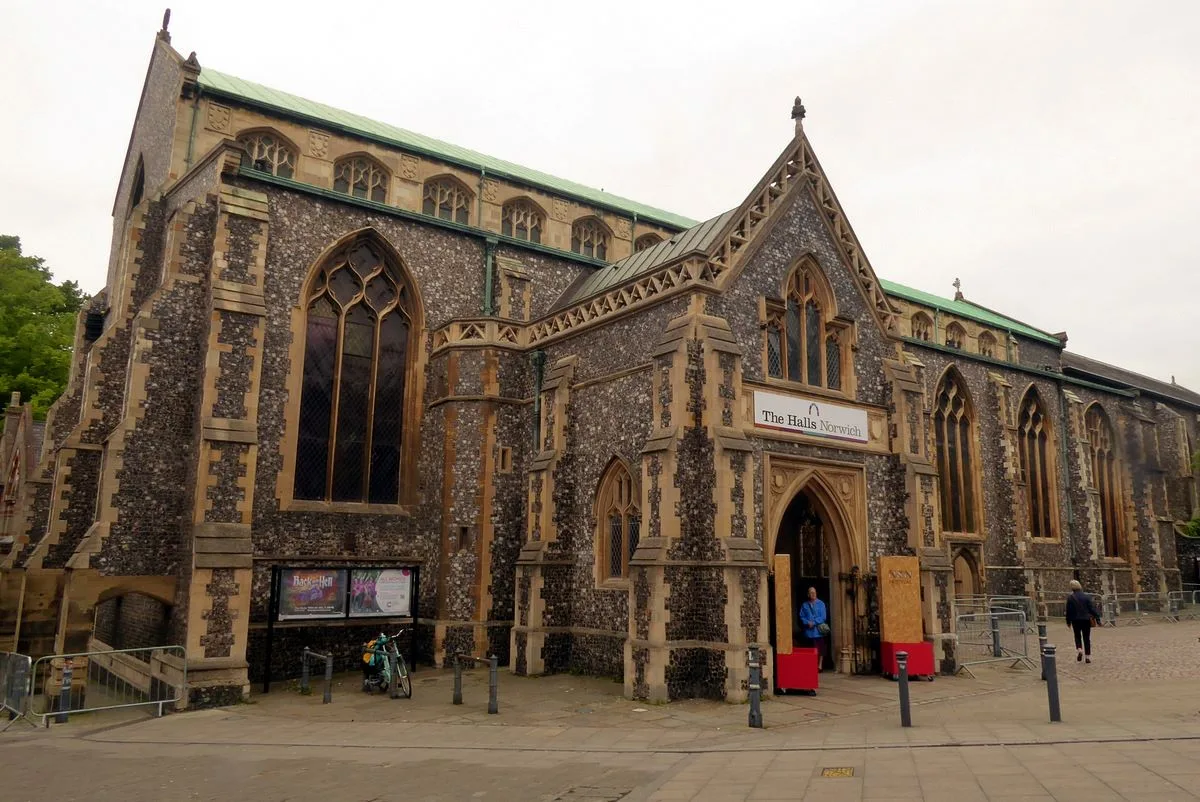
For this, a Coronation year, Britten Sinfonia were at St Andrews Hall as part of this year's Norfolk & Norwich Festival. The programme was entitled 'Musical Everests: The Year 1953', a year when Queen Elizabeth II was crowned, and when Sir Edmund Hilary and Sherpa Tensing raised the Union flag at Everest's summit. The programme opened, however, with a piece that took us way back to the Baroque days of 17th century Italy.
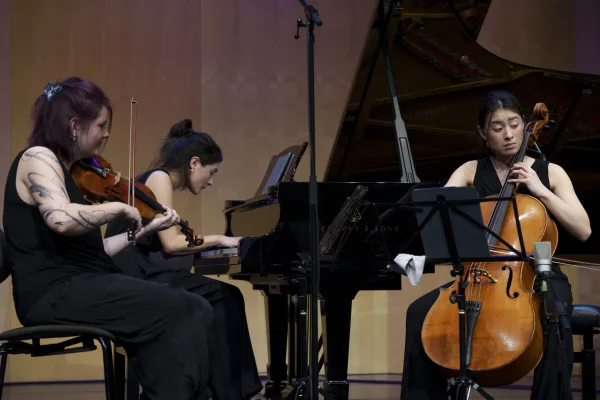
Arcangelo Corelli's twelve concerto grossi may date back to the 1680's, but it is the second of these that provides themes that later reappear in the programme. The trio of Thomas Gould (violin and director), Miranda Dale (violin) and Caroline Dearnley (cello), together with a 'pared back' Sinfonia take us elegantly through the Corelli concerto, a work of four sections that alternate between between joyful, pensive and uplifting.
They are joined by a fuller ensemble for Michael Tippettt's 'Fantasia Concertante on a Theme of Corelli', a work especially commissioned for the Edinburgh Festival of 1953. Suddenly, the penny-drop of continuity is released. This is one of Tippett's most recognised pieces, becoming known again to many after its inclusion in the soundtrack to Peter Hall's 1974 film 'Akenfield'. Britten Sinfonia's performance has an added richness, thanks to the four cellos and two double bass that now enhance the Sinfonia's line-up.
After a brief interval we are back, now firmly in the territory of 1953 with a performance of Elizabeth Maconchy's 'Symphony for Double String Orchestra', a work where the Sinfonia are arranged as a 'mirrored orchestra' with the violins, violas, cellos and double bass split into two sections. Whilst not strictly a symphony, more a concerto of four contrasting but well-balanced movements, this rarely performed piece becomes an absolute delight within Britten Sinfonia's hands. With its initial fandango pizzicato, and subsequent hints of French and Spanish flavours, I am absolutely smitten by the Sinfonia's interpretation, and especially by the conducting of Agata Zając. It is poignant to note that Maconchy died in Norwich in 1994, and lovely to learn that members of her family were in the audience tonight.
During a quick platform re-arrangement Britten Sinfonia's chief executive Meurig Bowen introduces the audience to Joseph Phibbs, composer of 'Flame and Shadow', the piece that was commissioned by Britten Sinfonia, and is receiving its world premier tour this week. It is a work of four short movements, and takes its title from a collection of verse by Sara Teasdale, a New York poet whose troubled and tragic life was expressed so vividly through her prose. Phibbs' work, whilst having no apparent links to 1953, or even Everest, is so beautiful in its contrast of lightness and despair, its propulsive rhythms and in its reflection of Sara Teasdale's tragic life and of 1920's Manhatten nightlife, that I felt genuinely privileged to be in the audience tonight. There are moments within this piece where elements of Britten seem to be jostling alongside shades from Gershwin's palette. Bravo!
The final, if brief, conclusion to the evening's programme was the ultimate of six 'Variations on an Elizabethan Theme' a work that was conceived and composed for a celebratory coronation concert at the 1953 Aldburgh Festival. Comprising of six short pieces, each one written by a leading composer of the day at Benjamin Britten's invitation, the work, and tonight's concert, concluded with this short, yet uplifting, piece written by William Walton. It served as a fitting finale to this hugely enjoyable, wonderfully performed, if at times slightly tenuous, look back to the coronation year of 1953.