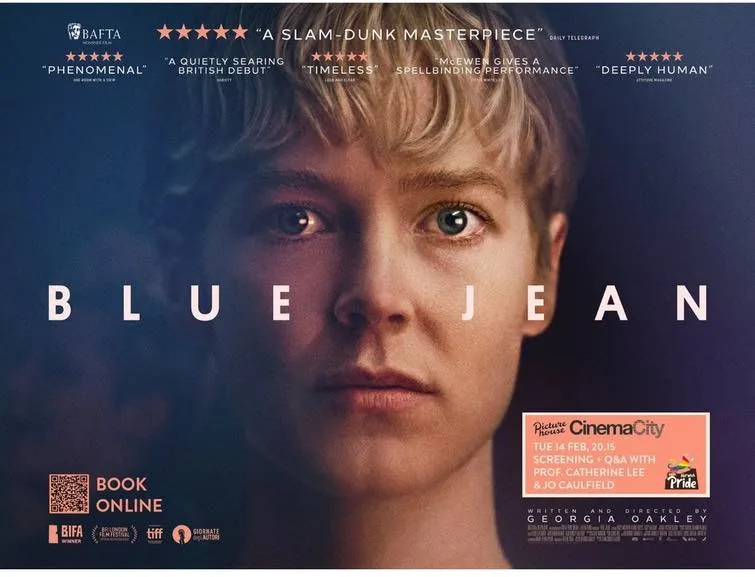
Blue Jean + Q&A Session
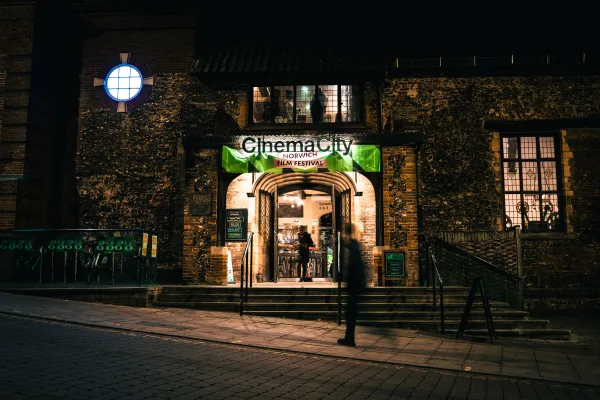
Cinema City
The act of bleaching your hair is regarded in pop culture as the commencement of a new era. Taylor Swift is famed for her “Bleach-ella” look when launching her new album, and Billie Eilish broke the record for the most Instagram likes when unveiling her new Hollywood gleaming bob. Rose Mcewan opening the film mid hair frazzling watching Blind Date is no different. It is an act of destruction of follicles to unveil something bold, striking, and ultimately authentic the same way that Blue Jean stands in defiance of repressive queer history that reigns poignant even today.
The plot follows PE teacher Jean navigating lesbian life in 1980s Thatcher Britain with homophobic section 28 looming across the country like a thick fog, when her world is turned upside-down upon running into a student at a local gay bar.
Rose Mcewan’s performance portrays the internal battle between standing up in protest, and just wanting to survive. She clashes with her partner Viv played by the effervescently passionate Kerrie Hayes. Their relationship is both intimate whilst combative to a realistic degree rarely seen on screen.

Georgia Owen’s direction creates a poignant claustrophobia that whilst being difficult to watch, feels fantastically exhilarating in a way. Every frame is carefully constructed. Whether it be the jagged fervency of a netball game, the secret haven of the euphoric queer clubs, or an awkward dinner party with a dodgy right wing relative.
The following Q and A with teacher Catherine Lee who inspired the film provided a fascinating insight into the period. She described Section 28 as something that was looming in the background, and it did not detract from the queer joy provided by hole in the wall venues and living room raves. She spoke true to the realism of the scenes portrayed in the film as Jean’s comrades appeared un-deterred by the apocalyptic political landscape. She remarked how sadly it feels like a similar societal conflict is recommencing, with much needless debate regarding trans rights infecting the media like a cancerous pustule.
Blue Jean not only provides a much-needed WLW perspective on a poignant time in queer history, but it is a rare LGBT cinematic masterpiece that does not end in tragedy. This is sure to be regarded as a queer cinematic classic for years to come.