
The Sound of Music
We all have some unlikely - inexplicable, even - gaps in our cultural experiences that others find hard to believe - a really famous film we haven’t seen, or a band we’ve never heard despite their seeming ubiquity. For example, I know a guy who has never seen the film Groundhog Day; I know another guy who manged to get through several decades of an otherwise normal life totally unaware of David Bowie’s existence, and I know a guy who has never seen the film Groundhog Day. So, get this: My good lady has never seen The Great Escape, despite it having been on the telly every Christmas of her life. And I, dear reader, have never seen The Sound of Music, despite it having been on the telly every Christmas of my life.
Now, I really like The Great Escape, and my good lady really likes The Sound of Music, so it has become a bit of a running joke that, eventually, one Christmas we’ll definitely absolutely watch both films, despite the fact that she finds the prospect of sitting through three hours of sweaty tunnelling about as attractive as I find the prospect of sitting through three hours of shrieking nuns. Unsurprisingly, it hasn’t happened yet. Because, y’know, fuck that.
I’m providing you with this fascinating glimpse into my idyllic home-life to help you understand how I, a forty-something Nine Inch Nails fan with a deep-rooted suspicion of musical theatre, came to be reviewing The Sound of Music - a task for which I am uniquely unqualified. You see, when Outline Towers sent out the clarion call for a reviewer to attend the first night of this production’s five-night run at the ever-lovely Theatre Royal, I answered that call, thinking, “I’ll take the good lady! We’ll get a night out at the theatre, and, come Christmas, she’ll have to watch three hours of people emptying dirt out of their trousers while I whistle Colonel Bogey and eat pickled onions.”
Anyway, the upshot is that I’ve now seen (sort of) The Sound of Music, and now I know infinitely more about it than I did four hours ago. This is what I learned…
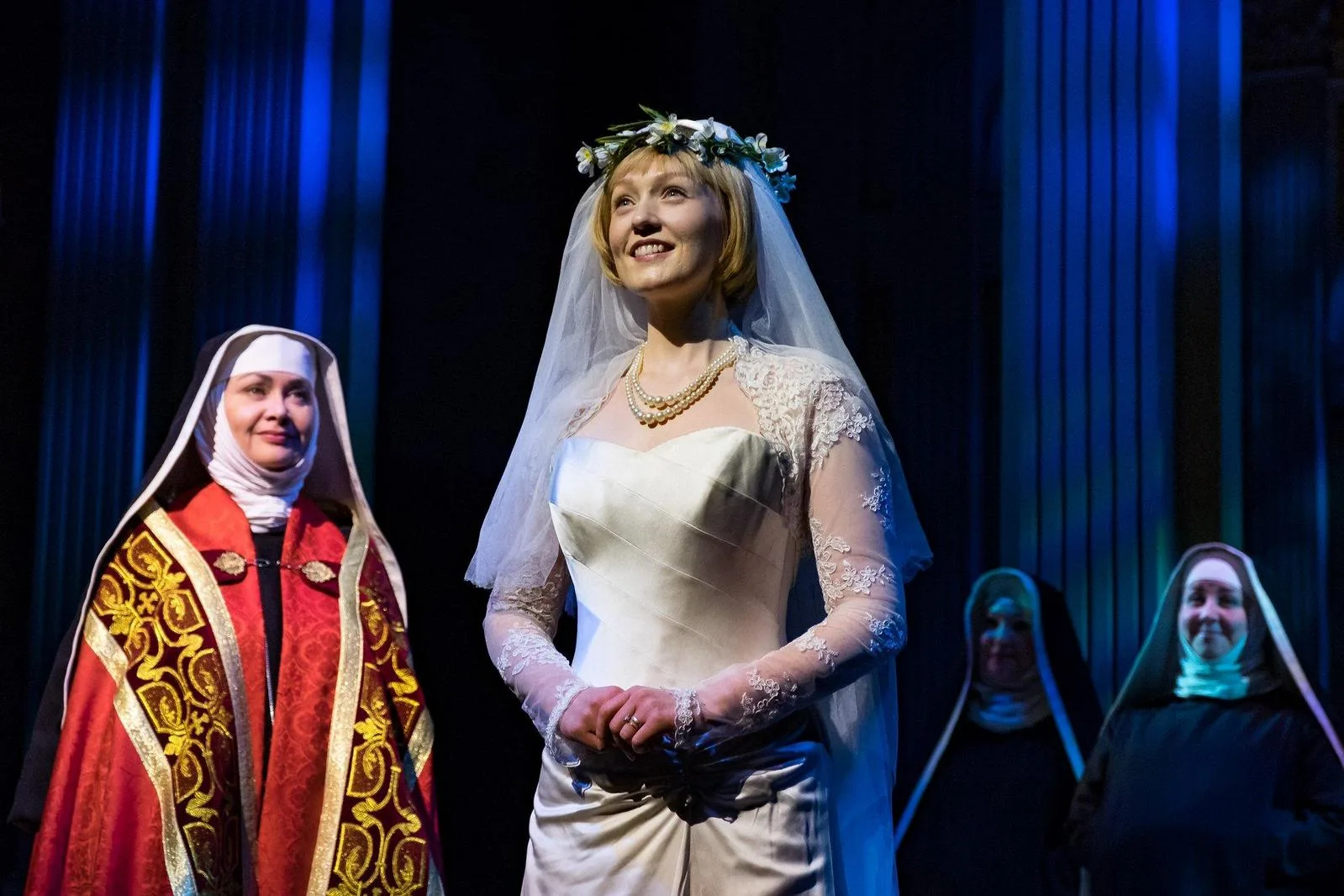
Maria is a late 1930’s Austrian nun, but owing to her tardiness and constant singing, some of the other nuns don’t think she should be a nun at all. Also, she firmly believes that she can communicate with hills (for those of you born and raised in East Anglia, a “hill” is a large bump in the ground). Fortunately, the Boss Nun is sympathetic as she secretly likes music, and also breaks into song at the drop of a wimple. They sing a song together about what Maria’s favourite things are, in which we learn that Maria thinks about her favourite things in times of discomfort to not feel so bad. It’s a bit like neuro-linguistic programming, but for nuns.
Now, if I were the Boss Nun, alarm bells would start ringing here, because Maria’s favourite things are bullshit. She likes cat hair, badly wrapped parcels, kettles, and bells. You’ll notice that nowhere in that list does our Lord and Saviour Jesus Christ appear. Or crucifixes. Or abbeys; you know, all the stuff that nuns should really really dig. I’m no expert, but If you like apple strudel more than you like God, maybe a lifetime of servitude isn’t for you.
It seems that the boss notices this too, and decides that the best way to deal with a problem like Maria is to get rid. Maria leaves the abbey and takes up the position of governess in the home of Captain von Trapp, a widower with seven children and a whistle. All the music has gone from his life following the death of his wife, but Maria’s incessant bloody chirruping soon remedies that. She wins over the kids with a mixture of patience, name-learning, and yodelling. Mainly yodelling.
Around this time we meet Max, a friend of the Captain’s. He’s a kind of Simon Cowell figure but, being a Nazi apologist, he’s slightly more likeable. He hears the children singing and suggests that they go to Berlin to take part in a battle-of-the-bands-with-lederhosen sort of deal, and through him we’re gently introduced to the spectre of National Socialism that was all the rage in those parts in the late 30’s.
Now, here’s where I had thought that we may be moving into strange waters. You see, I’m not entirely convinced that musical theatre is the right forum for addressing the horrors of fascism and the genocidal lunacy of the Nazis. However, it turns out that the Nazis in The Sound of Music don’t sing, they’re just bastards. Had they been depicted as the sort of bumbling, ineffectual Nazis we’re familiar with from ‘Allo ‘Allo and UKIP, the whole tone of the piece would be very odd, if not slightly distasteful. As it stands, nothing is trivialised, and there are important comments being made.

<iframe src="//www.youtube.com/embed/iSgGkRn6fpw" width="560" height="315" frameborder="0" allowfullscreen="allowfullscreen"></iframe>
So, approaching the interval, Trapp has fallen in love with Maria, Maria has fallen in love with Trapp, neither of them like Hitler, things are set up for an exciting second act, there’s a sense of a calm before the storm, there’s a rousing rendition of Climb Ev’ry Mountain, the curtain comes down, wild applause, and I realise that I’m actually enjoying myself.
To be honest, it’s difficult not to. The Sound of Music is so entrenched in our culture, so affectionately regarded, and so cross-generationally appealing, that sitting in the audience feels like wearing an old jumper, and although I’ve not seen the film, I know every song. Suffice to say, everyone is having a lovely time, and continues to do so.
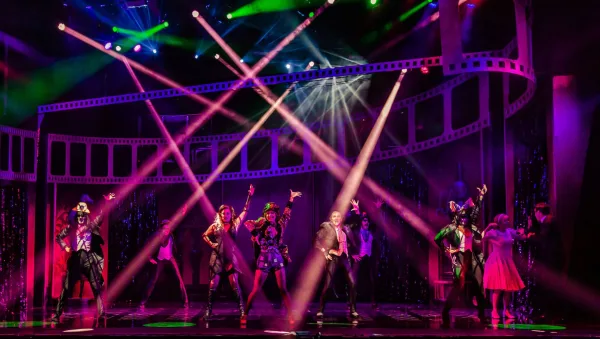
As I’ve probably made abundantly clear, musicals really aren’t my field, but to these untrained ears and eyes, tonight’s production is flawless. The set design and management are effective and unobtrusive, with the action moving seamlessly between the Trapp residence, the Austrian Alps, and Nonnberg Abbey. The orchestra sounds massive in all the right places, and the sound design renders every detail with crystal clarity. But this kind of production lives or dies by its performances, and every single one tonight is exemplary. My good lady informs me that Lucy O’Byrne’s Maria captures the essence of the Julie Andrews original perfectly, and Jan Hartley’s Mother Abbess is extraordinary. That woman has some pipes, I tells ya. I think the seven kids deserve a mention, too. All of their performances are note-perfect, and they all manage to be both charming and endearing without being either syrupy or precocious. Well done, guys.
Anyway, all that said, and with the caveat that I haven’t got the vaguest clue what I’m talking about, the second act seems to have some serious problems. Not in its execution, which is consummate throughout, but in its content and pacing. In short, it seems very rushed. By my reckoning, the first act lasts around an hour and a half, in which time Maria and von Trapp have met and fallen in love (but haven’t told each other). That’s it. Not even any Nazis yet. The second act was around half the length of the first, and in that time Maria and von Trapp declare their love, get married, go on honeymoon, come back, face off with the Nazis, make a plan, go to Berlin, win battle-of-the-bands, hide in the Abbey, and escape. And all while reprising four songs from the first act.
But hey, maybe that’s the whole idea. When you’ve seen the film a good few times - and I’m assuming that I was the only person in the theatre that hadn’t seen it at all - you don’t really need a live production to pander to plot or dialogue; you know the plot and the dialogue already. You’re there for the tunes. And you got all of them. Brilliantly. Several times.
And that leaves me with nothing more to say other than the most hackneyed and lazy phrase in a reviewer’s vocabulary: “If you like x, then you’ll like y”. Fans of The Sound of Music will love this expert production, and judging from the ovation the cast and orchestra received, and the overwhelmingly positive noises I heard from people on the way out, these fans certainly did. As for me, I’ll probably wait for Christmas and then watch the film. Until then, adieu to yer and yer.