Leonkoro Quartet NNF 2023
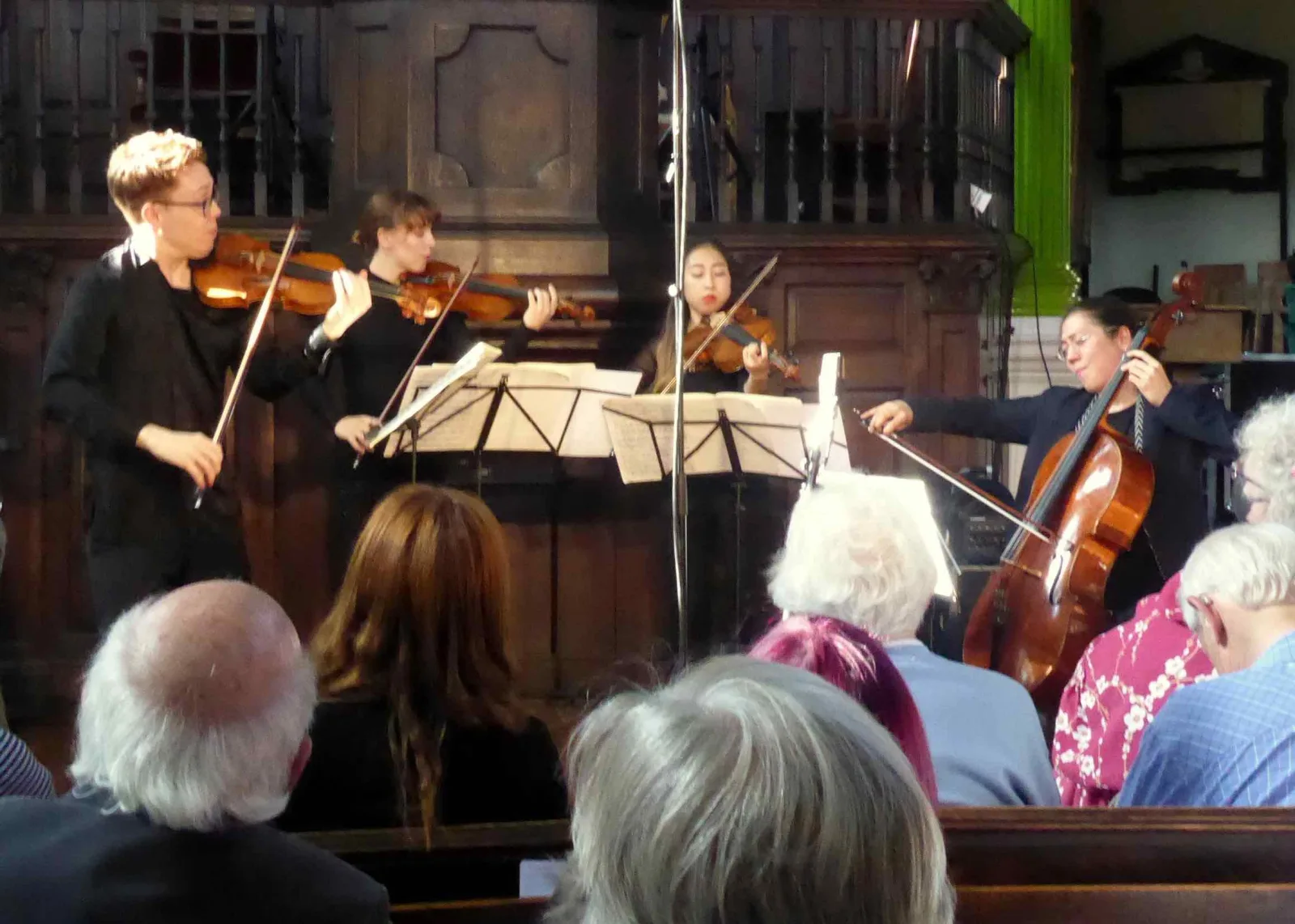
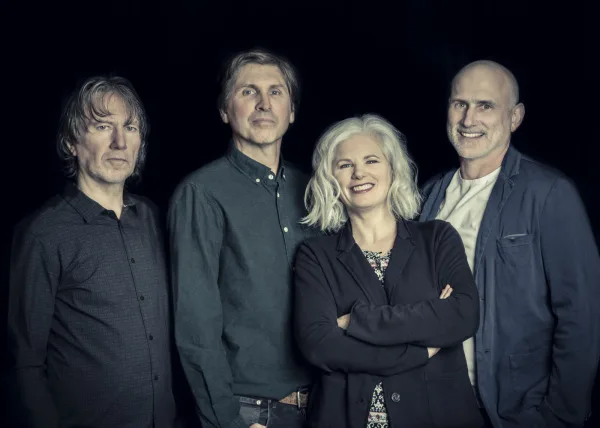
The last of four concerts at the beautiful Octagon Chapel in Colegate, each part of this year's Norfolk & Norwich Festival, featured the Leonkoro Quartet. Founded in Berlin in 2019, and led by the Schwartz siblings, Jonathan (violin) and Lukas (cello), the quartet take their name from an Esperanto word meaning 'Lionheart', and also tributes Swedish writer Astrid Lindgren's children's book 'Bröderna Lejonhjärta' (The Lionheart Brothers). The quartet is completed by Amelie Wallner (violin) and Mayu Konoe (viola).
Like Geneva Lewis & Evren Ozel, whose lunchtime concert I reviewed here earlier in the week, the Leonkoro Quartet are one of BBC Radio 3's 'New Generation Artists', and this performance was being recorded for the BBC. Highlights will be broadcast on Radio 3 In Concert on Tuesday June 6th at 7.30pm.
The programme consisted of two String Quartets, Joseph Haydn's String Quartet in C major, Op.33 No.3 'The Bird', composed in 1781 as one of six quartets collectively known as the Russian Quartets; and Maurice Ravel's String Quartet in F major, his one and only string quartet, dating from 1903. Although separated chronologically by more than 120 years, I I found myself with two burning unanswered questions – did Haydn write 68 string quartets simply because he was jolly good at it, and why did Ravel stop with one unless he felt that he had absolutely nailed it at the first attempt? Hopefully this concert might provide a few answers.
The first movement of the Haydn opens with the extra grace notes that provide the trilling bird-like quality that gave the piece its popular name and, right from the off, the Leonkoro are nothing short of spectacular in their playing. It is not a surprise to learn that they won seven international awards in 2022, including 1st prize at the International String Quartet Competition at London's Wigmore Hall. Their playing is exciting and virtuosic, and filled with rousing youthful energy.
Ravel may have modelled his quartet on that of Claude Debussy's, which had been published ten years earlier, but it remains one of my favourite string quartets of all time, a work of great unity with its cyclical themes re-worked throughout, and undeniably a masterpiece of impressionist chamber composition. Once again, the Leonkoro has got this one down to as near perfect as you could ask, and is enhanced by some splendidly rigourous bowing by Lukas during the lively second and fourth movements.
As to the question of who composed the better quartet, well the jury is still out on that one. One thing is for sure, though. The Leonkoro Quartet remain one of the most youthful and exciting ensembles that you will ever hear attempting either of these two fine examples of the form.