
Katie Melua
So we caught up with Katie ahead of the release of Album No. 8
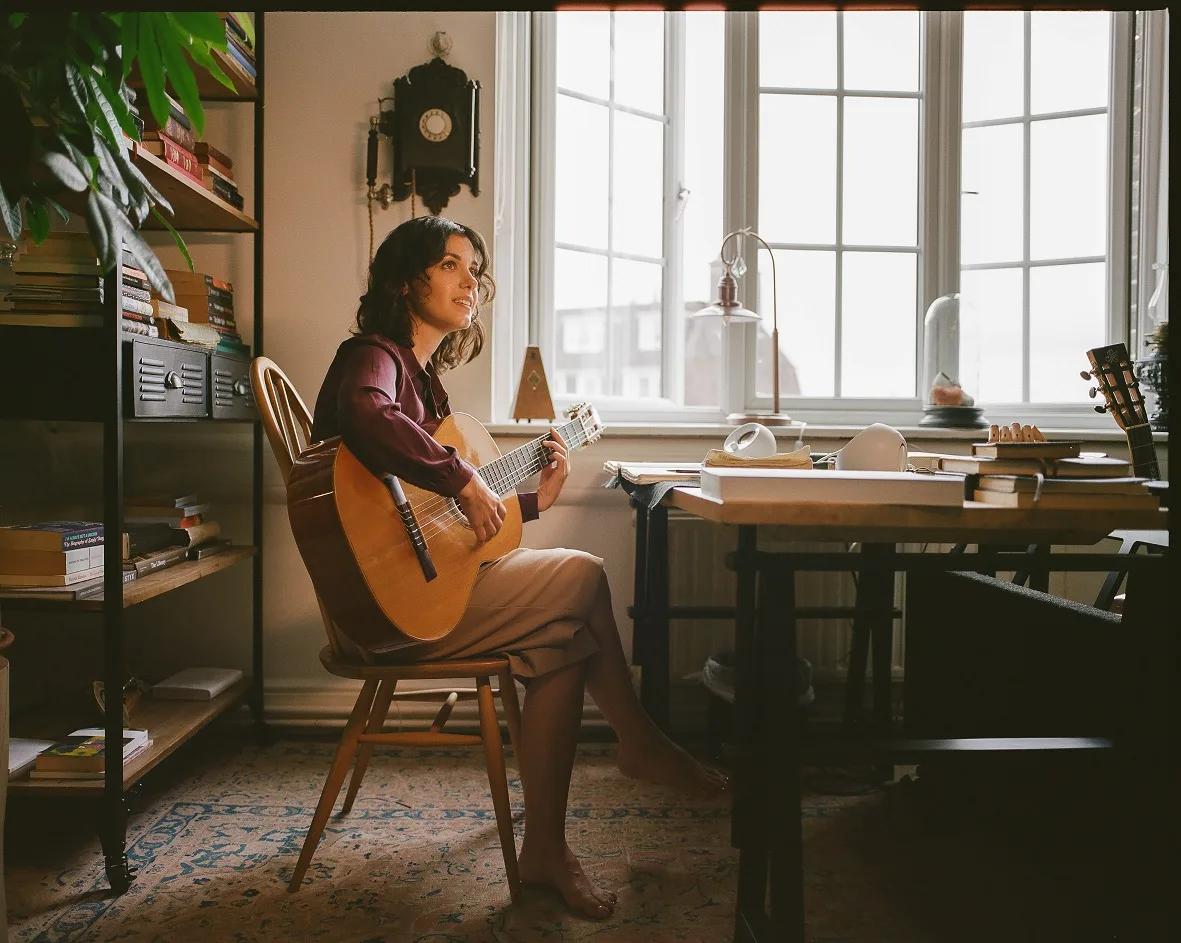
Rosie Matheson
You have a new album coming out, your 8th in 17 years. Do you still get excited?
We’ve been working on it for a long time now and can’t wait to share it with everyone. When you’re in the middle of writing and recording it’s tricky to be completely objective about how you feel about it or what you think about it. The dust has settled a bit now so it is a bit easier to see it properly, and begin to hear it properly. It is still exciting, definitely! I just can’t wait for it to be out there.
When you’re making a record is there a pressure to make it be something? To either be commercial or to fit other people’s expectations? Or are you at the point now where you’re able to have the freedom you feel to make what you want to make?
You have to essentially make the record you want to listen to. I think a lot about the experience of listening. In a way “make the record I want to make” is quite a selfish thought but I think “what kind of record would I need as a listener?” So, I think of it like that. What kind of experience do I want to create for a listener? And that listener has to be me because that’s the person I know the best.
I wanted this new record to feel like a celebration of great musicianship, of great record-making but also intimate and with a real, sincere, genuine connection between the record’s voice and the listener.
When you’re writing where do you get your influences from?
I listen to great records from across the history of music and I get it from observing life, what’s happening around me, observing nature and observing human relations.
You have a song on the new album called Airtime which has the line “I think we've given love too much airtime”. What do you mean?
There is a real gap between what I’ve seen in culture aboutlove and what I’ve seen in reality and I’m interested in seeing how we can bridge that gap.
‘Airtime’ is about the notion of the traditional concept of ‘forever love’ that is so prevalent in mainstream culture. I have sung some great romantic love songs myself but as I’ve got older the reality of life has shown me that when records just celebrate that early passionate, sparky love it’s not enough. I think it’s important to honestly observe your life and to put that into your music and your words.
Another song on the record - ‘How’d you make a love like that last’ - is about just being honest and asking ‘what is the reality in all the relationships that I’ve observed - both mine and those around me?’
Do you think love has been over-glamourised in culture?
Yeah, it’s glamourised and also quite sexualised and in quite an unrealistic way. In films and TV shows it is presented as this true version of real love, but it really isn’t, sex rarelylooks like the sex we see on screen. I think that is a problem, it’s stirring all of us up into thinking ‘oh you know that’s the ideal’, but, is that the ideal? And if the ideal looks like that, then we’re always gonna be a bit unsatisfied with our life and I want to get rid of that if I can.
So it’s about reality rather than perfection?
Exactly, it’s about reality and actually respecting reality.
How has the year been so far for you?
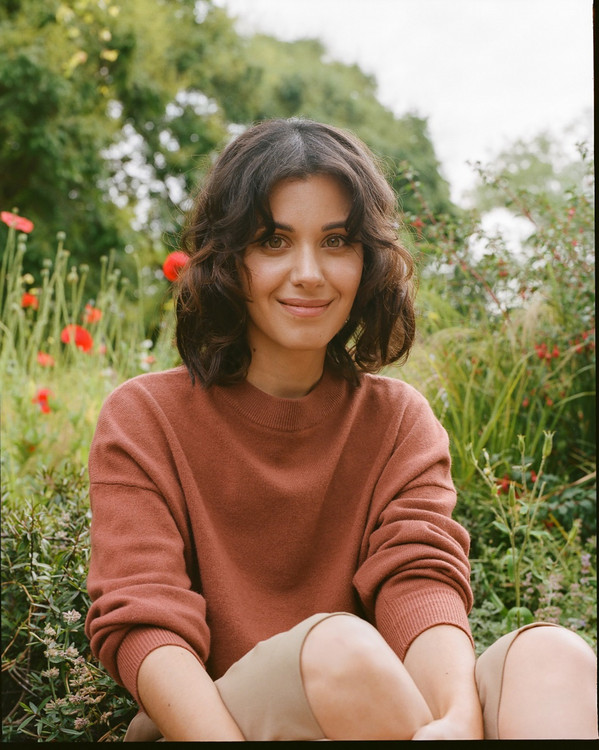
When lockdown started we had just completed recording the new album in England and in Georgia. So we needed to finish it and start preparing for the release. That meant that everything had to be done remotely including mixing the album so I quickly learnt some new skills. I also needed to do a photo shoot for the album so the photographer Rosie Matheson taught me to use a camera and I got to shoot the album cover. Taking the photos changed my perception of how I see the world around me and my visual senses are now heightened. I’ve just bought a camera so intend to keep taking photos.
You’ve been posting at-home acoustic performances online. Are you missing performing live on stage?
So much. I really miss bringing the music to life every night on stage and feeling the reaction. I also missed the band and the crew. We have been rehearsing recently because we need to be ready for when the gigs restart and also for the release of the new record. But you know, we are without an audience.

You recorded part of the album in Georgia. What does Georgia mean to you?
Georgia is my homeland, it’s where I was born, I lived there until I was 8 years old, my whole extended family are still there and we kept our roots very active. Georgia was my holiday place and recently I’ve been getting to know Georgia as an adult and as a place to work and work with the Georgian creatives, and that’s been really fascinating. For a long time, it was just a place we’d go on holiday, so I just knew my group of friends and my family, but now I’m starting to get to know people further afield there and I love it. I love seeing how people there work and they have very different philosophies and ways of working and I love the fact that I speak the language and I know two cultures so deeply - I know English culture as an immigrant and I know Georgian culture because I’m from there. So, the two perspectives are really, really valuable to me.
How do you balance those two identities?
I try not to get too burdened by the idea of finding an identity. I know existentialism is a big topic for a lot of people but you know I’m just grateful to have the life I have and the twobeautiful cultures I have, to have the two very different perspectives I have and I just try and enjoy it.
Would you say that your music and your songwriting is influenced equally by your Georgian background and by Britain as well?
Yes, of course 100%. The culture and arts that I know really well is massively influenced by that and also, I think my songwriting is influenced just by my view of the world - I have a very calm view of the world. Modern life is just so busy, there’s a relentless pace. That’s why I’m so grateful that we are having a chance to pause and reflect now.
Do you think you’ve always had that calm attitude?
At a deep level yes. But not always. You know I think when the record starts to sell and life got turned upside down and I had to deal with promo and gigs and those types of schedules I just wasn’t really ready for it. But now I really love the pressure because it makes me work….it means I have to work and I really love that because all I want to do is make records and songs; and the fact that there’s people wanting to hear them is great.
It’s 17 years since you released your first album. What are the highlights from that time?
The highlights are probably playing those great shows with my band and the freedom we have on stage. We perform these beautiful classical songs but it is also hard to perform those songs and do them justice….to really serve those songs is a very difficult thing. I’ve had some incredible musicians in the band and getting that experience in front of an audience. Those are the highlights. Specific shows would be: Blue Balls Festival in Switzerland, The Montreux Jazz Festival also in Switzerland, playing the Royal Albert Hall, playing the O2Arena. Then the other highlight is going to work with the Gori Women’s Choir in Georgia and, when we recorded the In Winter album, building a studio out of the boxes of equipment we took out from London. Also, just finishing and completing every single album is also a highlight because it’s not easy to make records.
Would the teenage Katie that was at the Brit school have expected to be here now doing this?
I would have dreamt of it, but I don’t know if I would have expected it. When I was younger there was this rush of quick achieve achieve achieve, do this now! A desperation to make it happen quickly and even if it did happen quickly the thought that it wasn’t going to last long. There was this pessimism that underlined everything, so that’s why I wouldn’t have expected to be doing this.
Do you feel secure where you are now as an artist?
Yeah, I do feel a lot more secure. But I know once I start thinking about the next record it will be rebuilding everything from the start again because that is basically what needs to happen.
So before this record’s even out, is that where your mind starts drifting to? Or are you able to focus on this now?
No, I am starting to think about the next record. And just writing, I really miss writing. It’s impossible to do it every day at the moment
And finally, how do you relax?
I switch my phone off. I go out for walks in the London parks that I live close to. I read. I go and visit the London Library which is one of my favourite places in London and I go and see friends.