
John Hegley

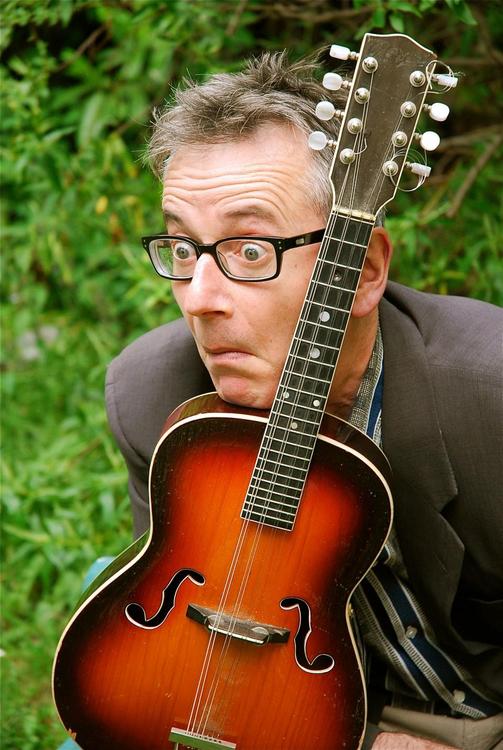
Bespectacled and charmingly funny with words, John Hegley has been a poet since the 1970’s. He’s appeared on TV and radio, run workshops with adults and children, and has had a myriad of books published. His poems are accessible, personal, funny and moving. His live shows are a great laugh with plenty of audience participation and general larking about. John’s visiting Norwich Arts Centre this month, and before I had a chat with him he wrote a poem specially for us, all about canaries and St Benedict…
A Man of Good Habit
Brother Benedict was somewhat strict
but wise and gentle, too.
He took charge of some monastic guys
who didn’t share his viewpoint.
The story goes,
they thought he was a goody-hoody
and chose some poison for is drink,
Not thinking such, he blessed it
and the cup broke up in smithereens.
So, Benedict stayed full of beams
for he failed to digest it
The birds that were sent down the mines
to see if the air was breathable,
they would have benefited
had that monk been round
and found another way to test it.
Being contrary to the canary,
he’d have been able to arrest it
and go back to the nest it
could,
because of the uncommon good
of Brother Benedict.
You started off as a busker, singing your own songs in Hull in the late 70’s. You were also in a band called the Popticians who were on John Peel’s show a couple times. How come you ended up as a poet rather than in a band?
I suppose I was stronger at the words than the tunes – they were all pretty similar and the words have more variety to them, so really I just played to my strengths.
When you first started writing, what were your poems mainly about?

I did write a lot of poems about spectacles – my first book was called Glad To Wear Glasses. There is a metaphorical side to it, where wearing contact lenses means hiding your faults rather than facing up to what you are. So I’ve always tried to get the philosophical into the everyday, really.
Can you remember the first time you read a poem and what you thought?
When I was a child I was read Hilaire Belloc’s Tarantella which has got an amazing rhythm, and then I discovered Gerard Manley Hopkins. The antics or acrobatics of words is what I love, but just like acrobatics one wants it to be beautiful as well as having a great rhythm.
When did you realise that being a poet was your actual job?
I feel very fortunate to be able to do something I have a passion for and make a living from it. I suppose it felt like a useful job when I started getting involved in education. Even though the performances are how I make my living, it’s made worthwhile to me by going into schools, doing workshops with adults and hopefully generating other people’s creativity and their own word antics.
I understand you do your writing in your local public library. Have you been involved in trying to save libraries?
I’m very pro library – I haven’t got a computer so I use library computers, do workshops in the library and have written a poem about the outreach service that it provides for getting books to people in homes which is crucial. I love that service.
Your poems cover such diverse topics – is there anything you’ve always want to write about but haven’t yet found the words?
I continue to investigate my family; my partner calls it the greatest story ever told because I keep going on and on about it! I say “I’m only just scratching the surface” in reply! I suppose it’s rather like Francis Bacon’s work – you might say he did an awful lot of similar paintings but obviously he was trying to get to something. I strive to make it universal though so it’s not just me talking about my own family. I’ve started to write about John Keats because I was Poet In Residence at Keats’ house which was a fantastic privilege. I guess I need to work out what the things are I haven’t written about yet and then I’ll write about them!
How long does it generally take for you complete a poem to the best of your satisfaction, and do you ever wish you’d changed bits of a poem once you’ve seen it in print?
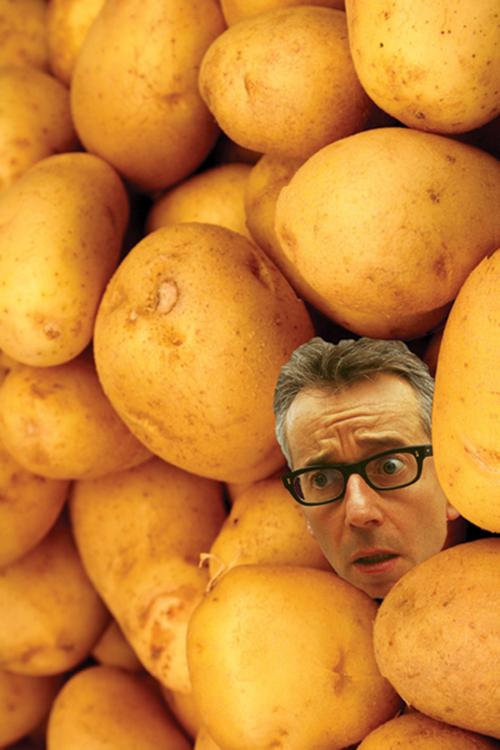
My poem The Quick Potato, which goes like this – The spud sped – didn’t take very long at all! Yes to the latter, but I suppose you aim for a seven out of ten. My publisher at Methuen years ago said he’d argue to keep anything in that is a six out of ten but I reckon seven and a half is the best. Sometimes I might see one of my poems in a book and think it’s a seven, but that’s acceptable.
If someone wanted to start writing poetry, how would you suggest they start?
Read. Listen. Listen some more. Read some more. Then maybe select something you’ve read that you liked and have a go at writing perhaps using the meter or emotion of that poem in your own way. Like Picasso copied the masters to start with. Then your own voice should start to develop. I would recommend the Arvon courses (arvon.org) if you want to get away from it all and really concentrate on writing for a bit.
Who are your favourite poets, and why?
Gerard Manley Hopkins because he showed me how poetry could be agitated and delighted, Adrian Mitchell because he did the same but with a political edge, WS Graham because he bemuses, enthrals and intrigues me, John Cooper Clarke because he showed how poetry can really be hip, and Stevie Smith because she showed you can put drawings with your poems successfully.
You encourage audience participation in your shows..have you got some ideas of what you might spring on us?
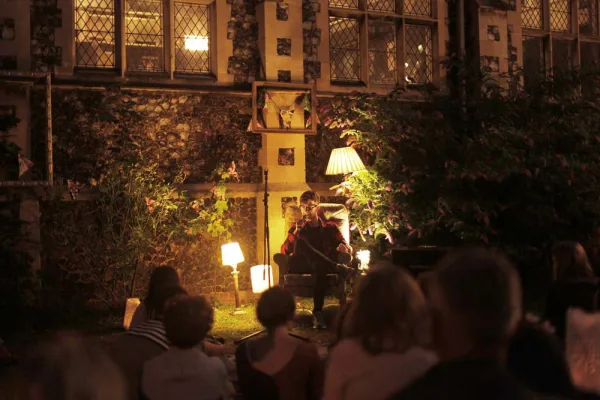
Certainly singing in parts, and there will be some Baroque dancing because the stage at the Arts Centre is perfect for that! Audience members will be invited to dance some steps which I will teach them in my inadequate way…there’s nothing wrong with being inadequate!
John, you’ve written a poem specially for us here in Norwich!
Yes, I wrote it in anticipation of speaking to you! The Arts Centre is on St Benedict’s Street, and the canary is obviously a reference to Norwich’s football team. I didn’t know about the story of St Benedict – that he was given poison.. and then I thought about canaries being taken down the mines, and it tied in – how St Benedict could save the canaries by sensing when bad things were afoot!
John Hegley will be at Norwich Arts Centre on 17th November. Tickets are available from norwichartscentre.co.uk.