Interview with Dry the River
"Can you bring to us? Peanut butter? Vodka? Yeah, bring some peanut butter – that always goes down well." - Dry the River has some rock 'n' roll cravings...
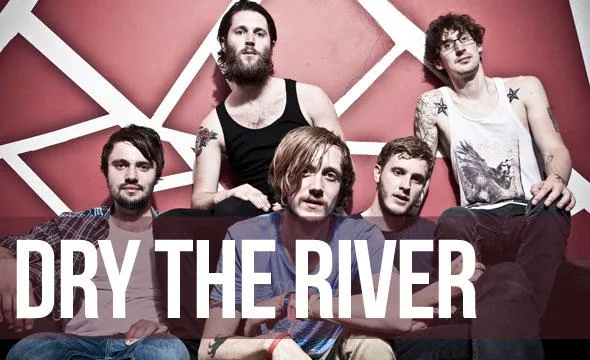
Evoking the majesty of religious imagery, with a nod towards the soulfulness of Americana, all filtered through five guys who came by this sweet and soaring sound by way of their own flirtations with an emo and grungey background, Dry the River is godsend. Having released their tragic and emotional debut Shallow Bed recently, this summer is bound to cement their place as your new favourite British band…
How are you doing Matt? Yeah, really, really good; we’re just on our way to Manchester for the show tonight.
And does this come in the middle of a few dates? It’s part of like a two-week tour and we’ve just started it; we’ve played Nottingham and we’ve played Cardiff so far and it’s been great.
That’s quite a big one ahead of your couple of weeks of dates in May too – you’re not making it easy on yourself, are you? Yeah, we’ve just got back from America as well, and we did four and a half weeks there. We had one day off in London, then we we’re back on the road again. I say day off, but we spent it in the Visa office from like 8 in the morning, so I don’t know if that counts as a day off or not.
No, unless it involves the sofa and various re-runs of programmes, it’s not a real day off. Yeah, right! We didn’t get to do anything like that.
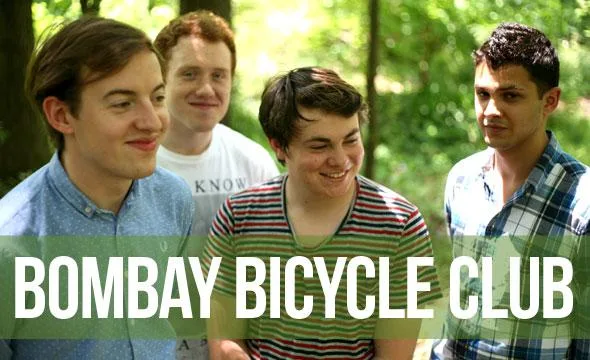
So we’re talking to you ahead of your gig in Norwich and I think it might be your first time in Norwich… Er, we played there with Bombay Bicycle Club once before, but I think it’s our first headline show.
You’ve got the momentum moving you along all these dates, but what’s gonna keep you going? That’s a good question; we don’t really have time to get tired, because we’ve been going solidly for two years now, so I hope we don’t just peter out. We’ll just eat lots of fruit and peanut butter – that’s what I’d do.
Now Matt, seeing as I get to talk to you, I can ask you about your experiences in the band personally – is it right that you joined the band in a second wave of band members, or did you all join at the same time? Er, we pretty much all joined at the same time, I mean, all of us had played together in different formations of bands, but it was about three years ago now that Peter kind of started writing these folk songs in his bedroom and he got three or four together, then called us all up individually that he knew from the local music scene to go and record over one weekend, so it all came together like that. We recorded a demo over the weekend, then got one gig and haven’t looked back. It all came together at once.
You guys were in different incarnations of bands before this, but was there a different feeling when you came together for this one, like when all the Power Rangers got together and did that super Power Ranger thing? Yeah, I like the comparison to Power Rangers, that’s brilliant! Haha, yeah, we’d been in loads of different bands before but I think when Pete started Dry the River, he wanted to found it in more traditional kind of folk influenced songs, like a bit more like Leonard Cohen, and have a bit less shouting in, so yeah, we recorded and they sounded much more restrained and folky, then over the years as we’ve played more and more shows, it’s got a bit louder and more epic and the old influences of each of us has sort of come back through.
With Peter being the lyricist, is it your job, Matt, to interpret the emotion of the lyrics into the playing, and how do you do that? Yeah, totally; Peter writes the lyrics completely separately actually. He’ll come to me with the chords, or just humming a melody and we’ll sit and arrange the structure of the song and what we think the backing vocals will do, and so on, then he writes the lyrics completely separately once we’ve put the music to it. I guess I’m just a melancholy guy at the heart of it, so that’s how it ends up sounding that way.
I imagine there’s a honeymoon period for a band when you first get together and you’re sharing influences, and finding that affinity with each other – is that as important, to have that relationship as well as your musical ability? Yeah, absolutely it is, and it’s kind of a weird one as it stands, in terms of sharing the cultural instincts; it’s kind of disparate and we’ve got to the point where we’re now hating each other’s music. Like in the van when we’re touring, it’s kind of the rule that whoever’s driving gets to choose what’s on the stereo. If you’re in the van driving and you turn round to see what’s happening, every other band member’s got their own headphones in! it’s almost rude, but I think there’s some crossover, but the fact that we’re all into very different things kinda works for us because it brings a lot to the table when we’re playing. It’s got its advantages, I guess.

You were saying that the songs are quite melancholy, but in a live environment they’ve taken on their own life; it’s fair to say that your live sound is heavier – did you want to give yourself some room for expansion? I think it was a natural thing, I mean, when the band first started, me and Pete wanted it to be much more restrained and not as loud, but I think we slowly realised that the more we played the songs, they were pretty epic songs and they needed to go heavy just to get the intensity across. The more we played, the more it seemed to happen naturally, so that’s the way that kinda worked out I guess.
The album’s been out a short while now – have you noticed a shift in momentum since its release? Has there been more interest, or is it the live circuit that builds up your fan base? It’s weird being back, because we were away – we released the album then went straight to America, so we weren’t here while it was out here. Just coming back now, and starting to play the UK this week feels a little different ‘cause the crowds all know the songs now and it’s amazing, like the first night in Nottingham, there were two full-on sing-alongs while we were playing, and that’s never happened before. It feels really rewarding to have that happen because we’ve been playing songs for two or three years and that’s never happened before. To finally have a record out for people to know the songs is just absolutely brilliant. It covers up our bad singing as well!
For a debut album, you had quite a heavyweight producer in Peter Katis – how did that come about, and what effect did he have on proceedings? I, to this day, still can’t believe that’s happened. We count ourselves very lucky really. We got asked by our label to get a list of producers together who we wanted to work with and he was top of our list basically because we love all the records that he’s done, I mean, he’s worked with The National on their last few records, he’s done Interpol, Jonsi from Sigur Ros, and obviously we absolutely love all those records, we love the sound of them, the way they sound great but not too slick and over-produced. He seems to hit the right balance. We emailed him and sent him a few of our rough recordings of our songs and fortunately he really liked them and invited us over. Like I said, I can’t believe it, but we managed it somehow.
BBC Introducing really helped you out when you started out last year, and with rumours that Introducing was going to be cut from the BBC, how do you think that would effect bands in their naissance? Yeah, they really shouldn’t do that! BBC Introducing did a lot for us, as did BBC Berkshire with local gigs, but they’re also a gateway to bigger things, like the first time we played at Glastonbury was on the Introducing stage. I think it might have been really hard for us to get booked there again had we not done that initial intro show. It’s just a straight thing, it helps bands out; they’re everywhere, they’ve got stages everywhere and it’s like a gateway to Radio 1. It’s been really, really important for us; it’s one of the key things for us as to where we are now – it’s been a big help.
It seems like one of the most tangible ladders between local and national music – - They’re really passionate about it as well, you can see that.
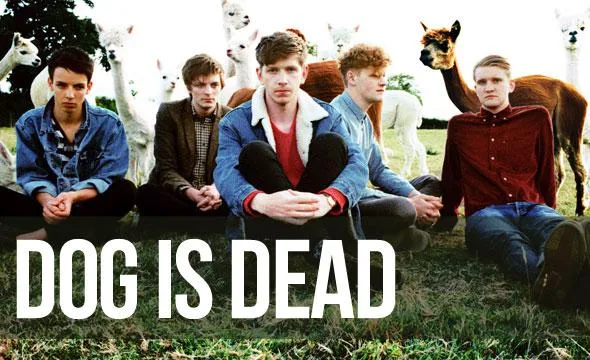
They truly are, in each region. I interviewed Dog is Dead who believed they wouldn’t be in the position they were in if they weren’t featured on the Glastonbury Introducing stage where they were one of the televised highlights. It’s funny you talk about them, because we were partying with them in Nottingham on Monday! They’re a good laugh, like when we played with Bombay Bicycle Club, they were the other support band so we got to know them a bit on that tour, then we needed a band to play with us in Nottingham on Monday, so they came down. We ended up DJing ‘til about 3o’clock in the venue and it was good fun; they’re fun, funny lads!
It must be good to keep crossing paths with bands like that who emerged at the same kind of time and are slogging away on the live circuit like you guys. Yeah, there’s a team mentality kinda thing.
You had a slew of festival dates last year, and taking festival dates versus headline slots, are they worth their weight ten-fold because you get to audiences who may not have heard you before? Yeah, absolutely; it’s a different thing - venue tours and festival tours are two different things. Like I say, playing to 500 people on a night in Nottingham and having people sing the songs back is absolutely incredible, but then going to Latvia or Poland and playing to 5000 people who might not have heard your music, but who are loving it, and you get to play on a stage in the sunshine, is equally as enjoyable. They’re different, but they’re both awesome basically.
It’s fair to say that record labels have fewer resources nowadays, so they tend to be more choosy about the acts they sign, yet you caused a bit of an old fashioned signing war – were you able to make informed decisions and choose who’d be better for you because of that? Yeah, there was a period where we were touring the UK, just playing these really small shows and having all these different people from different labels come in to each of the shows and taking us out and the guys from RCA we just seemed to click with, and we got on really well with. We based our decision quite heavily on that, just in terms of the people that you’re working with, we wanted to make sure that they understood us as a band and that we’d be able to keep the control we wanted and were on the same page as us, and Sam, our A&R man convinced us that he was that, and he turned out to be just that.
Matt, you’re coming to Norwich and we know you’re gonna bring us an enthralling show, but what, as an audience, can we bring you? Can you bring to us? Peanut butter? Vodka? Yeah, bring some peanut butter – that always goes down well. We haven’t had any signs at any gigs yet, like if someone wants to make a sign that’d be pretty good. Like a placard or something, get in the festival spirit. I don’t know what it should say, but I’ll leave that to the people of Norwich.
Emma Garwood
wombatwombat present Dry the River at the Norwich Arts Centre on May 12th. For tickets go to www.norwichartscentre.co.uk. Read the full interview at Outlineonline.co.uk