
Aidan Moffat - Where You're Meant To Be
"It’s a deep but light-hearted look into what we all would like to leave behind."
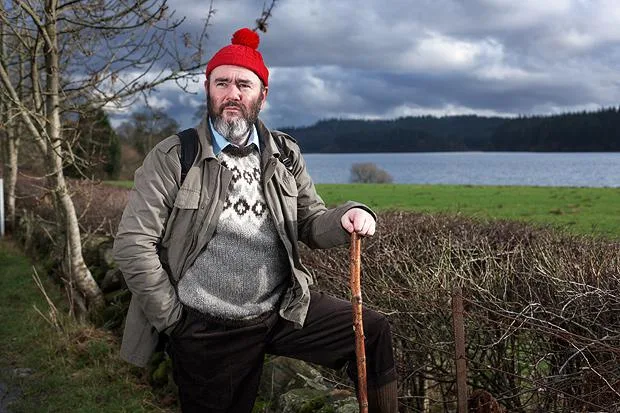
Aidan Moffat is a stalwart of the Scottish indie scene, not only with his much missed band Arab Strap but also the music he’s created with Stuart Braithwaite from Mogwai and Bill Wells amongst others. He might know something about indie music, but he doesn’t know much about folk music, and that’s the starting point of Where You’re Meant To Be, a new film directed by Paul Fegan, wherein Aidan discovers that Scottish folk music is not half as dull as he previously imagined. Aidan and Paul will be attending a very special night at Cinema City in July, giving Norwich the opportunity to watch the film, ask questions and enjoy an acoustic set from Aidan himself. I had a chat with the man himself, and we spoke about Twitter, Loch Ness and his infamous singing bottle opener amongst other more serious subjects.
How did you start working on this project with Paul Fegan, the director of Where You’re Meant To Be?
I’ve known Paul for years. He was a promoter and used to put a festival together in Edinburgh, Glasgow and Aberdeen called Triptych. He put Arab Starp on a few times and we had some mutual friends too. The whole project started when I had an idea to do a traditional Scottish Ceilidh tour. Now originally a Ceilidh didn’t originally just mean a dance, it was a gathering where everyone would do a little turn, a story, sing a song, play a fiddle. It was just about people entertaining themselves. So I wanted to do a tour like that and I wanted Paul to promote it, but then we forgot about it for years – it was pub talk to start with! But when I mentioned it to him again a couple of years later he was in a position of winning two or three awards for his first film, the Commonwealth Games were coming up which meant we could apply for funding because they were looking for Scottish cultural legacy projects, so it just came together at the same time.
It took three years to make this film. Can you tell me a bit about the story?
Ostensibly it’s about Scottish folk music but that sounds pretty boring! So if you look at the themes, one of the main ones is pretty grand, the one thing we all have in common which is death, so it’s pretty miserable! It’s not a miserable film though, it’s pretty entertaining and chirpy! It’s a deep but light-hearted look into what we all would like to leave behind.
Are traditional folk songs something that you’ve always been interested in or is it a recent thing for you?
No, I knew nothing more than the obvious ones like Auld Lang Syne and The Rose of Scotland, so it’s been a great opportunity to discover more about it. I think, like a lot of people I thought folk music was a bit too reverent, austere and stuffy, and people took it way too seriously. What I’ve found, however, particularly with respect to the bothy ballads from the north east of Scotland is there’s a real sense of humour to it. It used to be that farms up there were massive and there were whole villages filled with workers. Most of the songs are about sticking it to the farmer, but there’s a real humour to it. One of the songs I chose to do was I’m A Rover which is about trying to sneak away and get off with the farmer’s daughter when you’re drunk! There’s a vicious humour and questionable motives to it.
Well that sounds like it could be an Arab Strap song! Your own lyrics and songs are funny but tragic and very matter of fact but also emotional. Do you feel like there is a similarity between your own songs and traditional folk songs?
Yeah, it’s not something I realised until I got into it. Some of the old guys we met, the bothy balladeers, some of the stuff that came out of their mouths didn’t have a patch on me, I can tell you! They only do it in quiet moments, not at gigs or anything. There was this one guy called Danny in the film, and he had to whisper the song to me because he was quite embarrassed about it. It was pretty shocking – I couldn’t possibly repeat it to you! My idea that all these old folkies are dull and staid was therefore very quickly proven wrong.
I know you’re a dad now – is there some element of becoming a father that has meant you value the passing down of musical heritage more strongly now? Are you looking further into the wider human experience these days?
Yeah I think you certainly do consider the past more as you get older and have more responsibilities. One of the strongest concepts in the film is that the older you get the more protective you get about your history. I’ve never been big into history myself, but I would definitely say that it’s become more important to me recently and it’s been wonderful to learn more about Scottish history through music.
What is Sheila Stewart’s story and how did you meet her?
It was her and her mum’s work that inspired the whole thing. I heard them on the radio one night. It’s quite hardcore what they did, the unaccompanied voice, which can be a bit difficult to listen to. The night I heard them on the radio I focused on the voice and the story and started to realise where the attraction lay. You see the first time I met her on the film and it’s highly uncomfortable. We met in a car and there’s no less comfortable a place to meet someone than there. It had been 10 minutes or so and then she asked me to sing my version of her song and it didn’t go very well!
Did Sheila change your opinion of those songs and their heritage?
Well it’s funny, I don’t want to spoil the ending but I don’t think there’s a great deal of character development in the film! Everyone seems to get that what you have here is two stubborn creatures that are never going to agree, but we do respect each other and realise the best way is to share the space.

Did you find that most people knew the songs you were singing when you were out on tour?
No, not at all actually. I think in the places where you’d expect there’d be a deeper connection to folk music, ie in the countryside it didn’t actually exist like that anymore. Because the ways in which work and the function of music has changed over the years, like folk music used to literally be music made for people by people, mostly working class people singing about working class things. As time has progressed that’s changed as you don’t need to sing about yourself anymore, because you have access to a massive range of music.
You recorded a live album to go alongside the film– where was that recorded?
From Drumnadrochit, which is on the banks of Loch Ness, where the Loch Ness Visitors Centre is. We had two choices of where to record the live album – Glasgow’s Barrowlands, which is a world famous rock venue, or Drumnadrochit. The Barrowlands gig was a great gig with a great atmosphere, but we just felt like everyone knew about the venue already and it was the most obvious thing to do. The Loch Ness gig was a real surprise – it came at a point where we’d just played a few of the more rural places and we were pretty disheartened. The gigs hadn’t done very well, the people who did come didn’t really enjoy it! We got to the village hall in Drumnadrochit and fully expected it to be terrible, so we set up, expecting nothing from it, but it was fantastic, a complete surprise. I don’t know what made it so brilliant but everything about it went so well and it really helped us to get back into it.
You’re coming to Cinema City, our beautiful independent cinema here in Norwich to show the film, have a Q&A with Paul and then you’ll be playing us some songs. Is it nice to do play cinemas?
Yeah, the good thing about a lot of the independent cinemas that we found on the Scottish tour is that they sell booze! I’m not a big cinema-goer, I mean I don’t really have the time, I have two young children, but also I get really annoyed with other people. There’s nothing I can do about it – when you buy a ticket you just have to deal with it. I much prefer watching a film on my own so I can 100% focus on it, but having done the cinema tour and spending time with the audiences I definitely think that Where you’re Meant To Be deserves to be experienced as part of a group, and having a drink as well ties in with the film as well. It’s a film about people coming together and enjoying themselves so I advise people to go out in the sun during the day, have a drink and then come to the cinema!
Your latest album was with Bill Wells– The Most Important Place In The World. How did you two meet?
I met Bill in a pub in Glasgow that doesn’t exist anymore in 2002 through mutual friends and then I listened to his music and asked him to play on an Arab Strap song about 10 seconds later! He played on a couple of songs on Monday At The Hug And Pint and then the next year we started writing songs together. We had so much on that it took a while to finally make a record, so it was a long time coming with Bill but I love working with him, and The Most Important Place In The World is definitely in my top three records I’ve made.
I know you played Latitude with Bill last year, but I wondered if an Arab Strap anniversary tour might be in order sometime soon?
Never say never! It’s not out of the realms of possibility. What I will say is you’ll probably find out about something sooner than you might think..we’ll see!
You’re very active on Twitter; I have learnt that you love Him & Her, you recently had a great time at Springsteen’s concert and you’re not a fan of the shaving of intimate areas. The proximity of fans and musicians has grown so much since you were first starting out making music. Has it changed your relationship with your fans?
I think most people still understand that there’s still a barrier there; Twitter isn’t the real world. People don’t run up to you and want to discuss those things..they might mention that they’ve spoken to me on Twitter but most people get it, we’re not friends from doing it. Twitter’s very much an online pub for me. Often I’ll be having a drink at home, everyone’s gone to bed so I have a chat with people online. Twitter’s the only one I really like because it’s about communication and having a laugh with folk. I try to respond to people as much as I can, we have a chat and a debate and sometimes it can get a bit heated but there’s no getting away from that.
There are lots of musical projects that you have dipped in and out of, including Arab Strap, Aloha Hawaii with Stuart from Mogwai, your instrumental solo project L Pierre and Angry Buddhists. You even did an agony uncle column for The Quietus. Which of your projects to date are you most proud of?
I don’t think I have a favourite to be honest – the most important thing is to just keep doing things that interest you. At the moment I’m working on some music with RM Hubbert who’s also on Chemikal Underground, he’s a beautiful guitarist who’s been described as having a flamenco punk style. So we’re doing a record together for release next year. I used to always say it was the singing bottle opener that I was most proud of! (Aidan’s The Little Beer Song was released via a bottle opener that played the song when you opened a bottle with it). I’ve been working on a few new L Pierre songs too which should be out in January.
Cinema City are holding a special event on 28th June at 20:30, where you can watch Where You’re Meant To Be, enjoy a Q&A with director Paul Fegan and Aidan will perform live acoustic versions of some of the songs used in the film.
Tickets available here https://www.picturehouses.com/cinema/Cinema_City/film/where-youre-meant-to-be-plus-qanda-and-live-music


![[UNIT] @ The Shoe Factory](/assets/card/01e28a5fae64d2acbdcde7583fa8932d.webp)